Last updated: September 8, 2025
Dublin is Ireland’s capital and largest city and is located on the east coast.
For many tourists, Dublin is the gateway to their Ireland adventures. We spent four days in Dublin in August 2022, which is a perfect amount of time before moving on to other places.
Dublin has lots of great things to do. From learning about Ireland’s iconic beer, visiting historic buildings like Trinity College and beautiful parks and shopping, a diverse food scene, to cool museums, Dublin has something for everyone.
So without further ado, I’m psyched to share The Best Dublin Travel Guide with you!
Disclosure: I only recommend products that I’ve used in the past, and all opinions expressed in this post are my own. This post contains affiliate links. If you use one of the links throughout the page to buy something, I may earn a small commission at no extra cost to you. Thanks!
Things to See and Do in Dublin
Guinness Storehouse
Address: St. James’s Gate, Dublin 8, D08 VF8H, Ireland
First, stop at the Guinness Storehouse, which tells the story of Ireland’s most famous beer! It’s a seven-floor building at St. James’s Gate and used to be the fermentation plant of the brewery. Since opening its doors in 2000, more than 20 million people have been to this iconic attraction!
Visitors learn about the four ingredients to make Guinness, the brewing process, and how it’s been stored and transported around the world. You’ll even “meet” Arthur Guinness (the inventor)! Equipment used for brewing Guinness is displayed as well.
Besides, don’t miss the many advertising slogans that promoted Guinness over time and you can even learn to pour your own pint at the Guinness Academy!
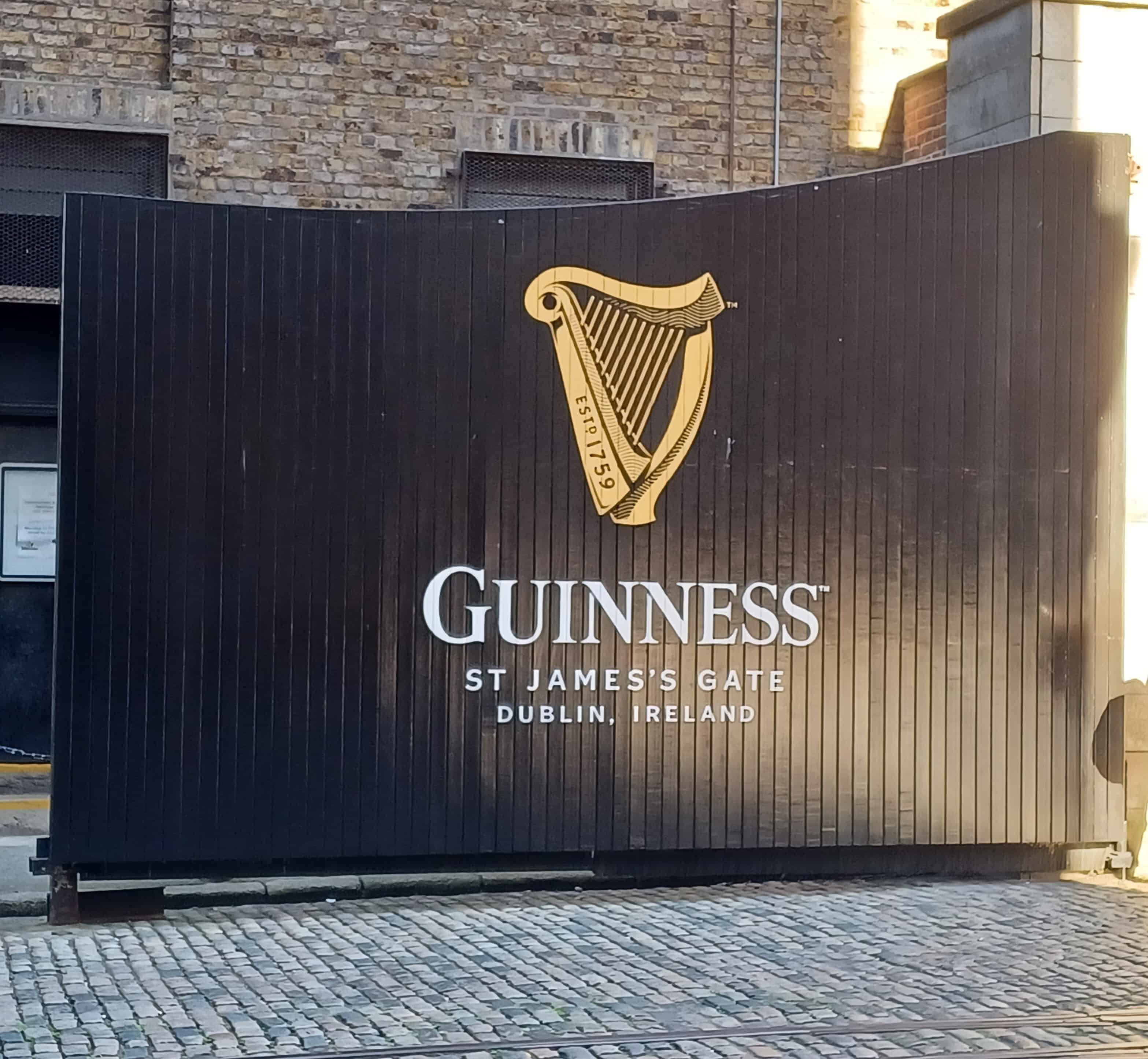
The Guinness Storehouse entrance gate.
For a pick-me-up during your visit, take a seat at the Cooperage Café or Arthur’s Bar and 1837 Bar & Brasserie. They are ready to serve you hot and cold drinks, snacks, and traditional Irish food!
Once you get to the 7th floor, you deserve a free pint of Guinness at the Gravity Bar, as well as a 360° panorama view of Dublin! Finally, browse the gift shop for some cool souvenirs, like t-shirts, hats, pint glasses, socks, magnets, key chains, coasters, and even Guinness chocolates!
Ticket admission is 22 EUR for a self guided tour of the Guinness Storehouse. Or you can book a special experience, such as the STOUTie Experience, which includes your selfie being printed on a Guinness beer! You can find more info on this in Tom’s post.
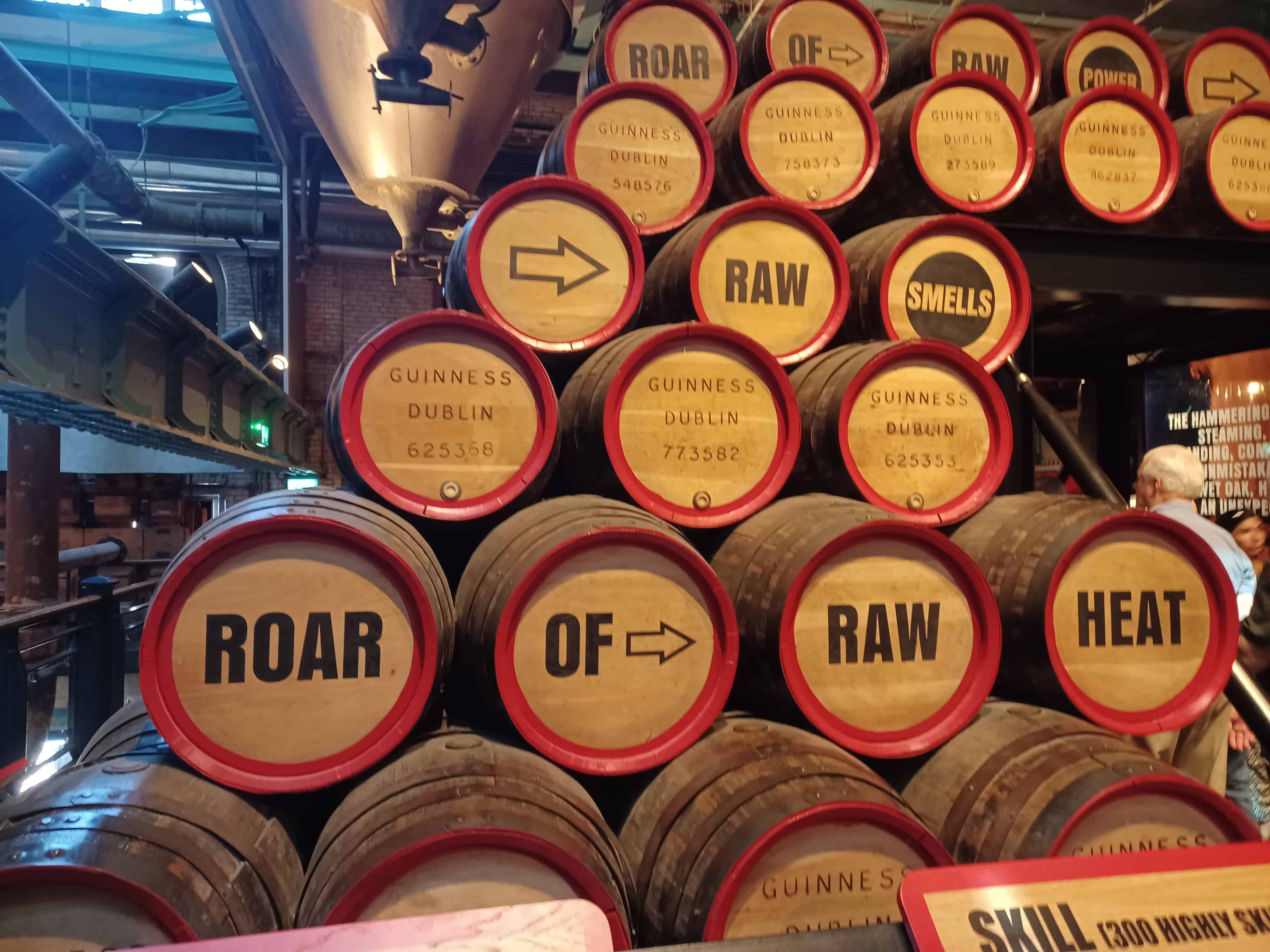
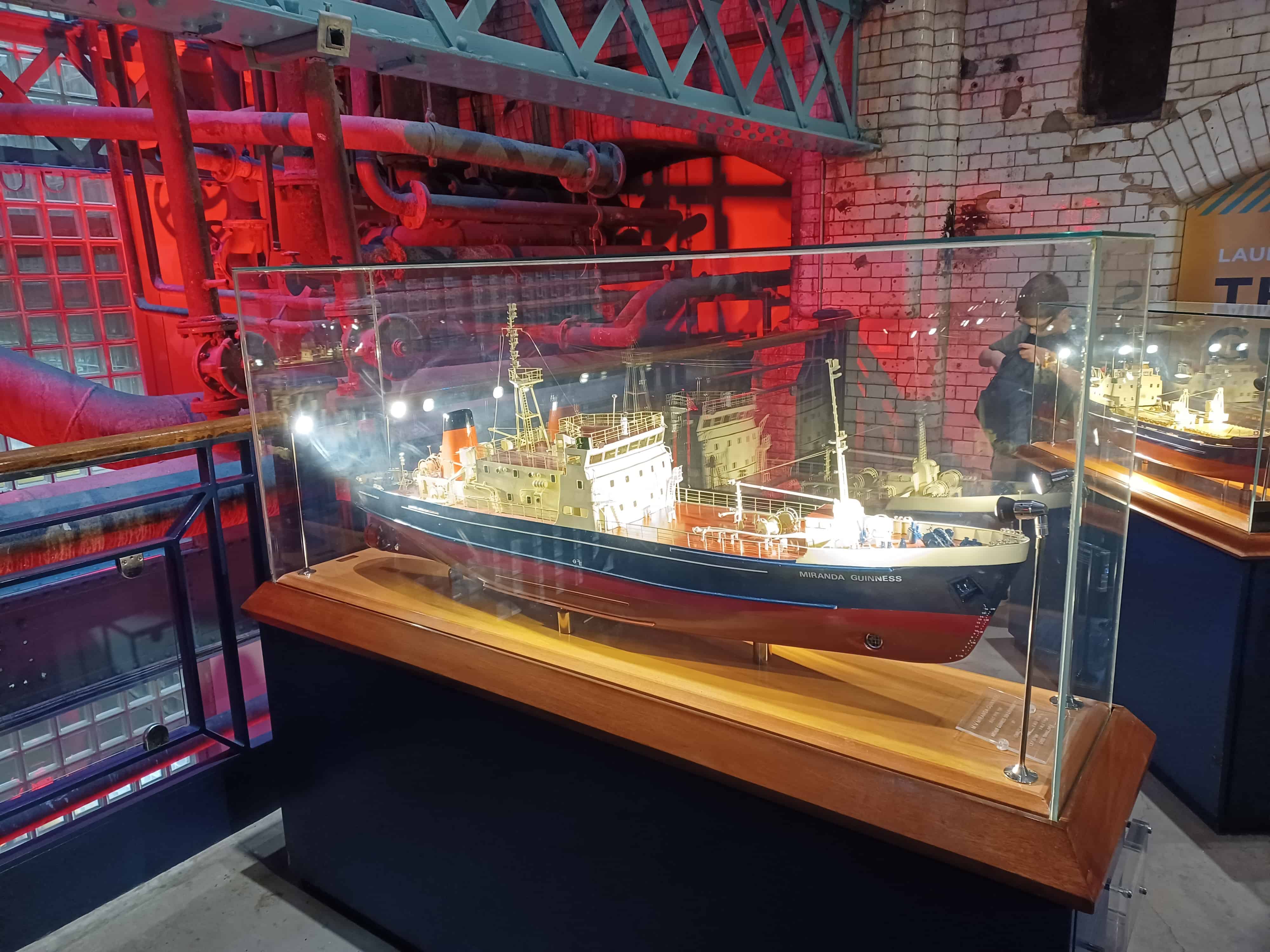
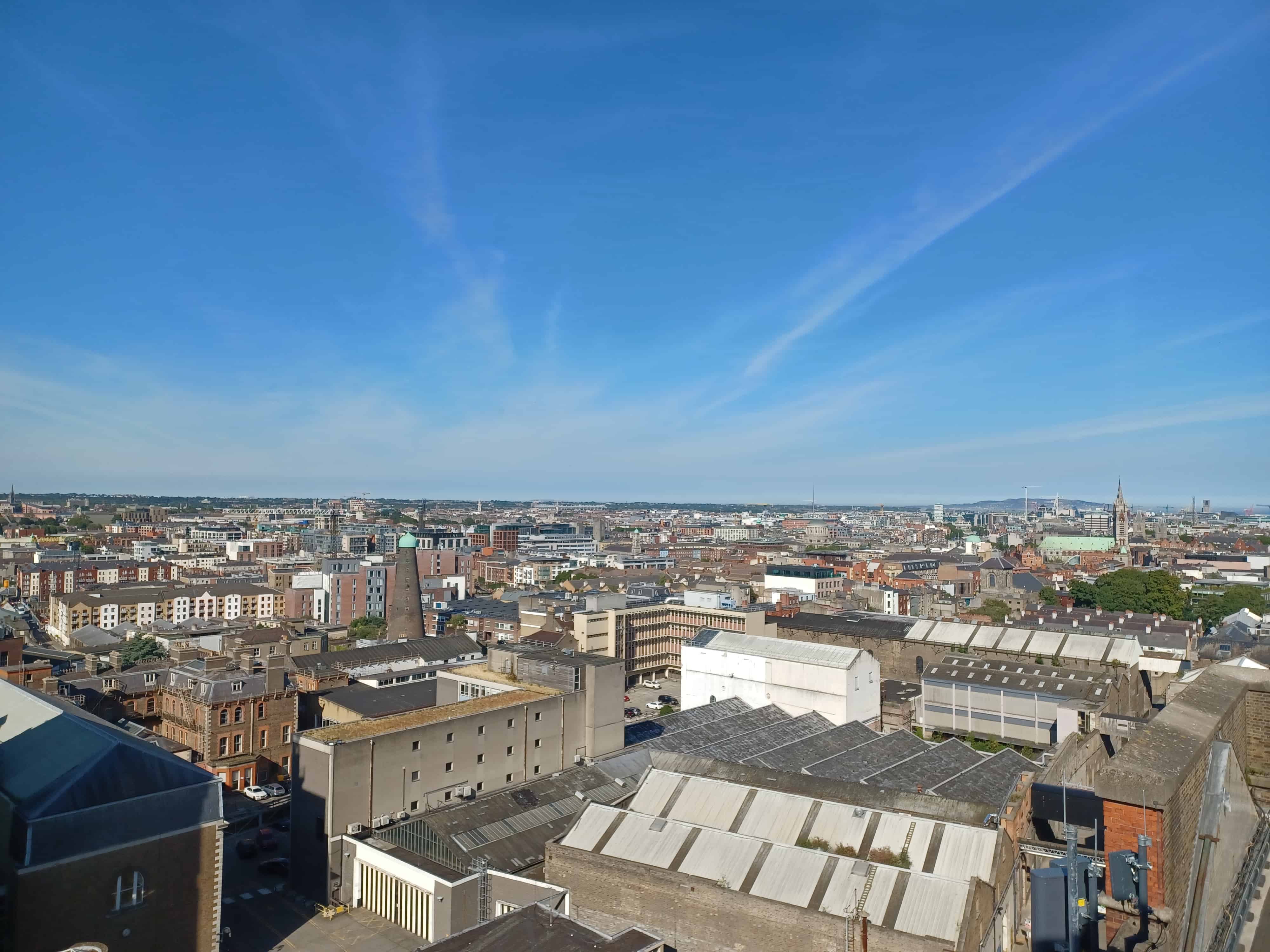
From left to right: Barrels used to store Guinness, ship for transporting the beer around the world, and 360° view of Dublin.
Trinity College
Address: College Green, Dublin 2, Ireland
Trinity College was founded back in 1592 by Queen Elizabeth I and is Ireland’s oldest university. Many famous Irish people went to school here, including Oscar Wilde, Sally Rooney, Samuel Beckett, and Douglas Hyde (Ireland’s first president).
But the most popular spot of Trinity College is the Book of Kells exhibition. It’s a 680-page manuscript written in the 9th century AD. According to the Book of Kells Facebook page, it’s Ireland’s greatest cultural treasure and the world’s most famous medieval manuscript.
Every day one page is turned, so it takes 170 days to finish this book. Moreover, the Long Room inside the Old Library, which opened in 1732, has 200,000 ancient books, as well as Ireland’s oldest harp (built in the late Middle Ages)!
It’s strongly recommended to purchase tickets online for a timed visit of 30 minutes (starting at 26 EUR) to guarantee entry into the exhibit.
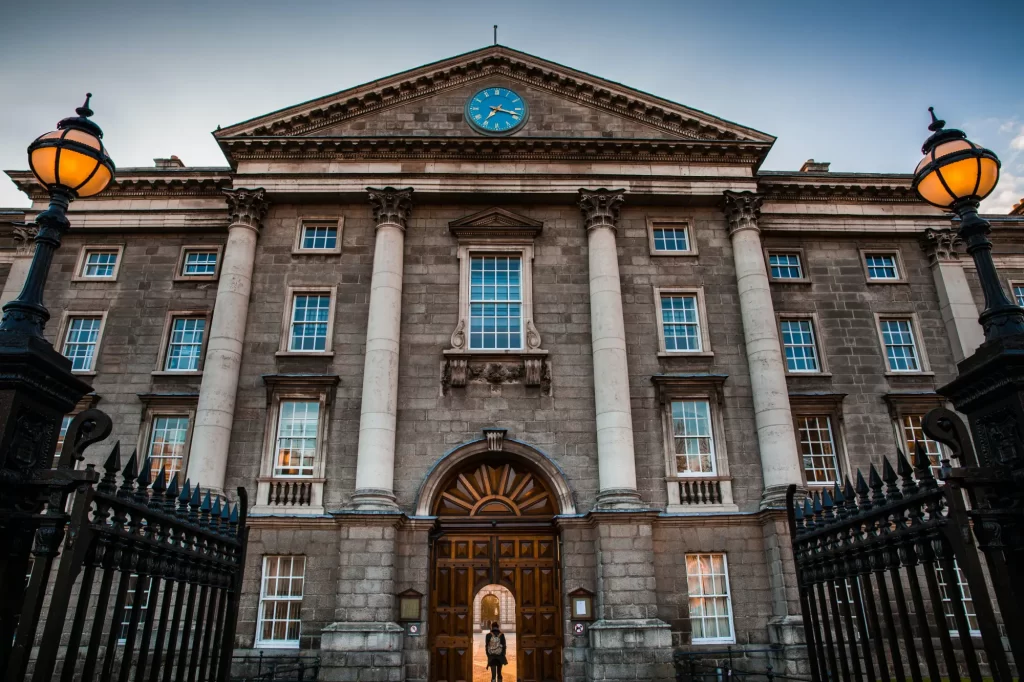
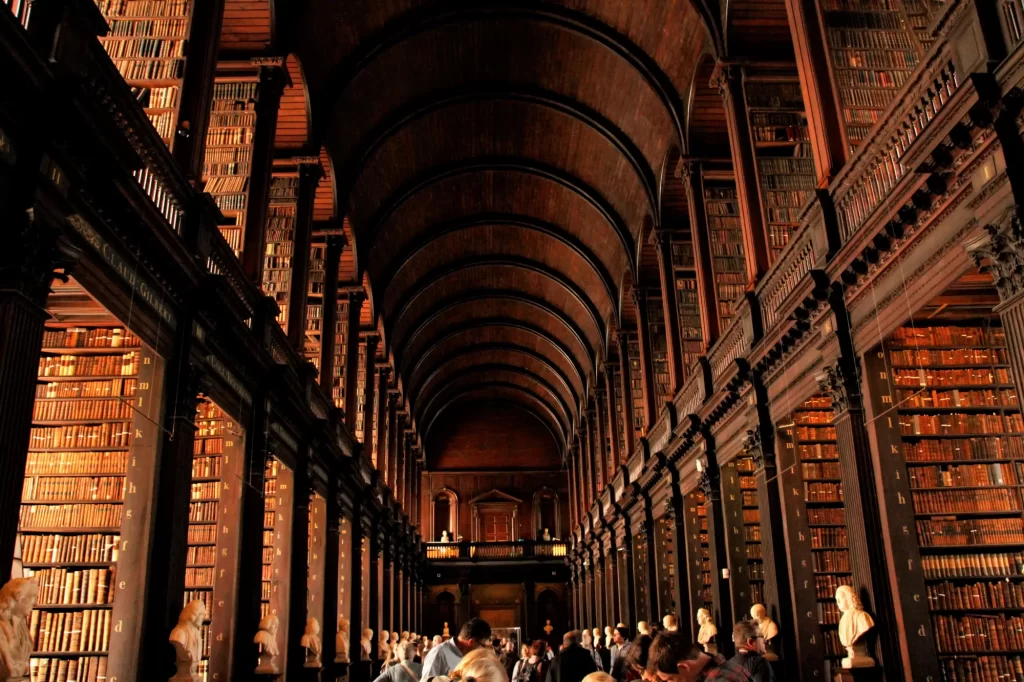
Entrance to Trinity College (Photo by Stephen Bergin on Unsplash) and The Long Room (Photo by Hanna May on Unsplash).
While strolling on the cobblestoned paths of the campus, check out the amazing Georgian and Victorian buildings. Examples are the Campanile (completed in 1853), and the ‘Sfera con Sfera’ (Sphere Within Sphere) bronze sculpture by Arnaldo Pomodoro (1982/83).
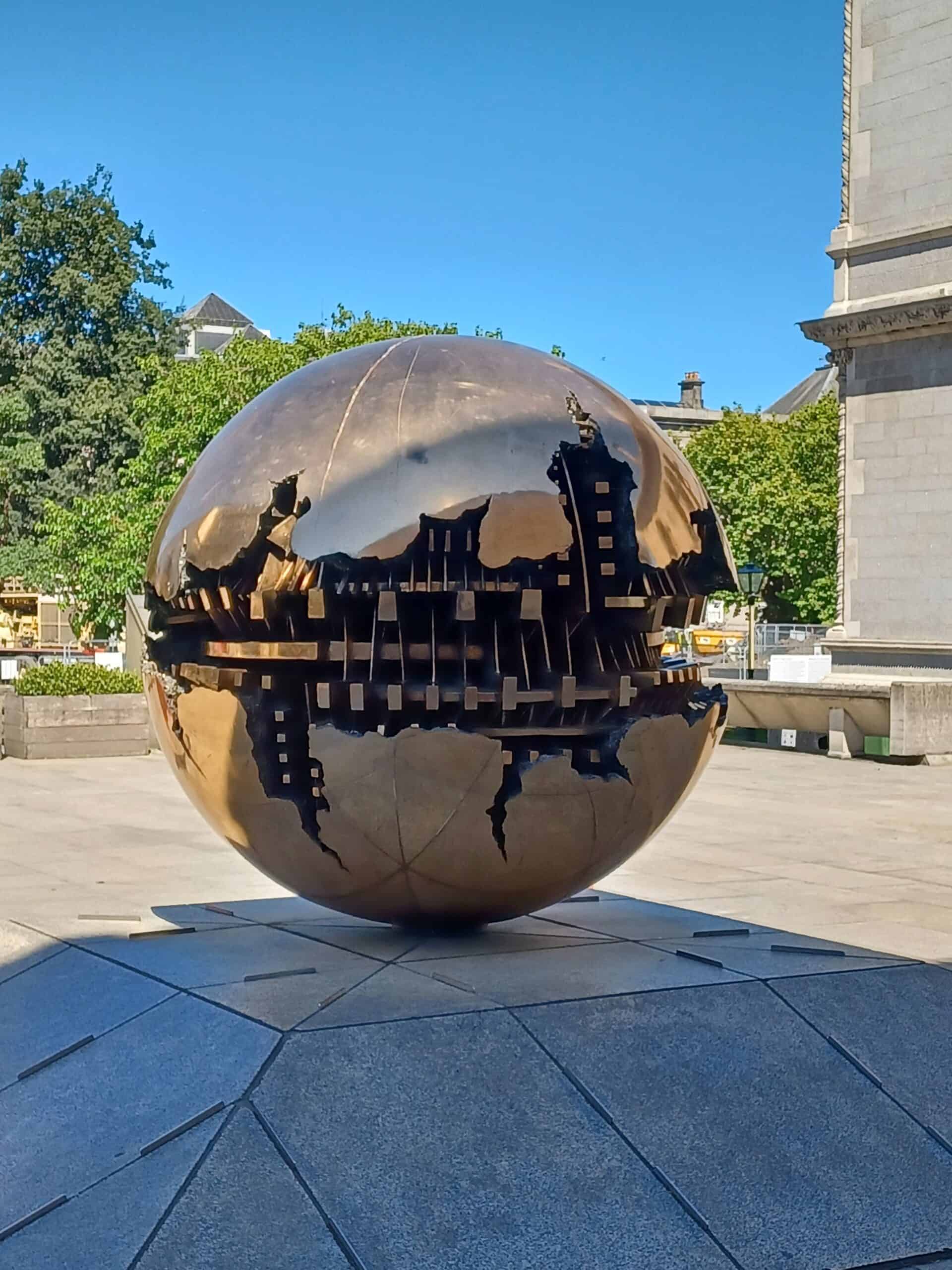
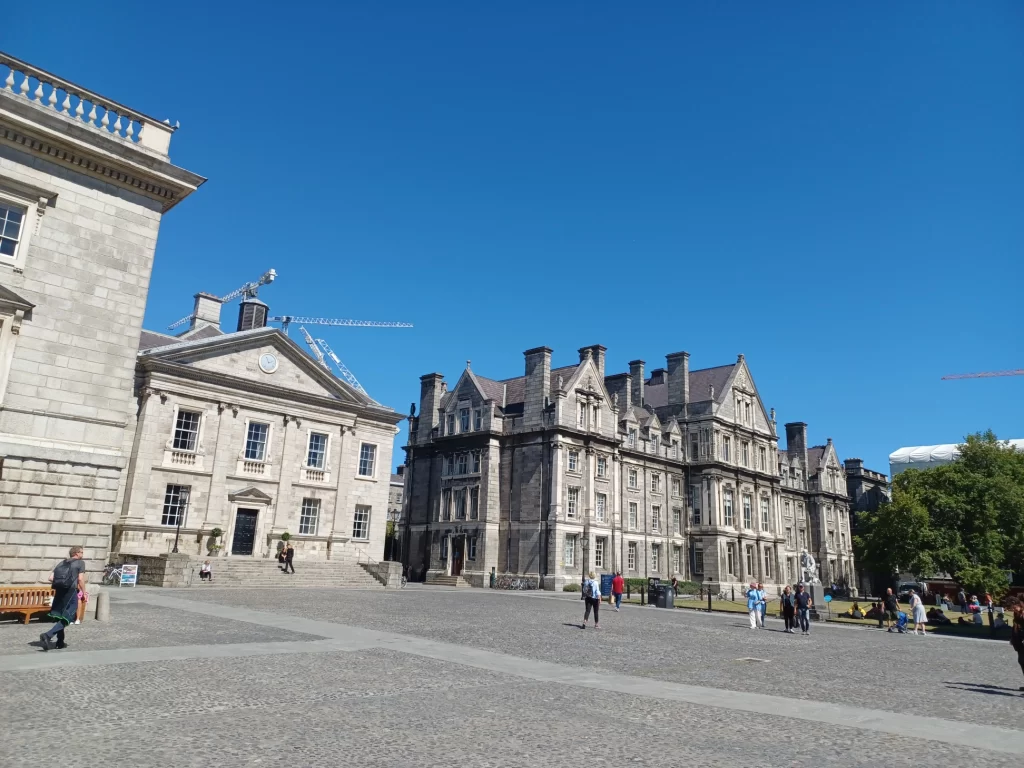
The ‘Sfera con Sfera’ bronze sculpture and a part of the campus grounds.
You can book self-guided or guided tours around the campus and the Book of Kells exhibit. Lastly, it’s possible to book rooms (single/twin/double or apartments) at the Trinity College Campus and Dartry (15 minutes from the campus) during the summer months.
Temple Bar District
Temple Bar is Dublin’s cultural quarter and nightlife hotspot. It’s next to the riverbank of the Liffey, which flows through downtown.
Temple Bar used to be a wealthy neighbourhood in the 17th century. But this changed drastically in the 1800s, when it was one of Dublin’s main red-light districts! It was still a crappy area towards the end of the last century, but in 1991, it was modernized.
Today, the most famous spot is the bright red Temple Bar Pub where you can check out Ireland’s largest Whiskey collection and it has live music every day. This pub was established in 1840. It’s known for its flower decorations outside, low hanging lamps, and a bronze statue of James Joyce.

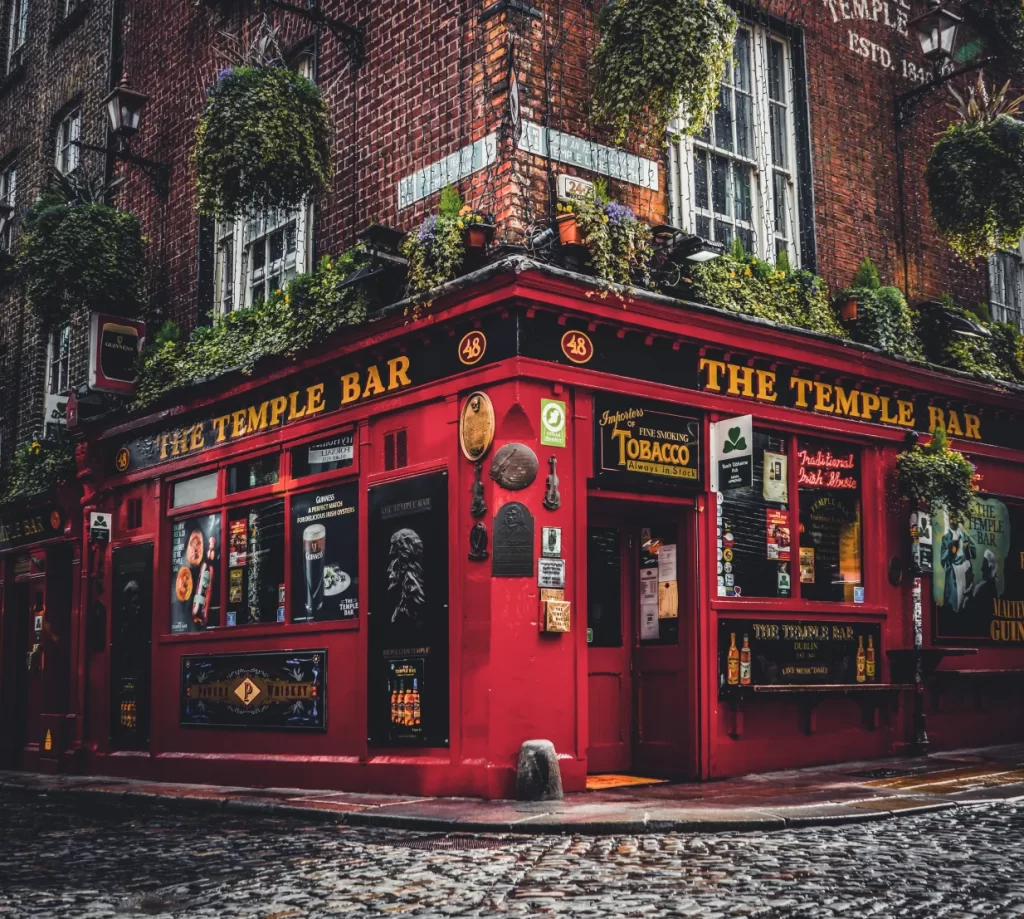
The Temple Bar Pub. Photo by Leonhard Niederwimmer on Unsplash.
The Temple Bar district has many other pubs, night clubs, cafés, restaurants, hotels, hostels, and lots of shopping opportunities. It’s also home to many art galleries and the Irish Film Institute.
Thanks to its high popularity with tourists and locals, this area can be pretty crowded. Besides, it’s often more expensive than in other parts of Dublin, and petty crime, like scams and pickpocketing, can happen sometimes.

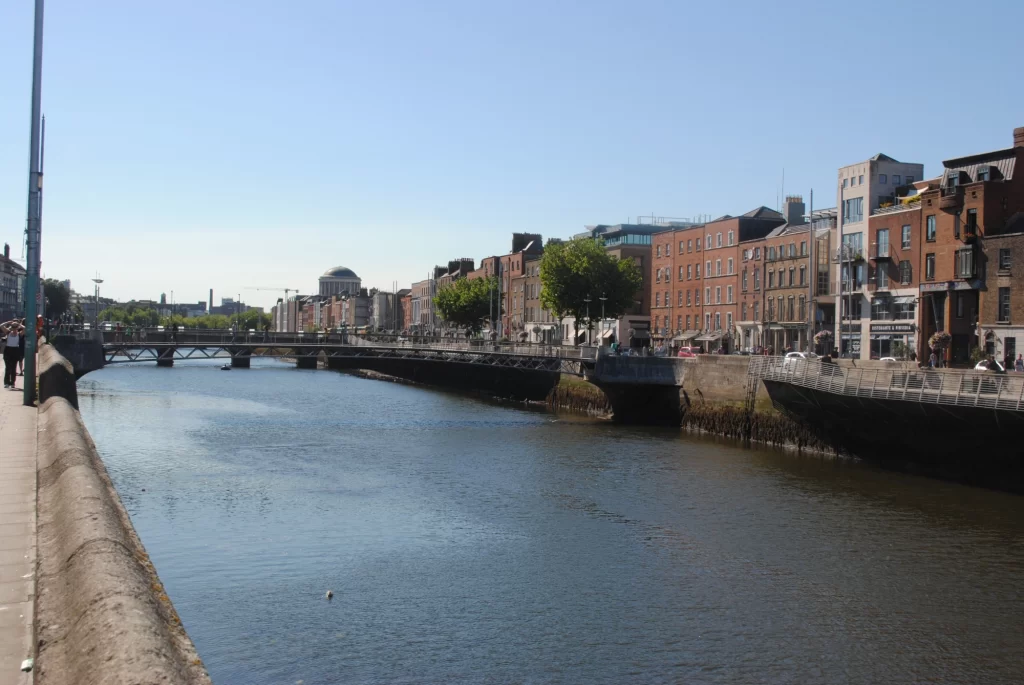
The Liffey River.
The Irish Rock’n’Roll Museum
Address: Curved St, Temple Bar, Dublin, D02 RD26, Ireland
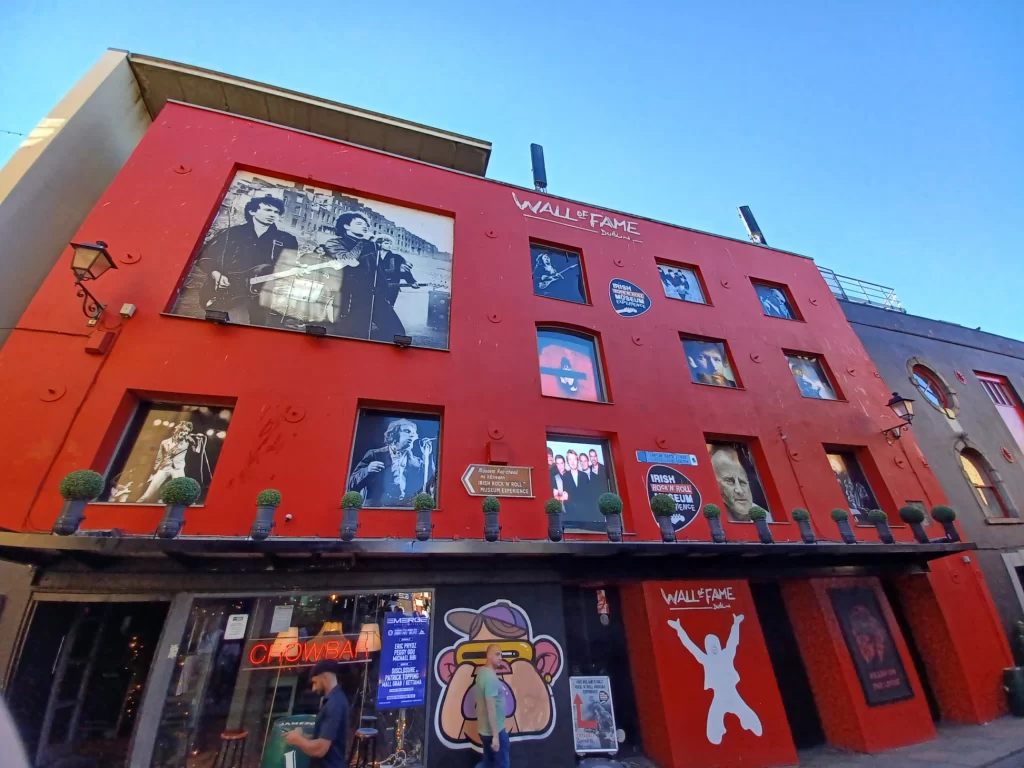
If you love Irish music, check out the Irish Rock’n’Roll Museum! The Wall of Fame outside, that displays many Irish Rock’n’Roll legends, including U2, Rory Gallagher, Thin Lizzy, and Sinead O’Connor, is a great first impression of this place!
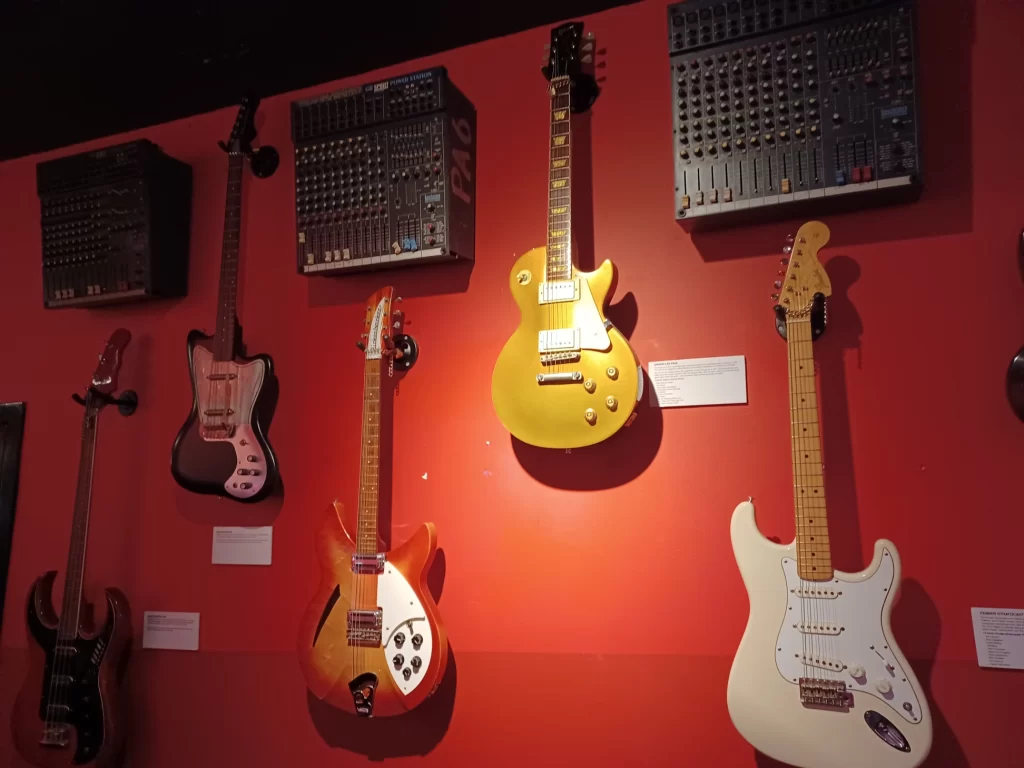
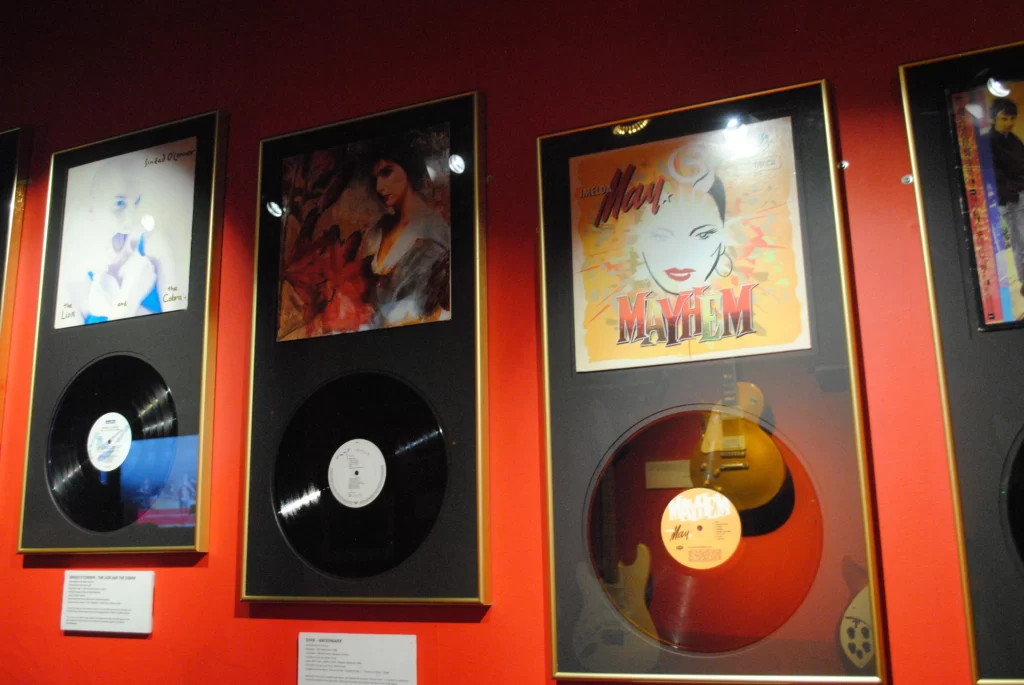
We joined a guided tour and looked at a bunch of vintage guitars and records by Irish musicians, like The Cranberries, Enya, The Undertones, and The Boomtown Rats.
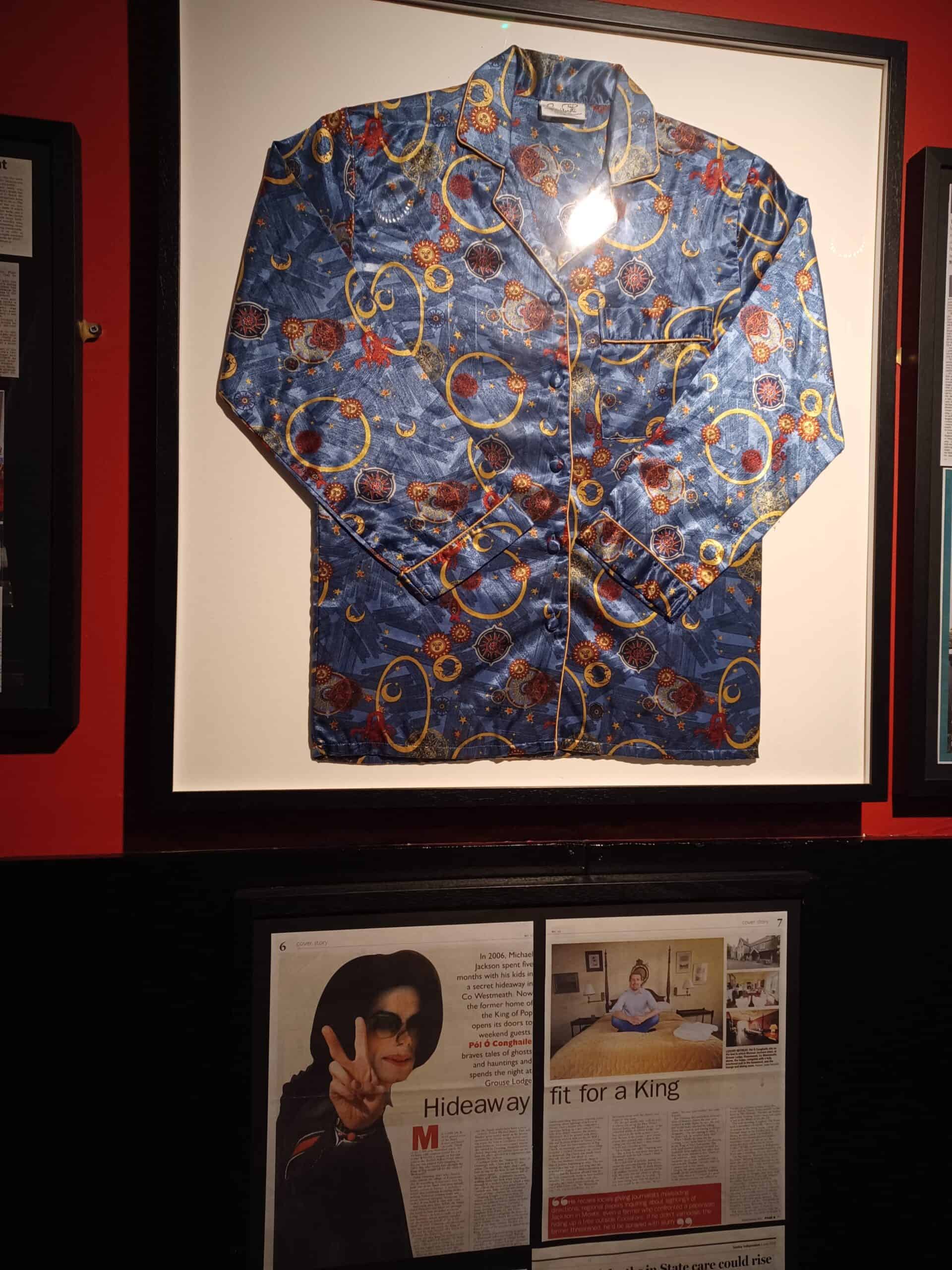
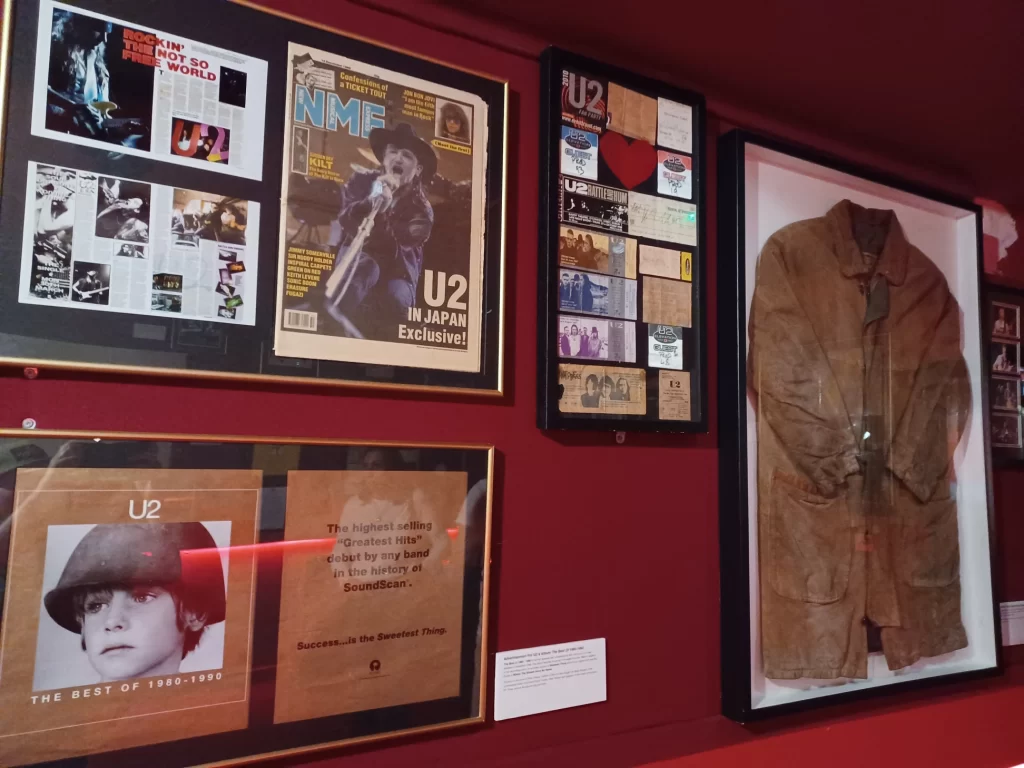
Next, there’s Michael Jackson’s pajama and a jacket he wore while touring with the Jackson 5 (Fun fact: He lived in Ireland for a while in 2006!). After watching a short movie about Irish Rock’n’Roll legends, we moved to a room dedicated to U2, that had tons of exclusive material!
But this place is not just a museum, it also has a recording studio (Rihanna and The Script recorded here) and the Button Factory. The latter is a music venue and be sure to jump on stage to feel like a real Rock Star!
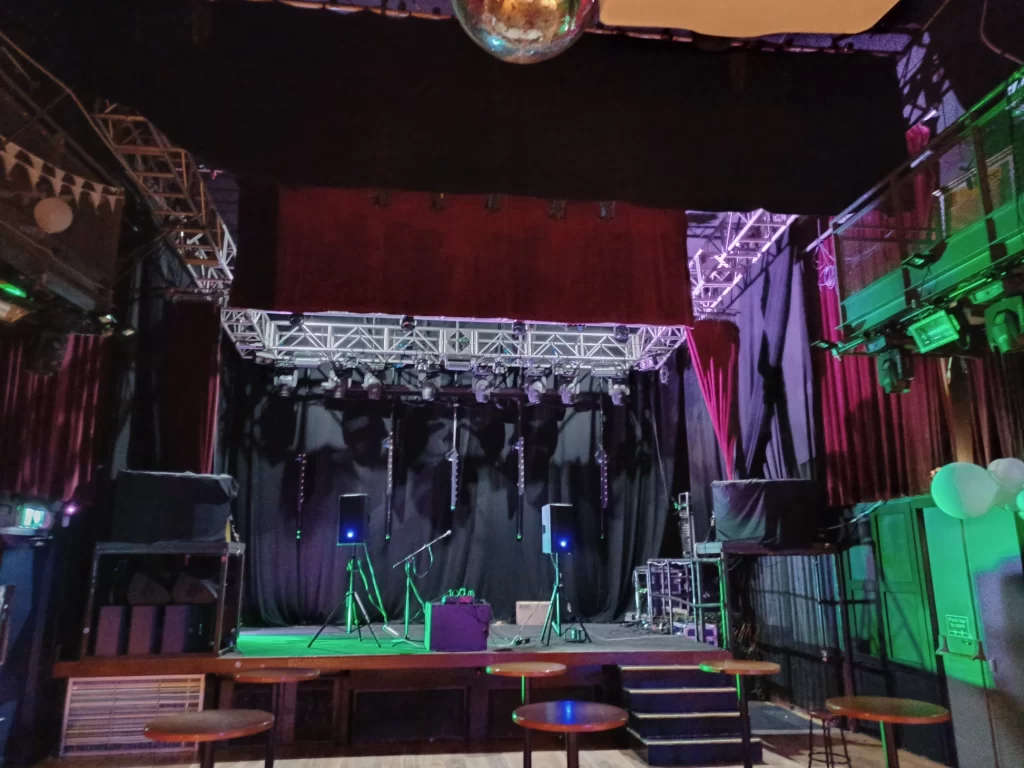
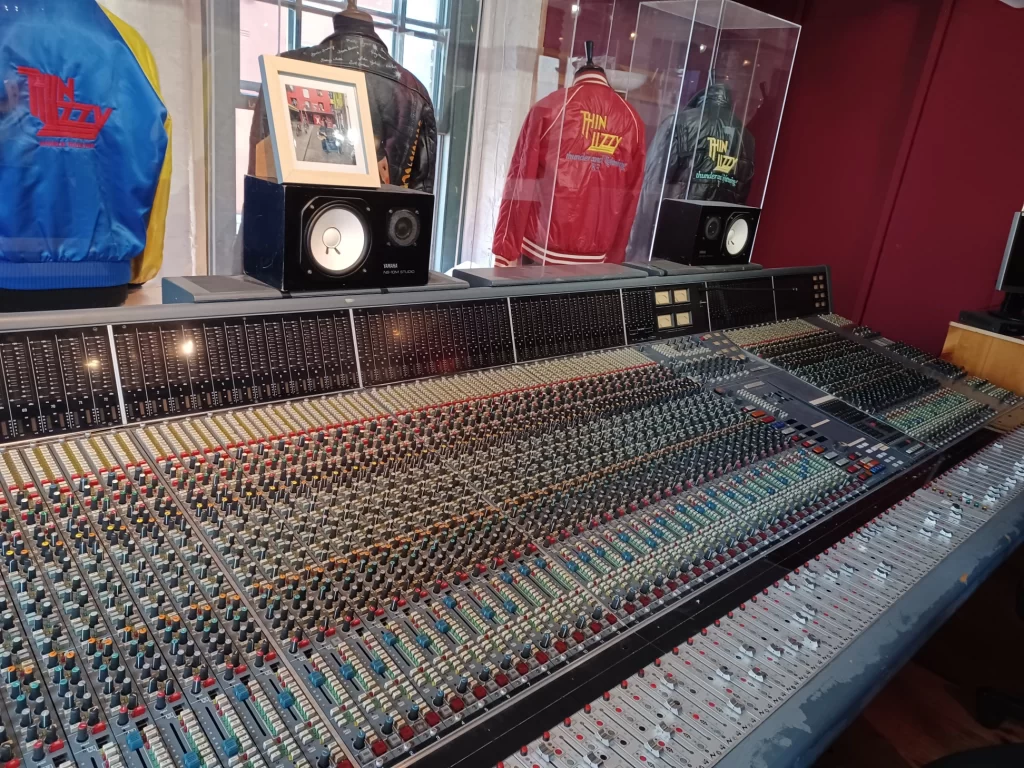
Moreover, this is Dublin’s major rehearsal space for unknown and famous bands. As we entered one of these rooms, Brian, our guide, suddenly encouraged the musicians in our group to start a jam session! Then we checked out Thin Lizzy’s recording studio and a selection of Phil Lynott’s guitars and a jukebox.
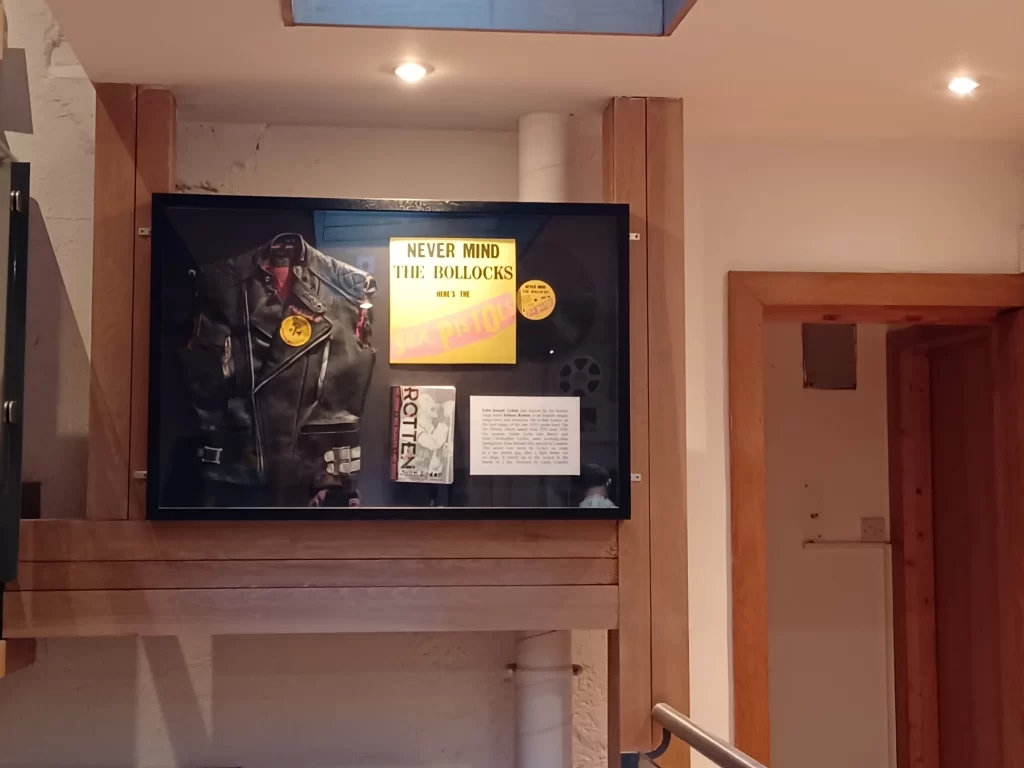
Finally, we found a few things related to Rock legends who have Irish roots, like Johnny Rotten’s sleeveless jacket, a Nirvana gig poster, and Beatles memorabilia!
The Irish Rock’n’Roll Museum is open 7 days a week. Ticket prices start at 22 EUR and only guided tours can be booked at this time.

Phoenix Park
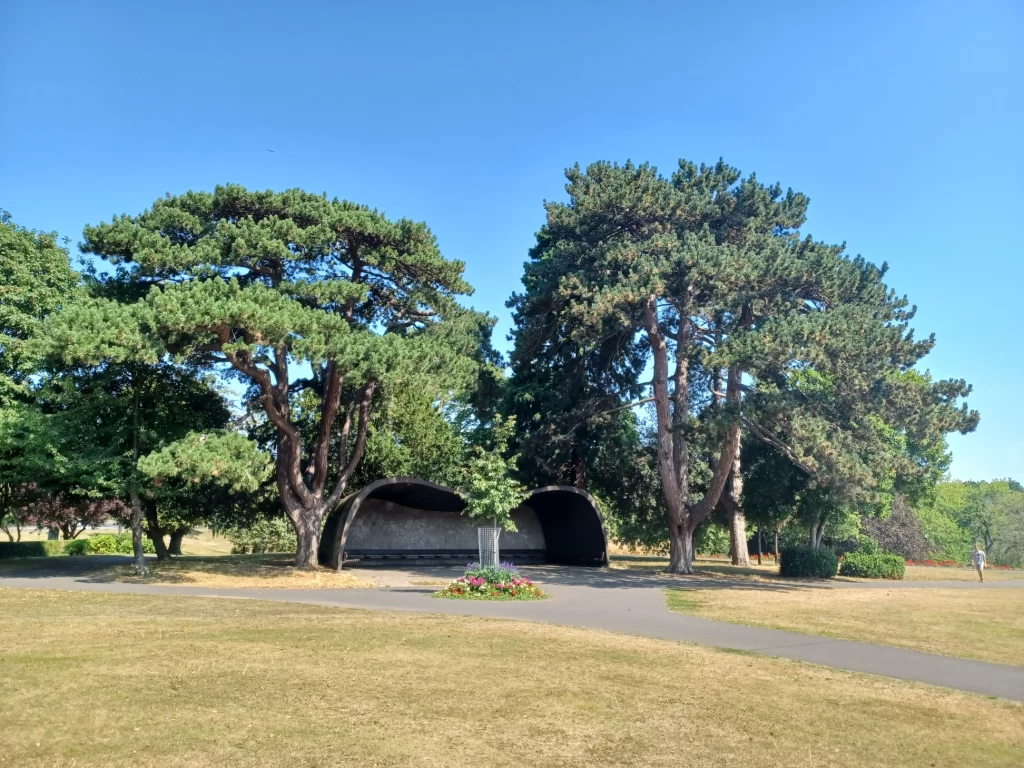
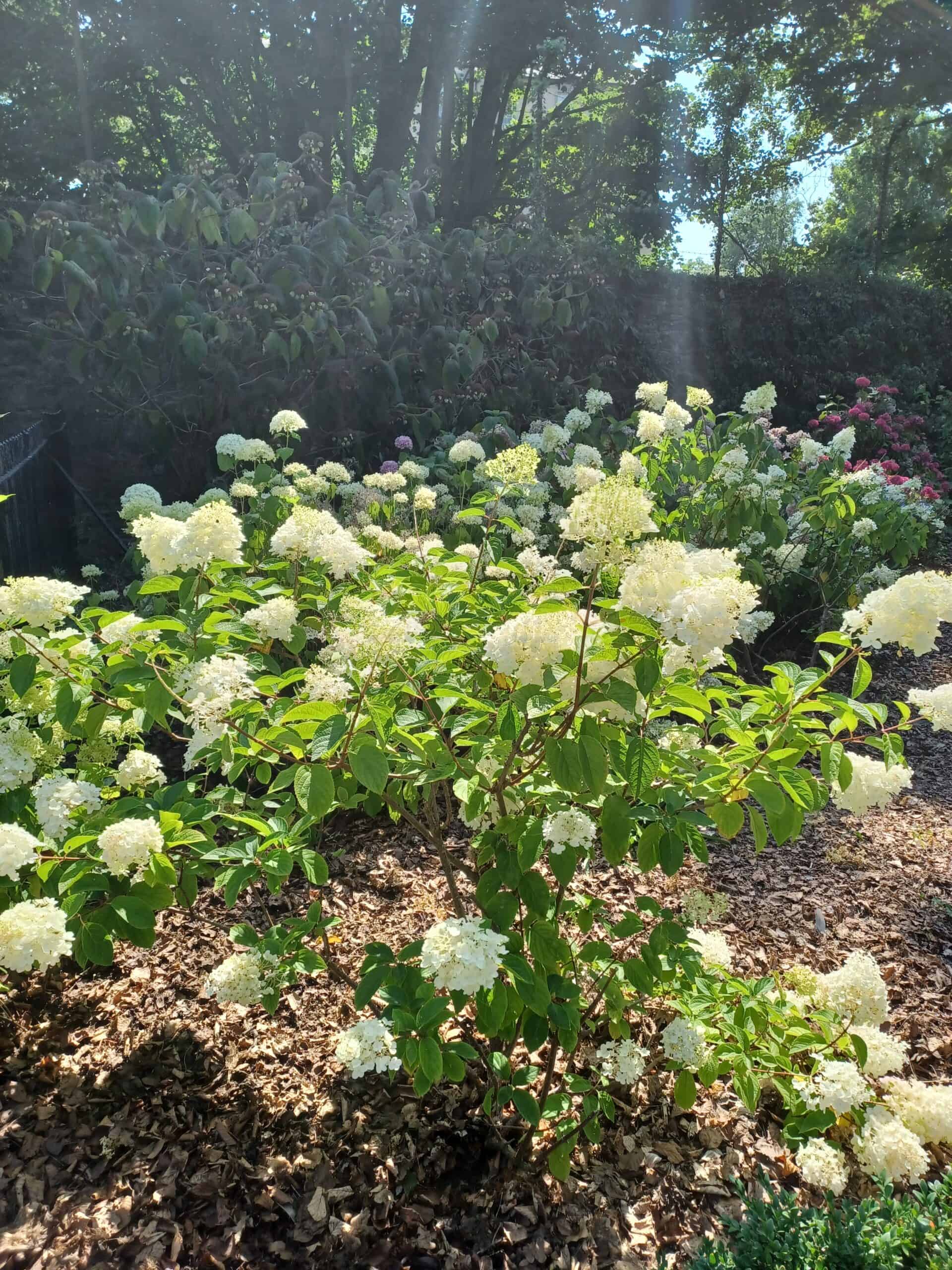
Need a break from the busy city now? Then hang out for a couple hours at Phoenix Park. It’s perfect for walking, having a picnic, playing sports, and relaxing. You can also rent a bike with Phoenix Park Bikes at the main entrance, and ride along the park’s 14 km (8.6 miles) of cycle trails.
It was founded in 1662 as a royal hunting area and has been open to everyone since 1747. At 1,750 acres, it’s Europe’s largest city centre park (it’s twice the size of Central Park in New York City!).
The Irish President lives at the Áras an Uachtaráin residence inside the park, same as about 600 wild fallow deer. They have been here for many years and are free to move wherever they like!
There are ponds to look at, a Visitor Centre, the Papal Cross, Victorian Flower Gardens, a Biodiversity Information Centre, Phoenix Café, and Tea Rooms as well.
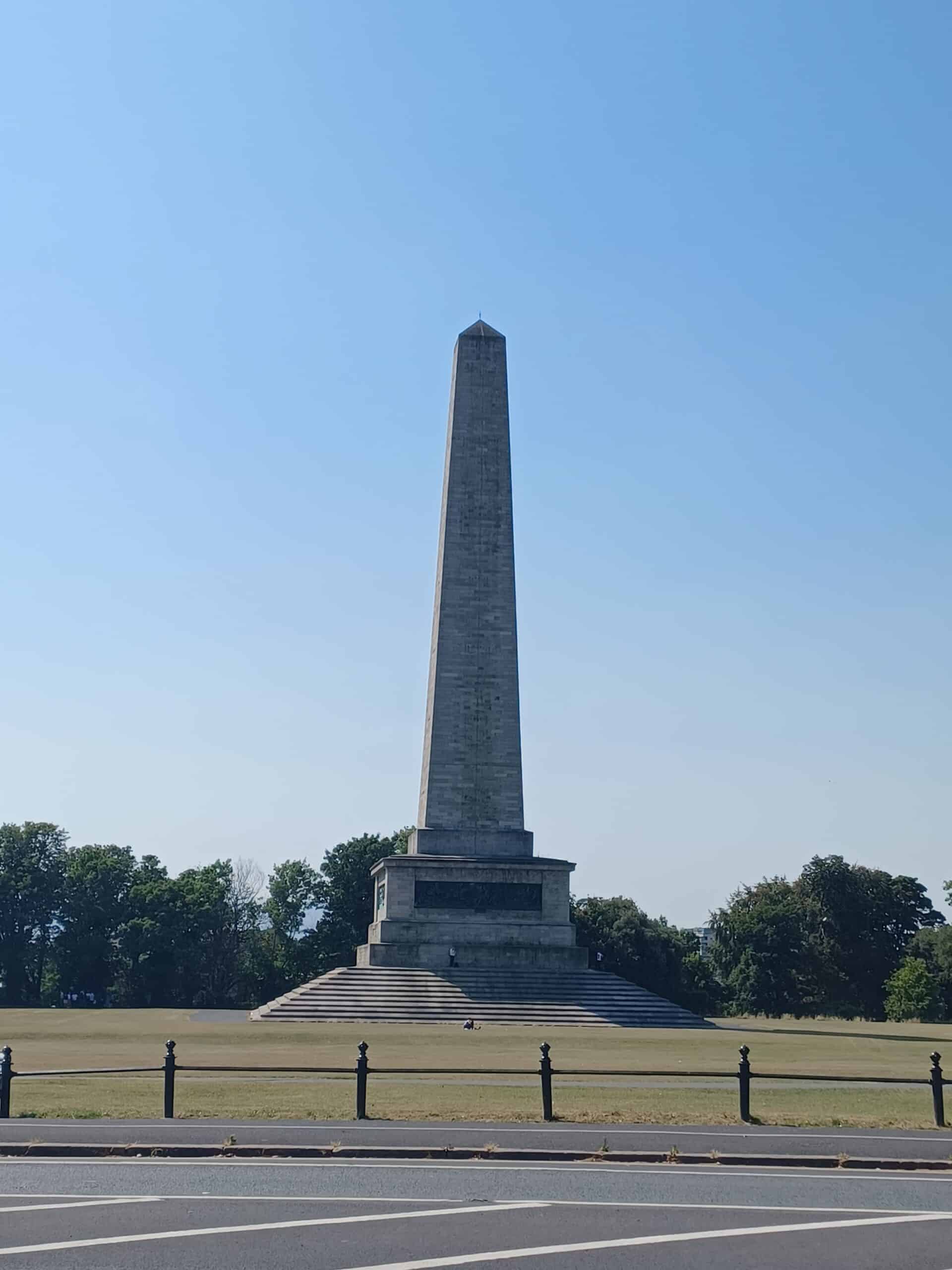
Finally, you can find the Wellington Monument inside Phoenix Park. It’s Europe’s tallest obelisk, and was built to honour the Duke of Wellington in 1817, who’d beaten Napoleon two years earlier. But the builders ran out of money, so it wasn’t completed until 1861, after he’d already died!
St. Stephen’s Green Park
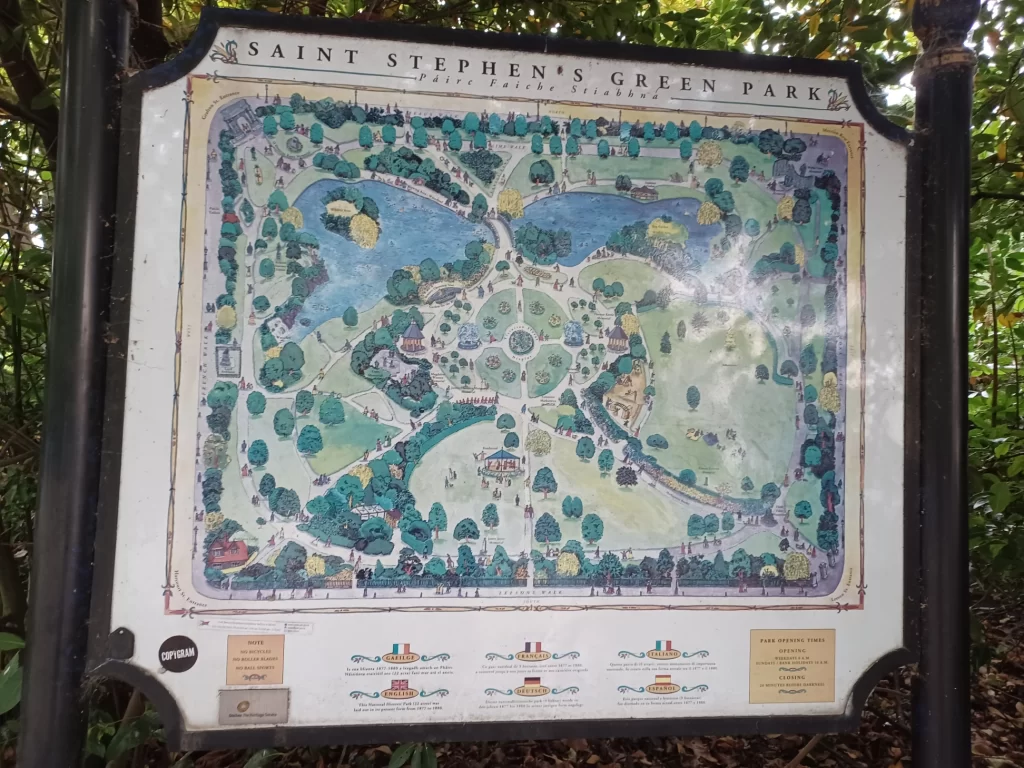
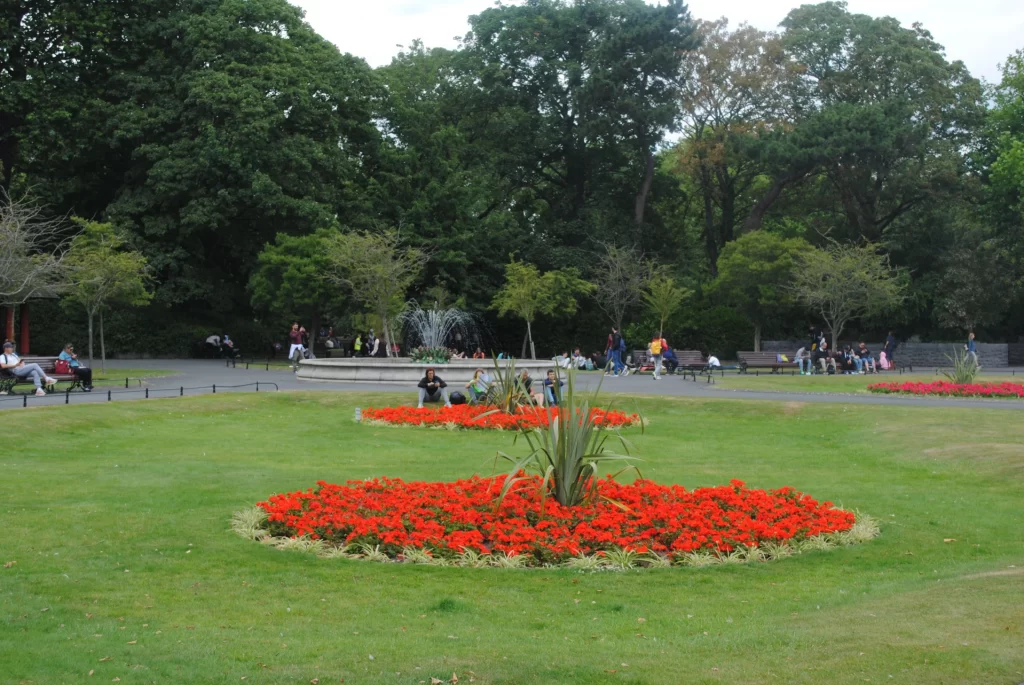
St. Stephen’s Green Park has 750 trees with a Victorian layout and is right in the heart of Dublin. Until 1664, it was a marshy common for sheep and cattle to graze and even public executions and witch burnings happened here!
In 1877, Arthur Edward Guinness (Arthur Guinness’s great-grandson) asked the City of Dublin to open St. Stephen’s Green to the public. Since 1880, everyone is allowed to spend time at St. Stephen’s Green Park.
The park also played a role during the Easter Rising of 1916, when rebels of mainly the Irish Citizen Army dug trenches and took it over. St. Stephen’s Green Park also has several monuments, like a bronze statue of Theobald Wolfe Tone, the leader of the Irish rebellion in 1798. There’s also a memorial to the Great Famine from 1845 to 1849.
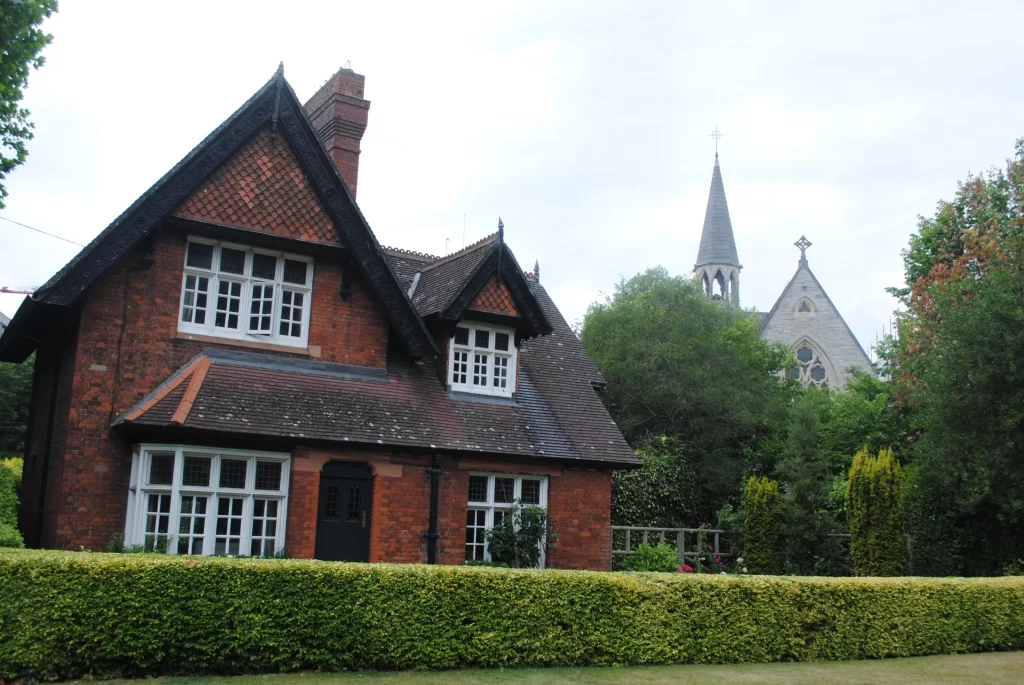
Many birds and plant species live inside St. Stephen’s Green Park. There’s also a playground, the Ardilaun Lodge (Superintendent’s Lodge), built shortly after 1880, flowerbeds, waterfall, as well as a garden for the visually impaired.
Grafton Street
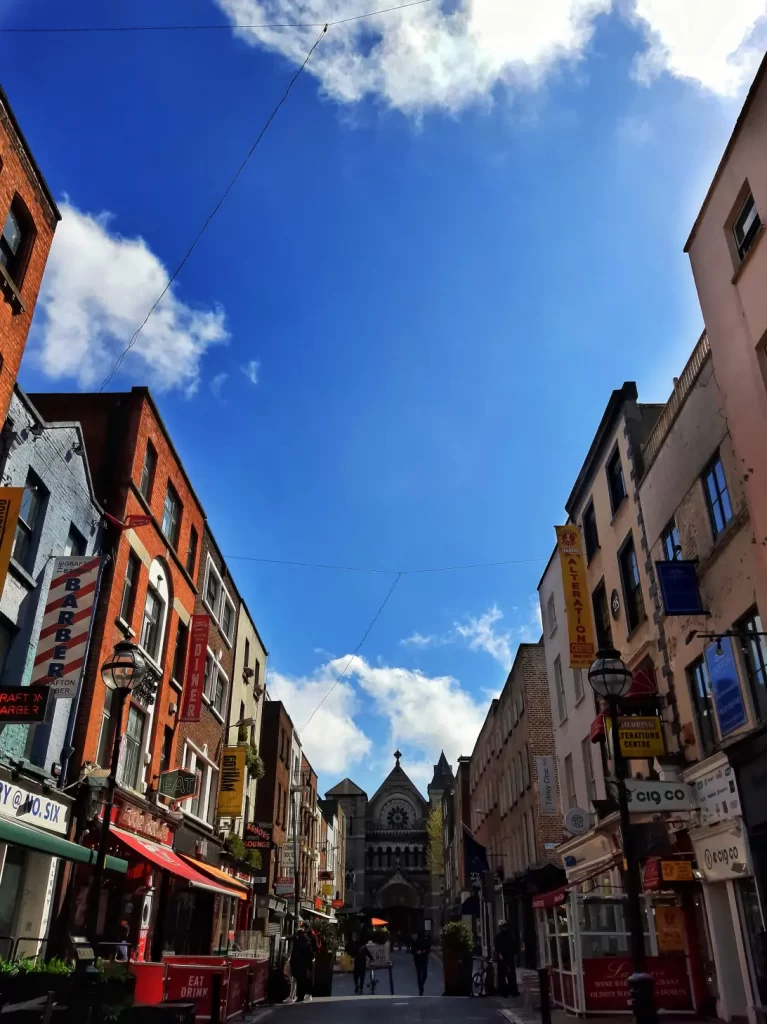
There are many stores and shopping malls in Dublin, so get your credit card ready to be maxed out! A popular shopping spot is Grafton Street, a pedestrian street only minutes away from St. Stephen’s Green Park.
There are tons of shops, like The North Face, Disney store, Levi’s, but also the Card Gallery, Ulysses Rare Books, the Irish Design Shop, and Aran Sweater Market (handknitted Irish wool clothing).
It’s also a great for watching street performers and buskers, especially during the summer. Some well-known musicians started their career while busking here, such as Bono, U2’s lead singer. How cool is that?

St. Stephen’s Green Shopping Centre
Address: St Stephen’s Green, Dublin, D02 HX65, Ireland
Next, check out St. Stephen’s Green Shopping Centre, which has many European and Irish chain stores, like Game Stop, Flying Tiger, Butler’s, Eason Books, United Colours of Benetton, and Carroll’s Irish Gifts.
The latter sells jewelry, Irish-style (shamrock) clothing, chocolates, tea towels, green Leprechaun top hats, bookmarks, and more! We also liked the design of this shopping centre, especially the large clock and all the balloons!
George’s St. Arcade
Address: South Great George’s Street, Dublin, Ireland
George’s St. Arcade is a market inside a lovely Victorian-style red brick building in downtown Dublin. It’s been around since 1881 and has several independent shops and stalls with vintage clothes, records, jewelry, book store, crafts from Asian countries and West Africa, and many more!
My favourite was Elevation Music Movies Comics, which sells cool vintage music and movie prints, comic book merch, buttons, patches, key chains, and magnets!
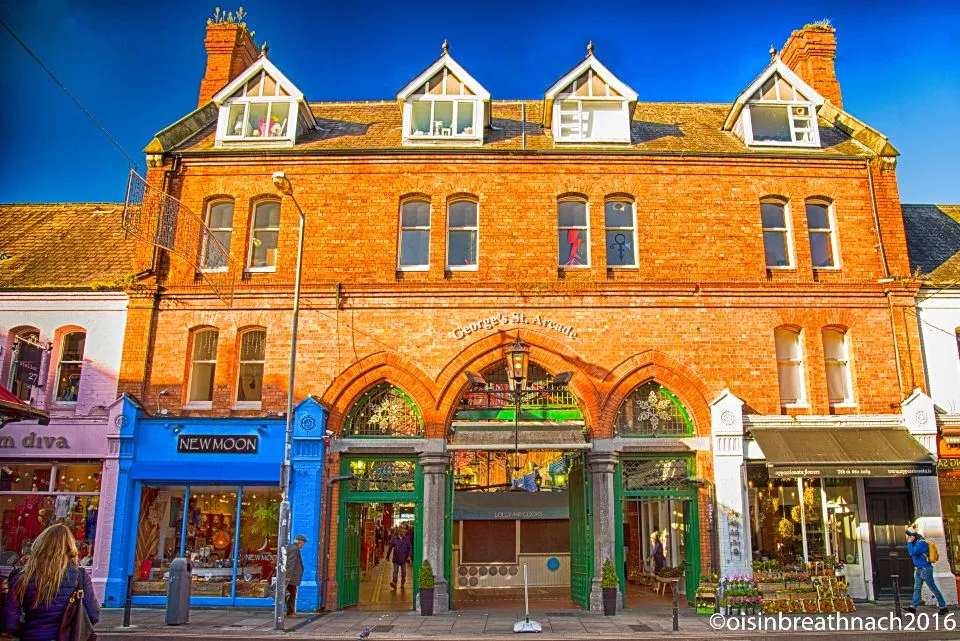
George’s St. Arcade from the outside. Photo credit: The Layden Group.
Join a Guided Bike Tour with Lazy Bike Tours
A great way to see lots of Dublin’s downtown attractions is through a guided bike tour. We joined a tour with Lazy Bike Tours, which takes about 2.5 hours. You can rent a push bike (cruiser bike) or e-bike.
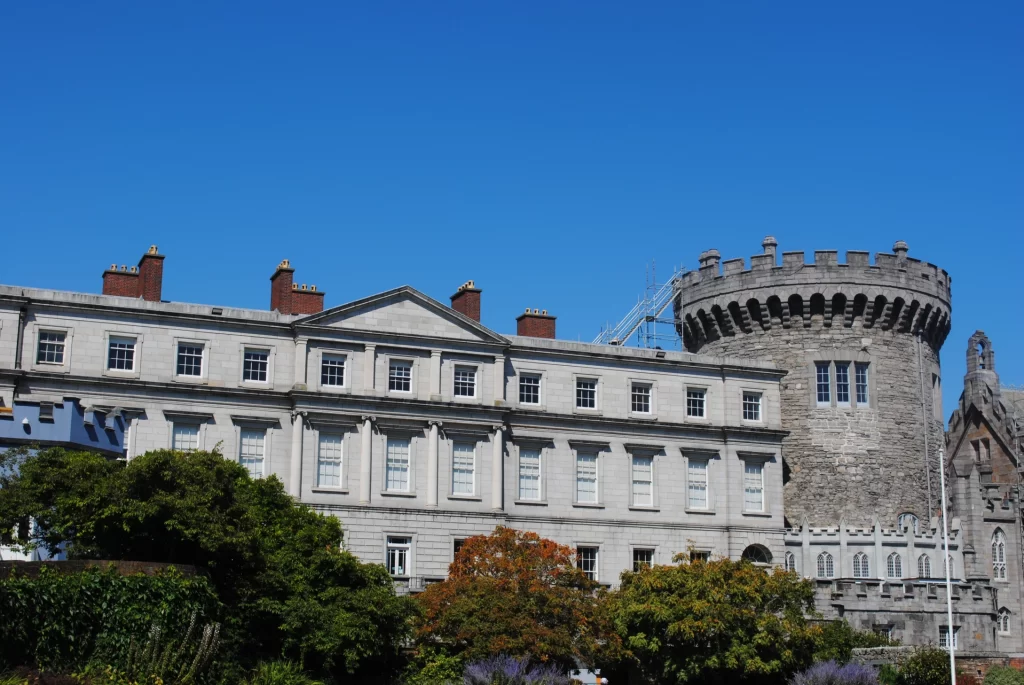
Our first stop was Dublin Castle that dates back to the early 13th century. The powder storage of the castle exploded in 1684, so the round tower (right side of the photo below) is the only original part still intact today. The hard dirt that was left from the explosion was later turned into a Georgian palace.
Next, we looked at St Patrick’s Cathedral, completed in 1260, which is one of the few medieval buildings in Dublin that still exists. You can also find Jonathan Swift’s grave here and there’s a nice park right next to the cathedral.
When we arrived at the Teeling Whiskey Distillery, opened in 2015, we learned that it’s the first distillery that opened in more than 125 years! Ireland’s whiskey making history started in the middle ages.
Fast forward to the 1800’s, a production boom happened, with 30 distilleries all over the country. But in the 20th century, the industry declined drastically. This was because of the damage due to the two World Wars, civil wars in Ireland, and a changed consumer taste preference.

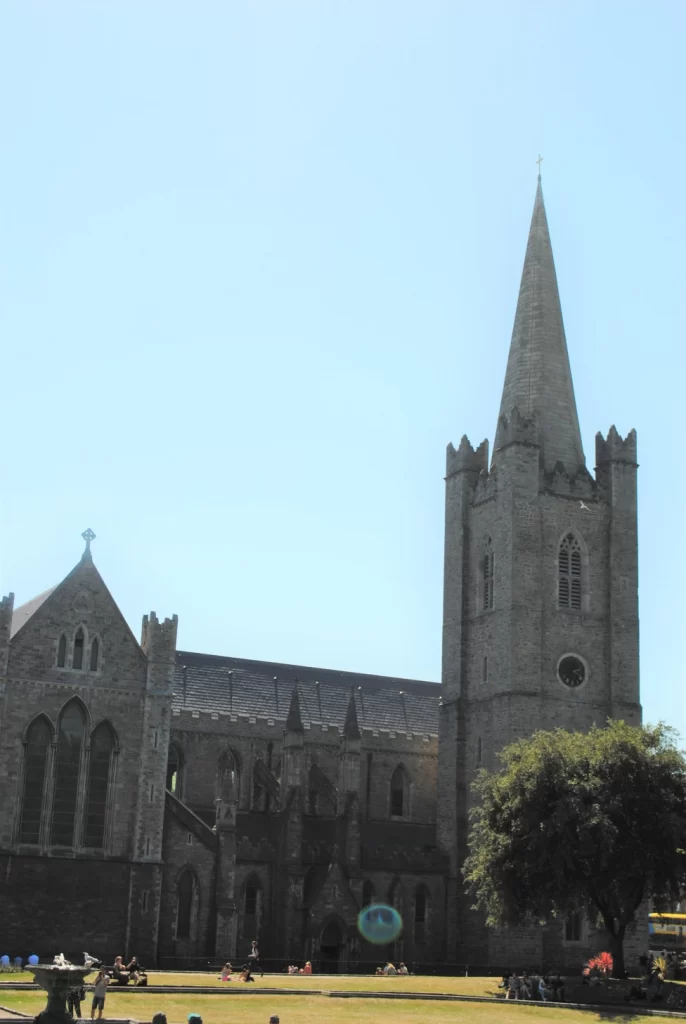
St Patrick’s Cathedral.
We also stopped at The Liberties, Dublin’s oldest working class neighbourhood. In the 12th century, when Dublin was a walled city, this area was one of its suburbs. Many distilling and brewing families (including the Guinness family) lived here. The Guinness brewery is still here today, that a very optimistic Arthur Guinness leased in 1759 for 9,000 years!
You can also find many antique shops and small shops here. As we got to the Guinness Storehouse, Laura, our guide, told us that Arthur Guinness was advised by businessmen that he’d be more successful producing whiskey instead of beer, as it was perceived as the “poor people’s drink”. Who knows what would have happened if he’d listened to them?!

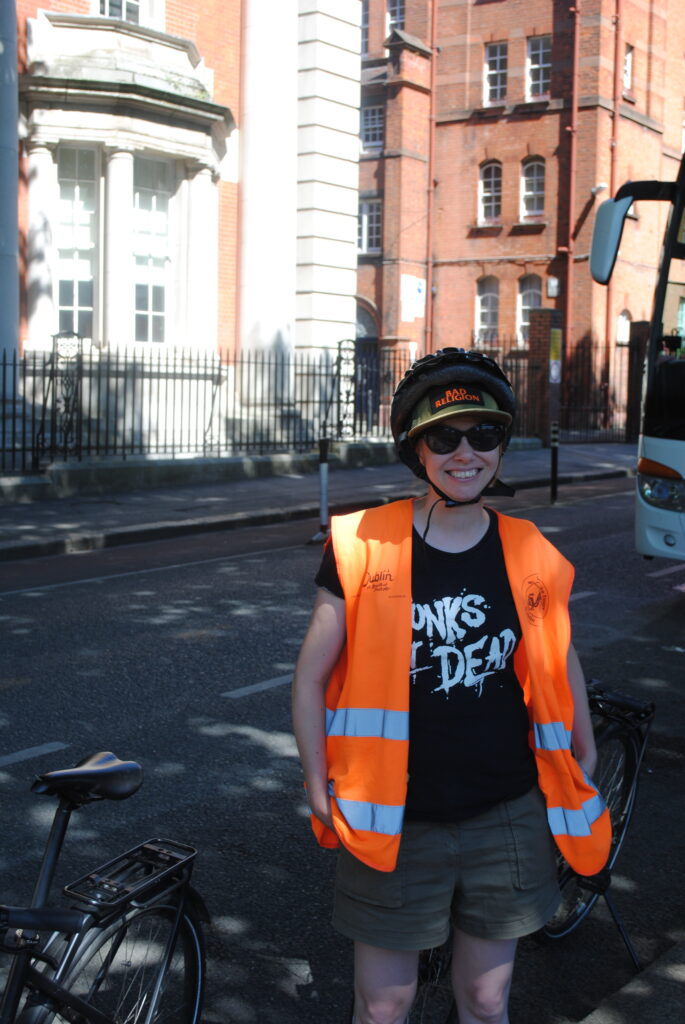
We also rode by some amazing street art murals painted by Holly Pereira.
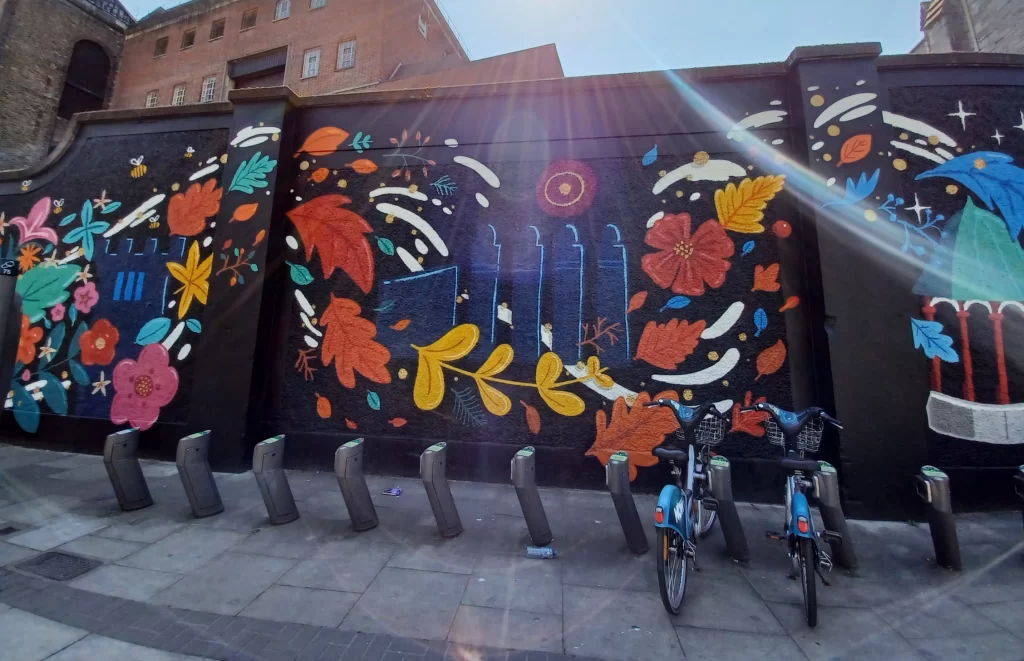
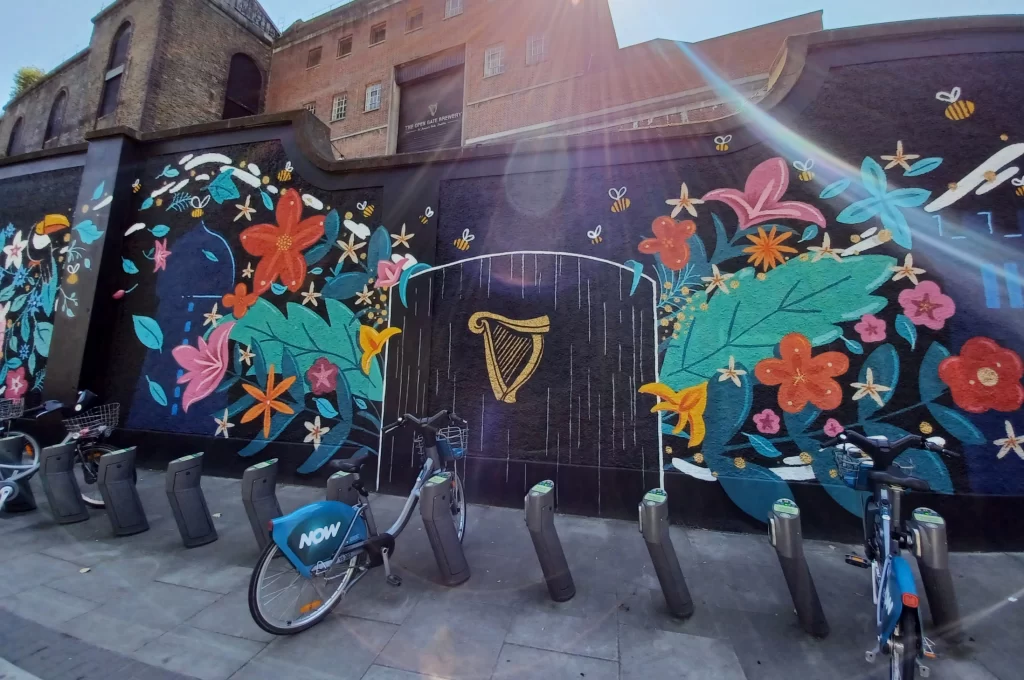
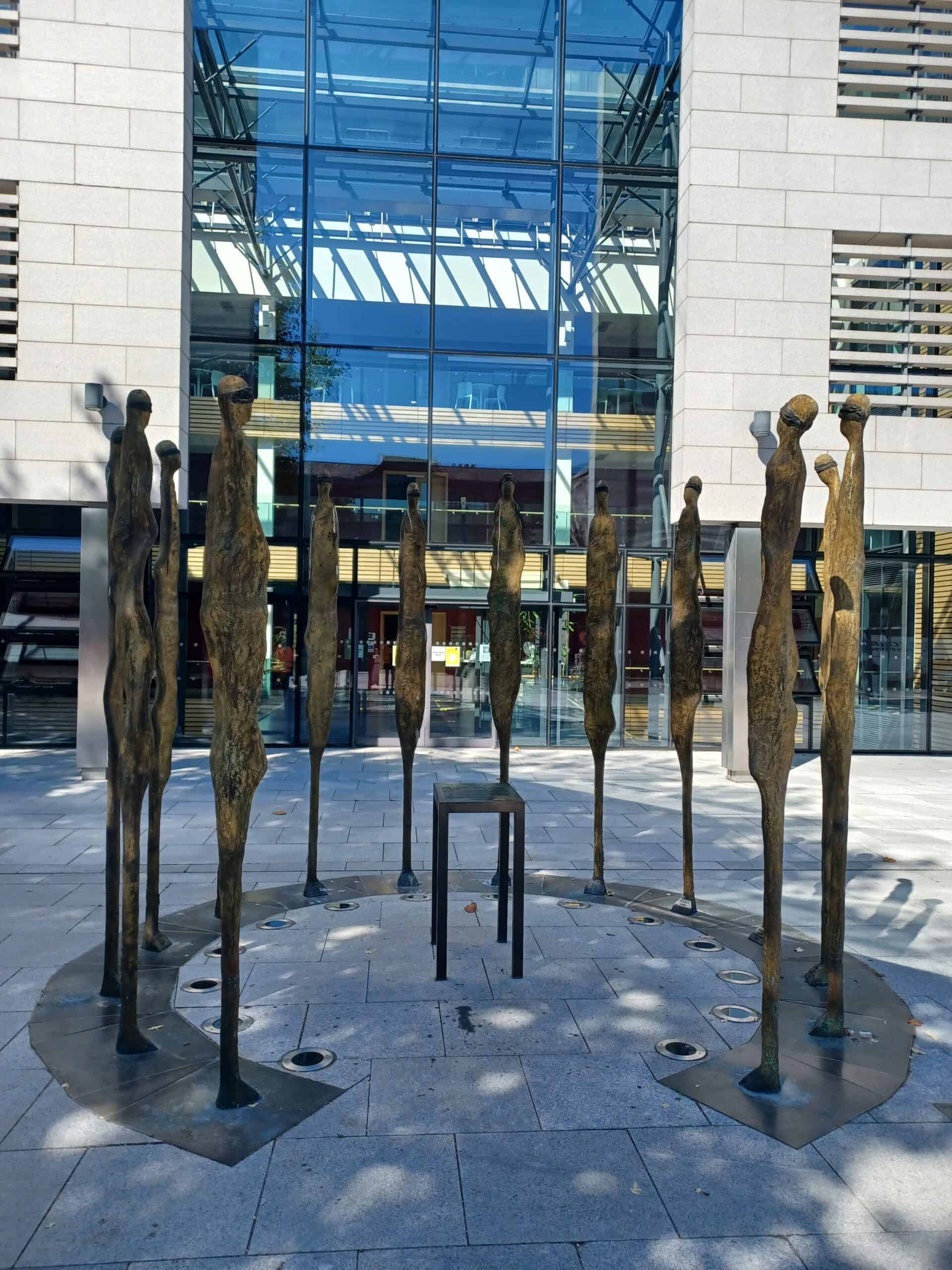
The most touching stop of this tour was Kilmainham Goal Museum. Criminals (especially revolutionaries fighting for Ireland’s independence) were imprisoned and executed here from 1796 until 1924.
In May 1916, a total of 14 Irish rebels were shot by the British Army at the Stonebreakers’ Yard of this prison, soon after the Easter Rising had occurred.
Today, visitors can look at 14 bronze sculptures across the street, which were put up to honour these brave men. They are standing in a circle, blindfolded and each one has holes where the bullets hit them.

EPIC – The Irish Emigration Museum
Address: The Chq Building, Custom House Quay, North Dock, Dublin 1, Ireland
If you want to learn more about Ireland’s history, EPIC – The Irish Emigration Museum should be on your list!
These days, more than 70 million people worldwide (many in North America, Australia or New Zealand) have Irish heritage, even if they never met their ancestors.
First, you find out why many Irish people emigrated. Reasons were extreme poverty caused by the Great Famine (1845-1852), oppressive laws from the government, civil wars, forced labour, a weak economy, or a lack of jobs. Others were looking for a romantic partner or land to buy abroad.
You can also watch lots of short movies that show the Irish emigrants’ hopes and fears, which are very moving and read some of the questions they were asked upon entering their new home land.
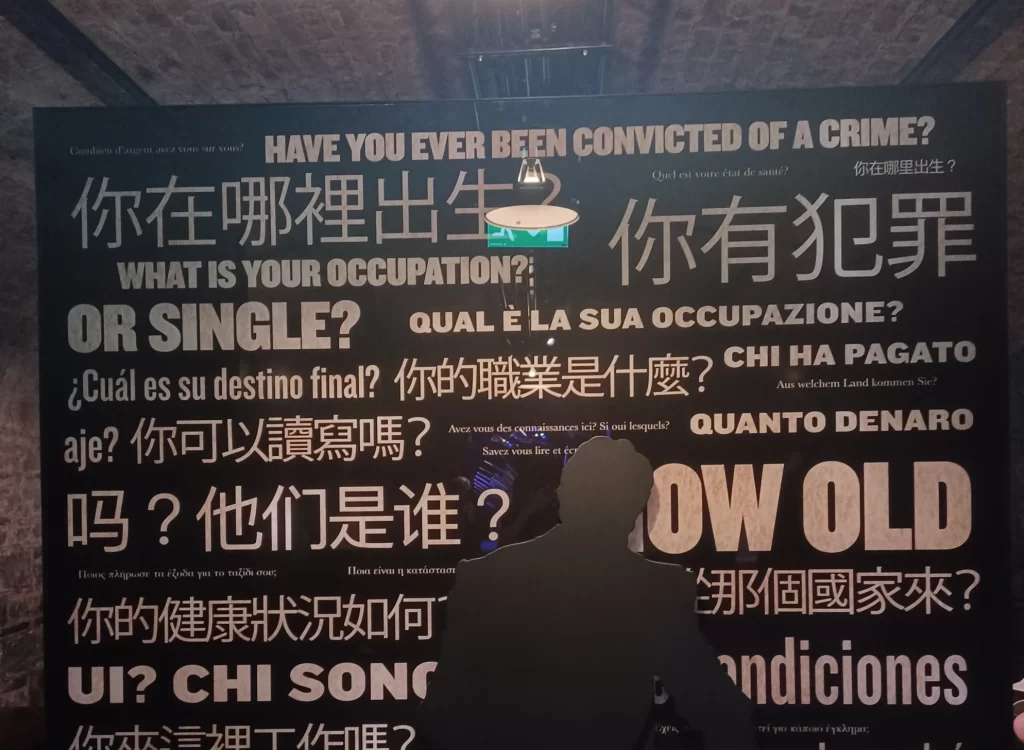
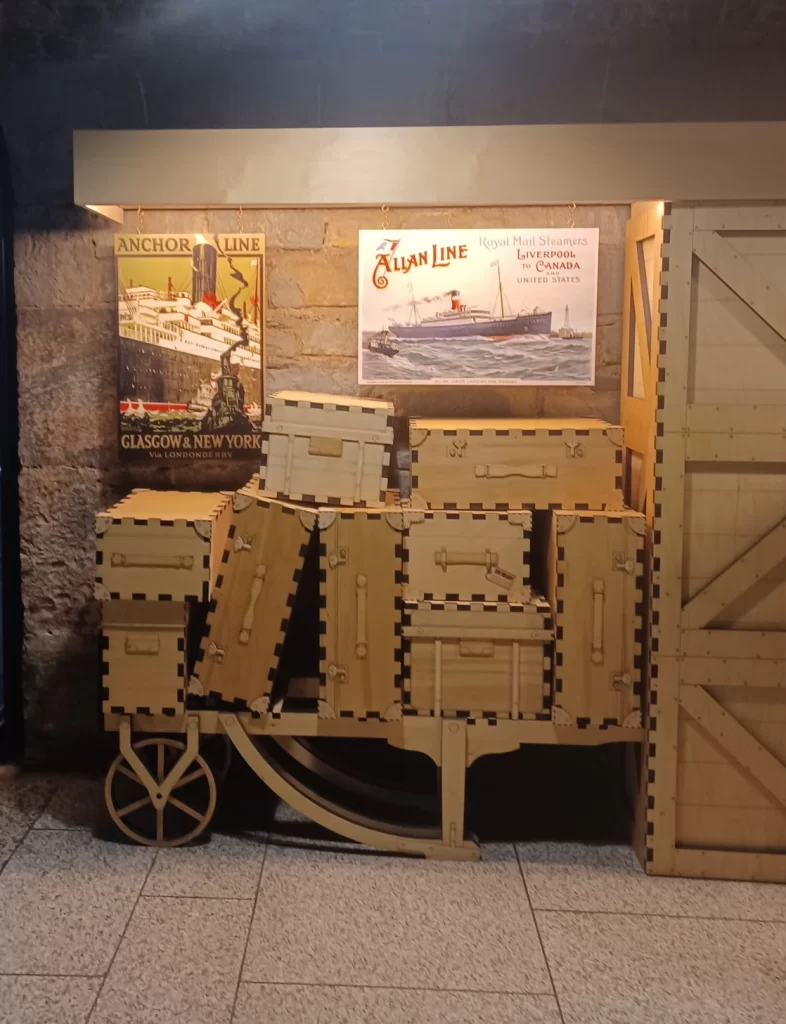
As the tour goes on, visitors learn how the Irish culture and identity have changed the rest of world. Many Irish communities were formed overseas with time and emigrants were happy to share traditional Irish music and dance with their peers. This started in the mid-1800’s.
Other Irish migrants and/or their descendants became politicians, actors, musicians, authors, journalists, directors, athletes, scientists, and so on. For example, did you know that several Canadian and Australian prime ministers and US presidents have Irish roots?
Irish food and drinks have travelled the world, too. That’s why today, we have at least one Irish pub in many bigger cities and Guinness and Jameson’s Whiskey are famous! And let’s not forget about the many St Patrick’s Day celebrations worldwide on March 17th every year!
Wow, the EPIC Museum was just awesome! Every visitor gets the EPIC Passport at the start of their tour, which gets stamped after each section is completed. You can also visit the Irish Family History Centre to find out about your Irish ancestors.
Self-guided entry ticket admission starts at 21 EUR for adults and you can download a free audio guide in various languages to your phone. The museum is also fully wheelchair accessible.
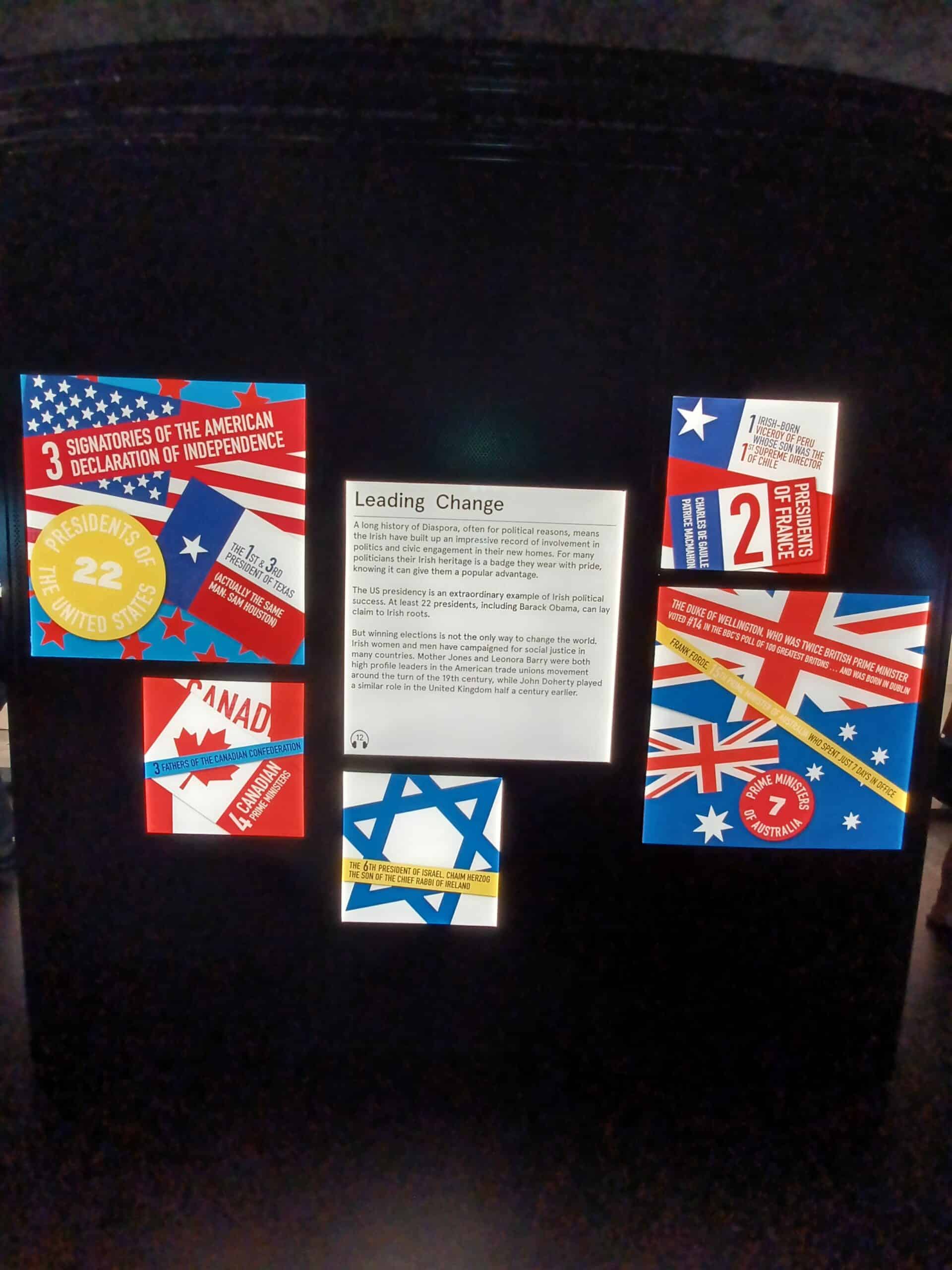
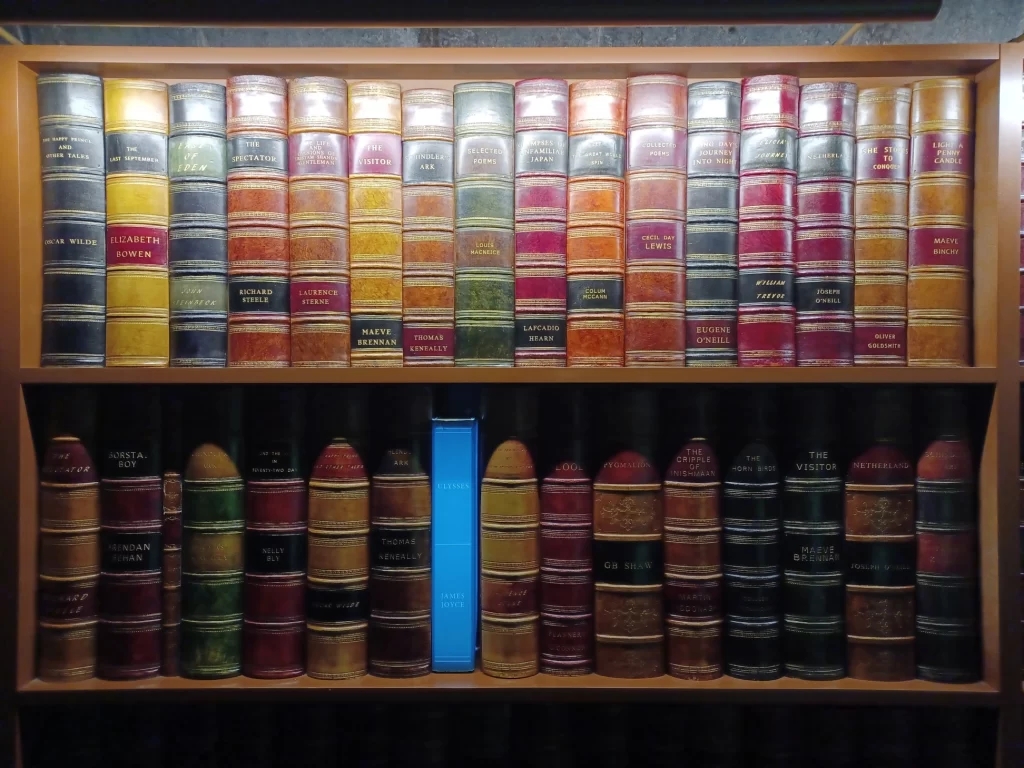
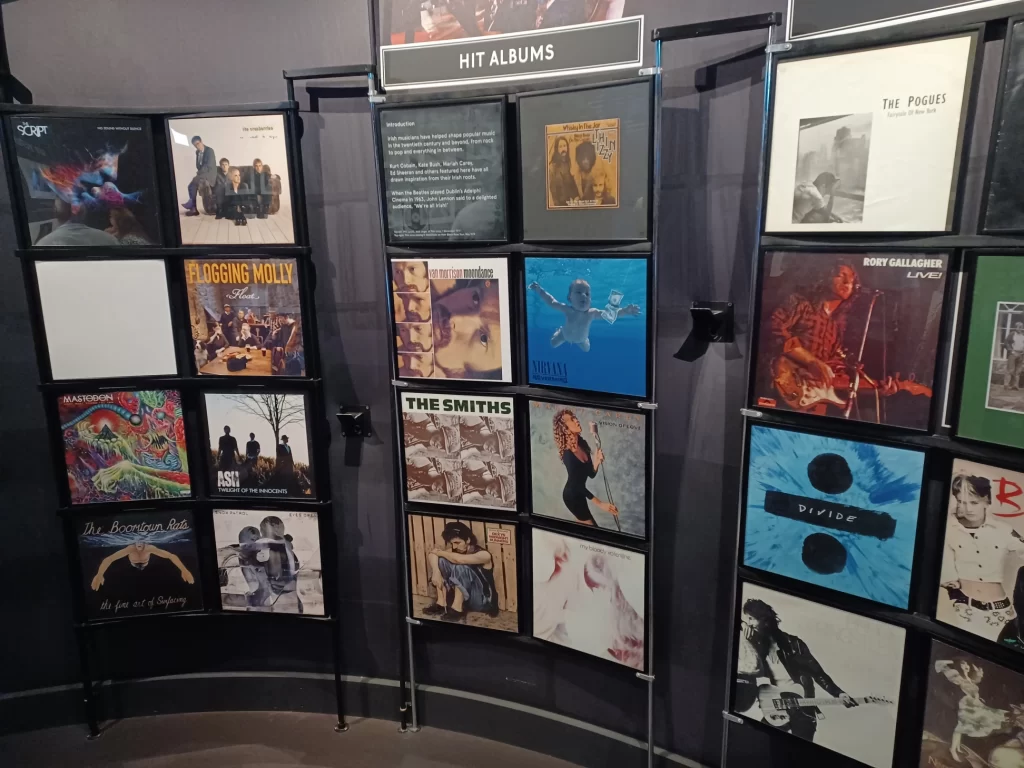
Politicians and hit albums by musicians with Irish roots and books written by Irish writers.
Samuel Beckett Bridge
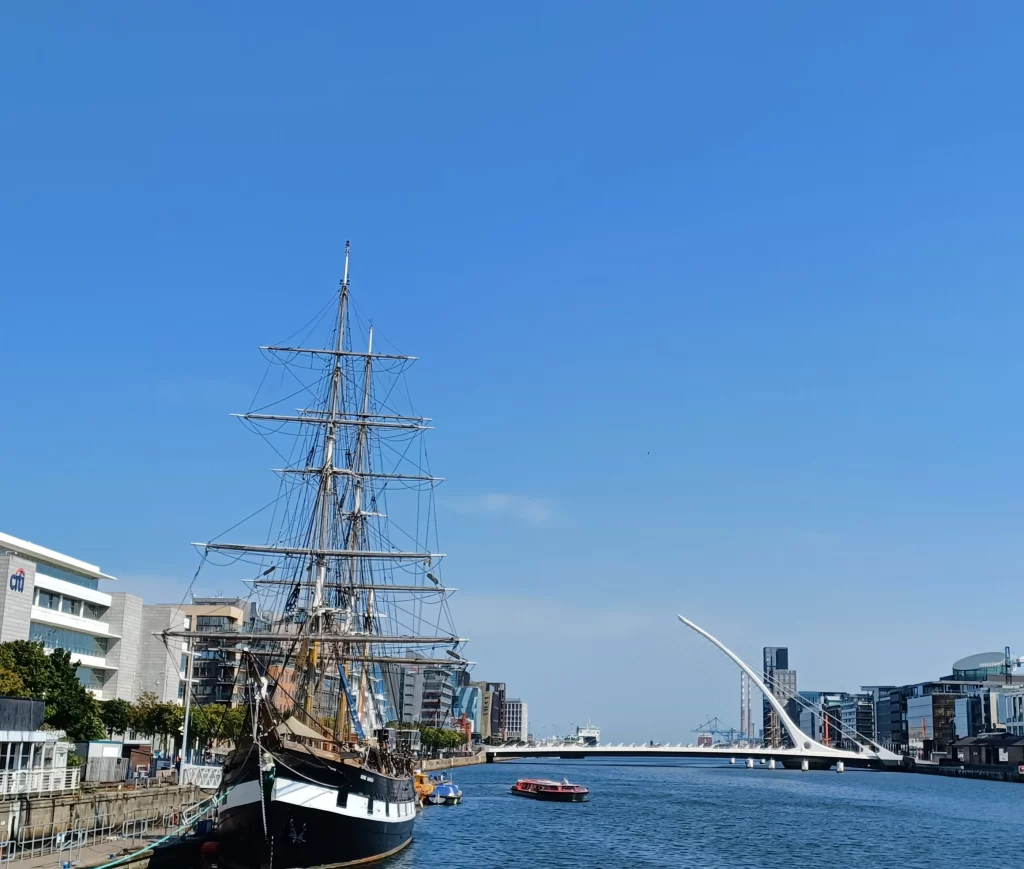
Only a few steps from the museum you can find the famous Samuel Beckett Bridge, a cable-stayed swing bridge shaped as a harp. It’s one of Ireland’s traditional musical instruments and a big part of Irish culture.
It crosses the Liffey River, is 120 meters (390 ft) long and 48 meters (157 ft) high and was completed in 2009. Since then, it has become one of Dublin’s major landmarks.

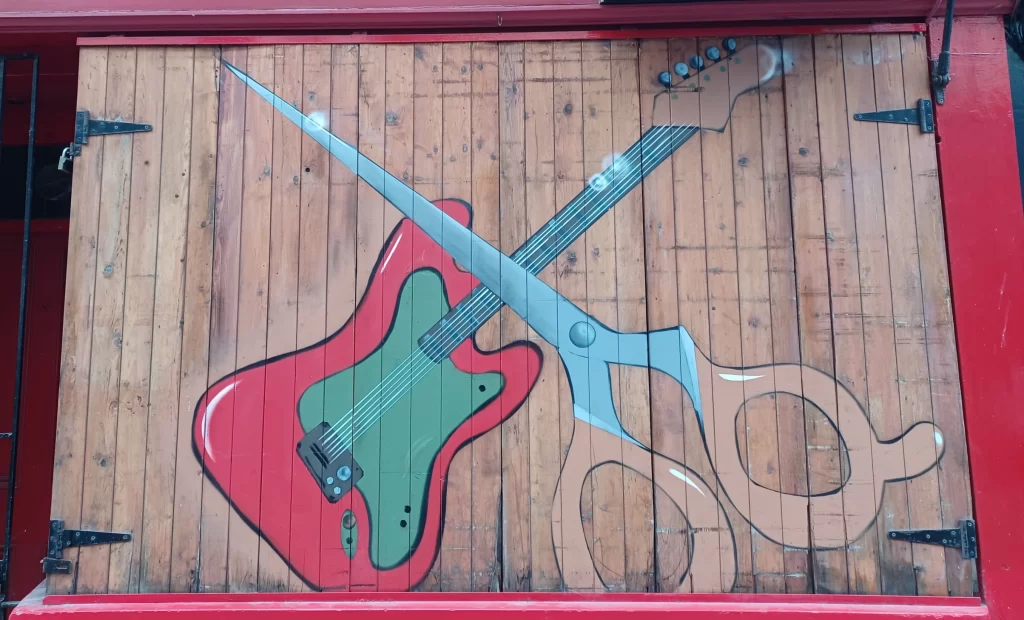
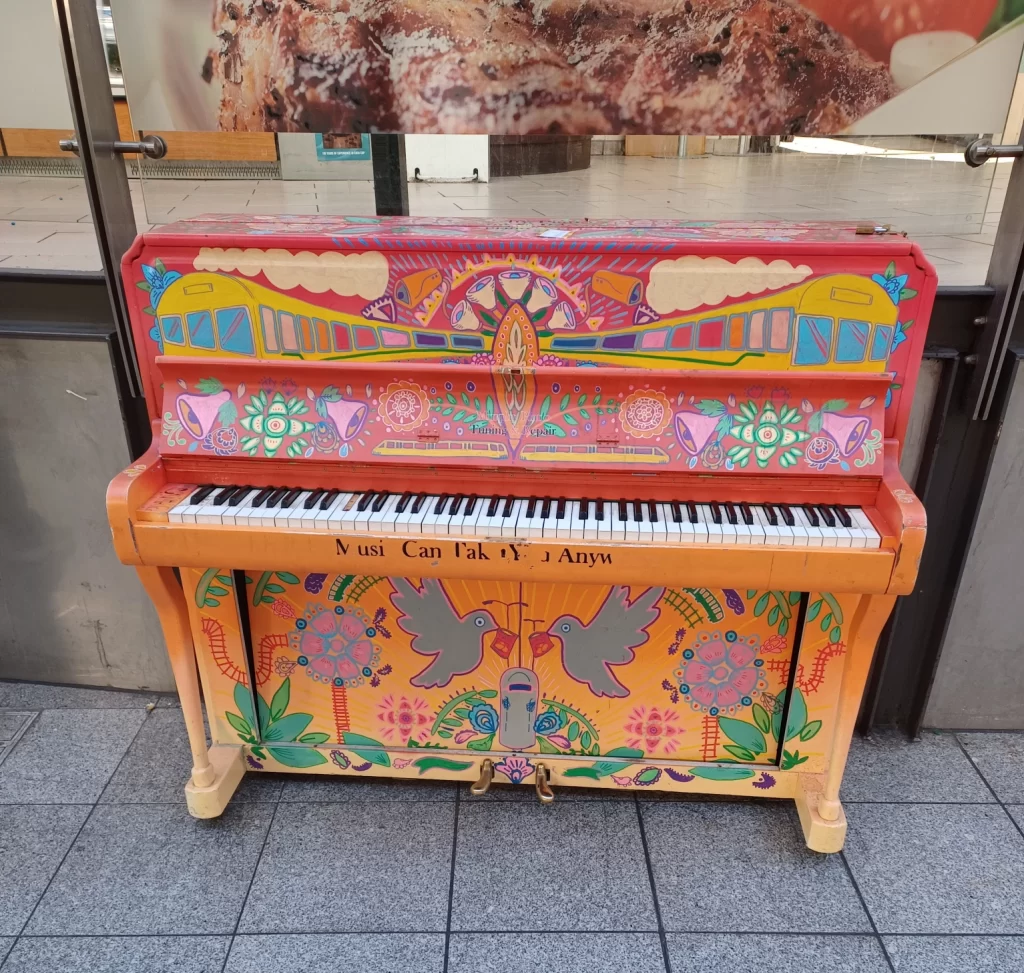
Dublin’s Street Art
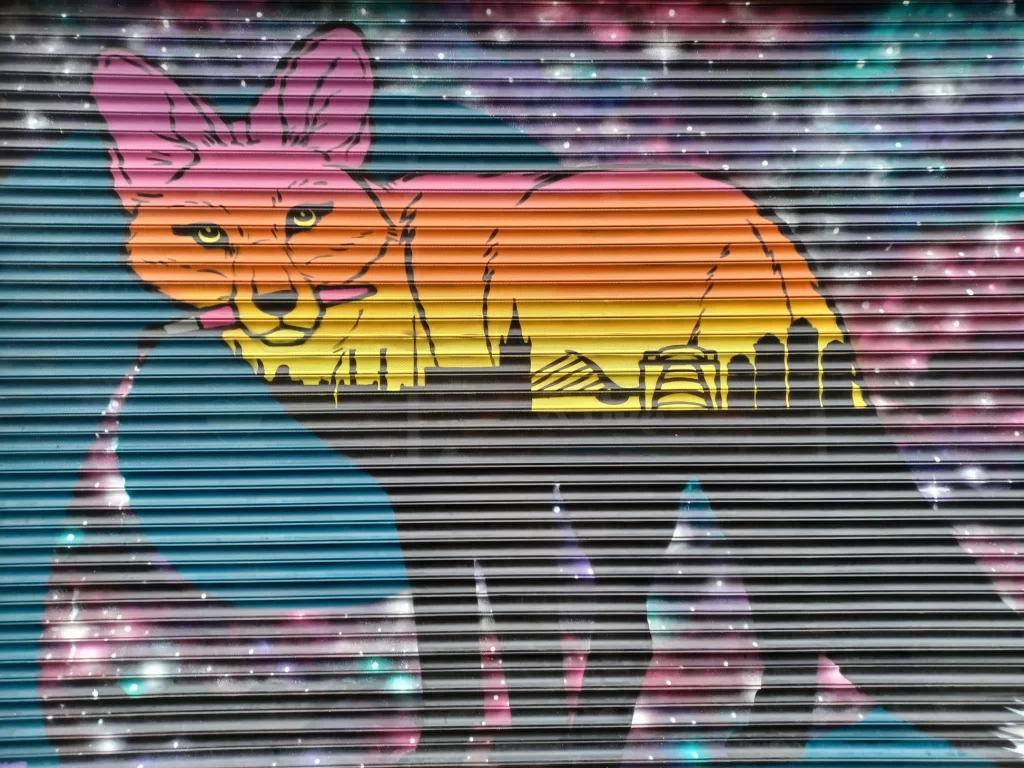
Dublin also has more cool street art to look at and we even saw a very colourful piano inside Connolly train station.
Where to Eat & Drink in Dublin
If you’re looking for craic (Irish slang for good times 😉 ), you can’t miss Dublin’s diverse food scene!
Here are our favourites:
Camden Bites & Brews
Address: 9 Camden Street Lower, Saint Kevin’s, Dublin, D02 FX67, Ireland
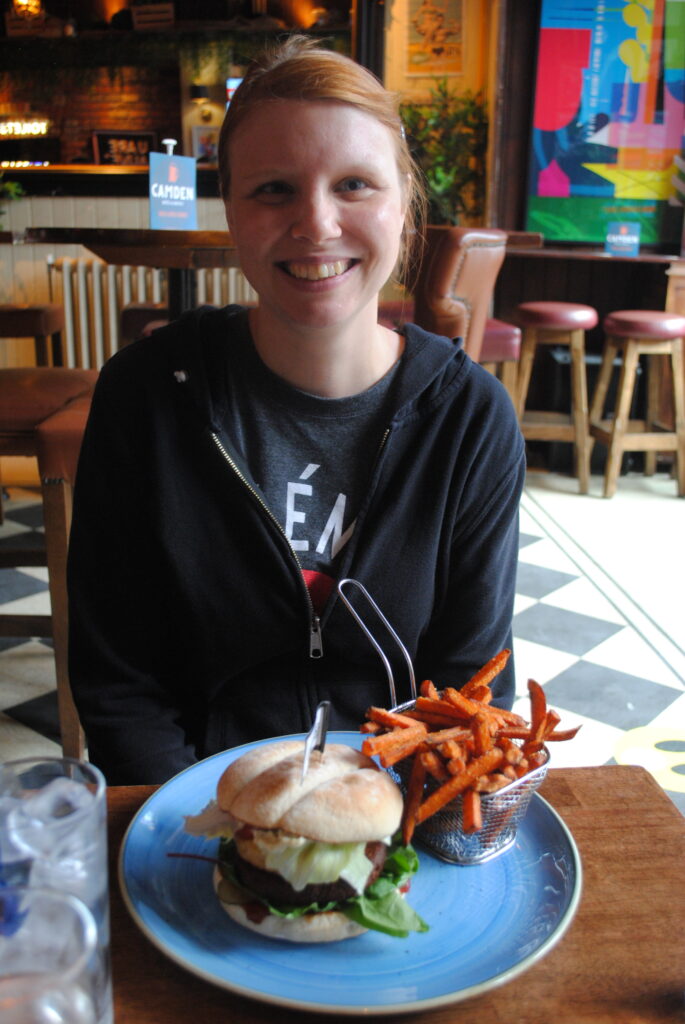
Camden Bites & Brews is a fun bar and restaurant that is known for Italian coffee and cold drinks, DJ nights, and has hosted a flea market several times.
They serve lots of pub food, like burgers, wings, Fish & Chips, calamari, and chunky fries. We had a Beef Burger and Piccolo Vegan Burger and they were really good! There’s also an outside terrace and we loved the chessboard floor design!
The Little Pyg
Address: 59 William St S, Dublin 2, D02 E521, Ireland
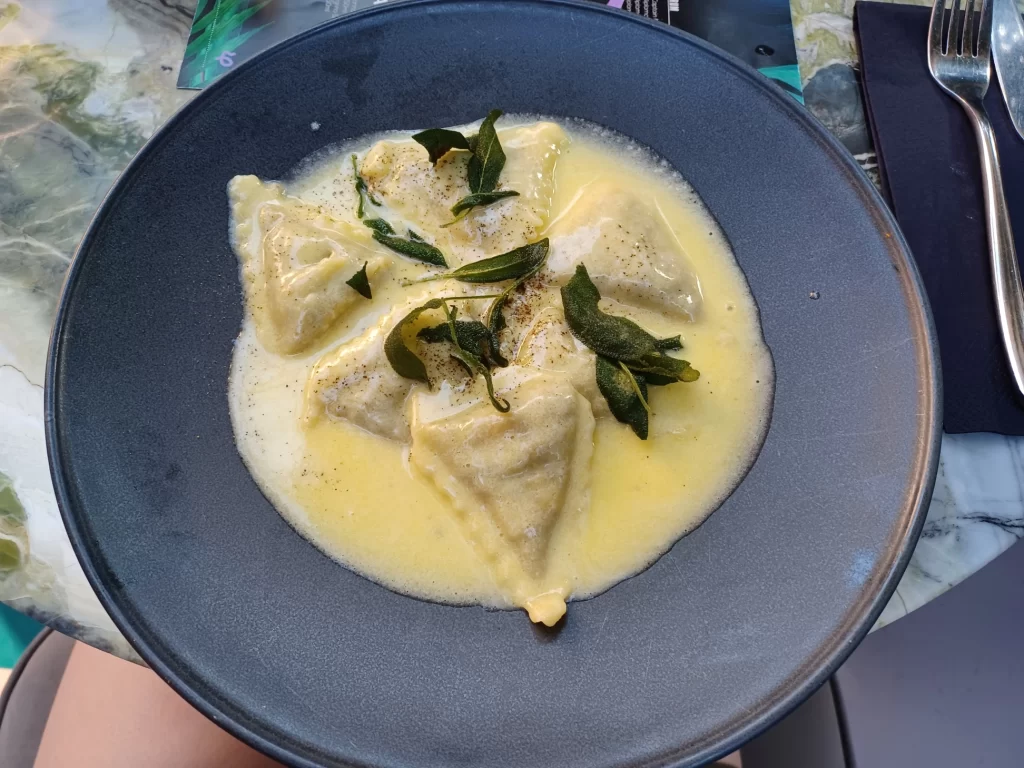
Wow, what an unusual name for a restaurant! The Little Pyg is inside Dublin’s Powerscourt Townhouse Centre and they serve authentic Neapolitan pizza, as per Michelin Maestro Enzo Coccia’s recipe.
We ordered their Tomato Soup and Mushroom Ravioli, which were very tasty, although the portions were a bit small for the price… But even though this restaurant is inside a busy mall, it’s got a chill vibe and the staff was very friendly and efficient.
The Hard Rock Café
Address: 12 Fleet St, Temple Bar, Dublin, D02 NW56, Ireland
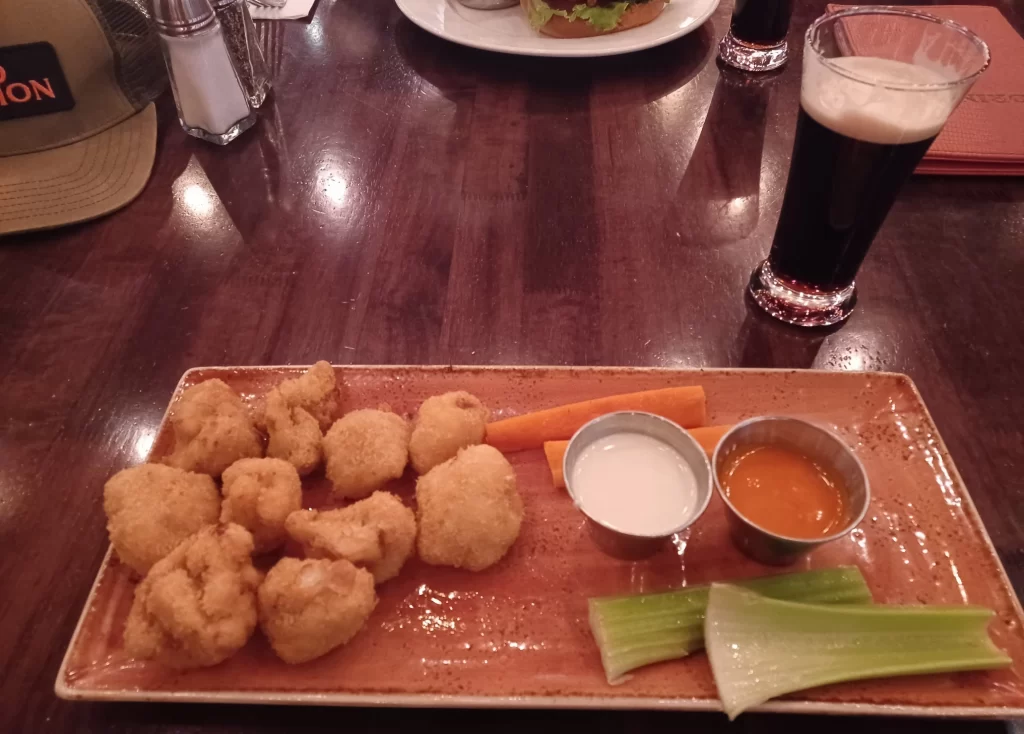
The Hard Rock Café is right in the heart of the Temple Bar district. We tried The Big Cheeseburger and Cauliflower Wings, and some Guinness. So yummy!
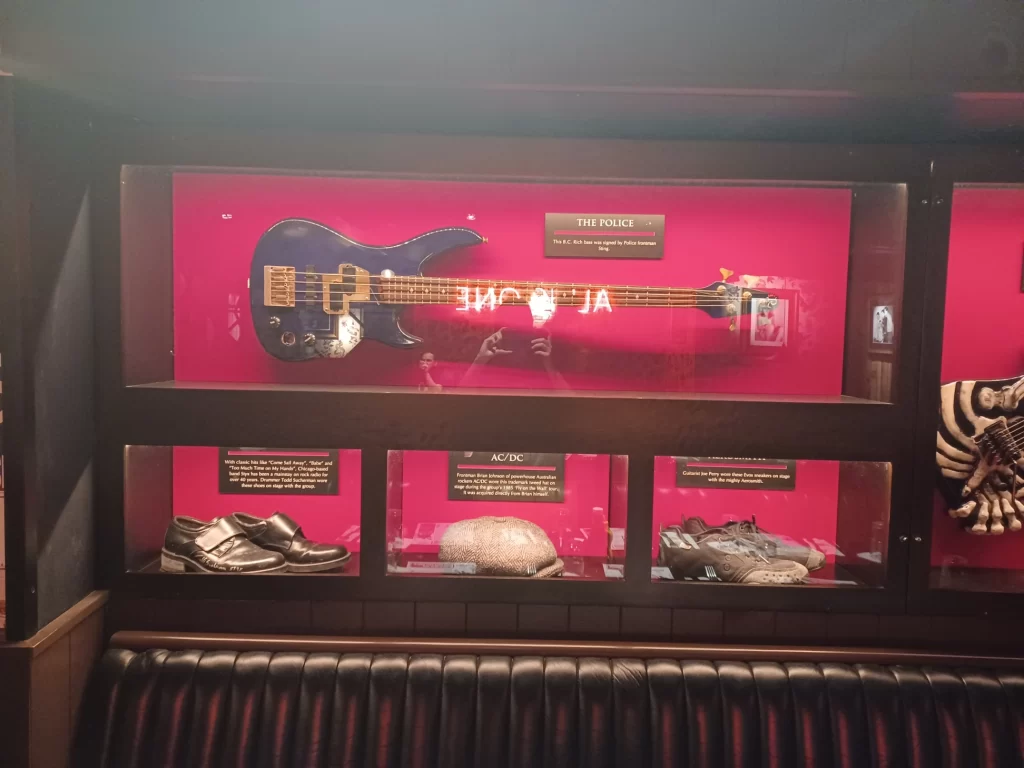
They even have a Guinness Burger. But like in any of their locations, it’s not just about the food and drinks, but also about all the Rock memorabilia on the walls.
So while you’re waiting for your grub, check out Brian Johnson’s tweed hat, Jimi Hendrix’s silk shirt, Slash’s top hat, Ringo Starr’s drumsticks, and more! There’s also a drum set hanging from the ceiling, live music happens quite often, and don’t miss the Rock Shop with its iconic merch on your way out!
Where to Stay in Dublin
Clayton Hotel – Burlington Road
Address: Leeson Street Upper, Dublin, D04 A318, Ireland
Clayton Hotel – Burlington Road has 502 rooms and suites. The rooms are quite big and have A/C and they have a very tasty breakfast buffet. Room service, a fitness room, meeting rooms, and work spaces are available, too.
There’s also a bus stop right out the door and some of them take you right to the airport or downtown.
Generator Hostel
Address: Chimney Viewing Tower, Arran Quay, Smithfield, Dublin, D07 F2VF, Ireland
Of course, Dublin also has tons of budget-friendly accommodations! I chose Generator Hostel, which is just a short walk to Temple Bar. The receptionist was very friendly and there’s a bar with live music and a café/restaurant area on site!
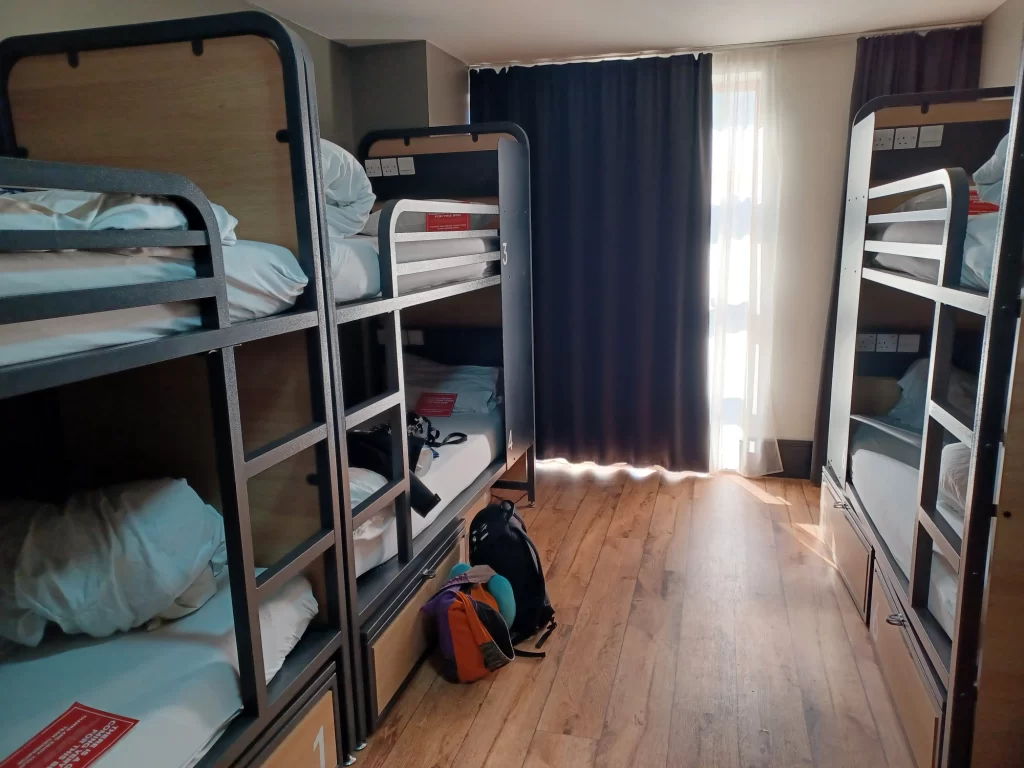
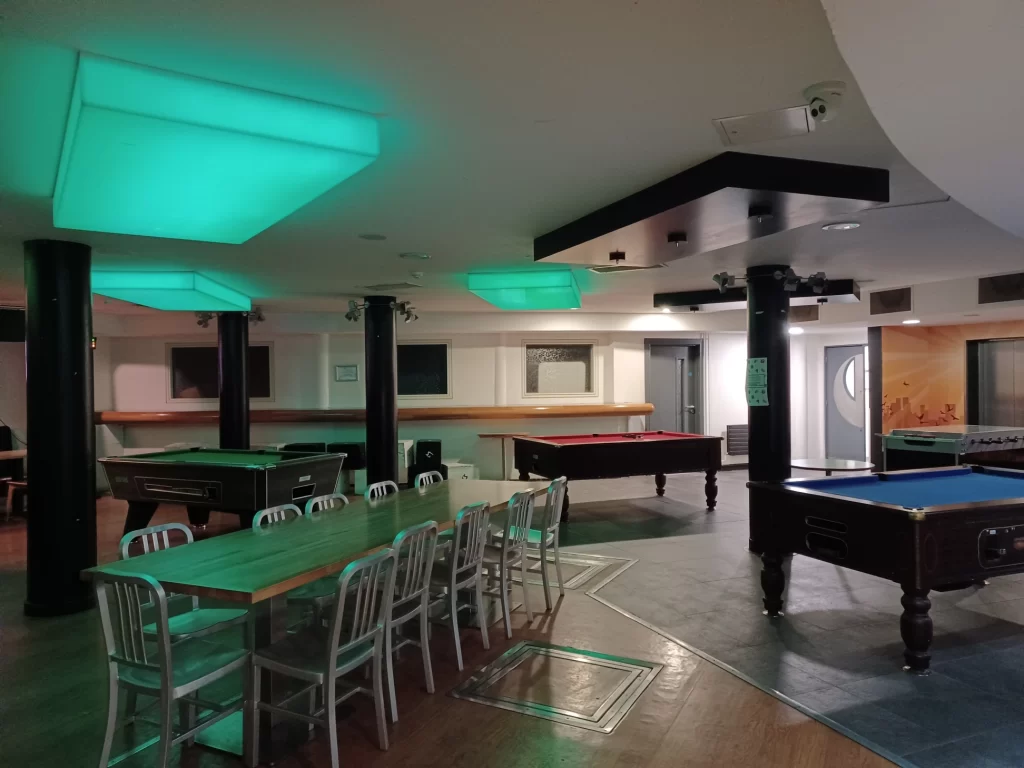
It has private or dorm rooms, a cinema room, games room, lockers, laundry, towels (for a small fee), and even bike rentals! Breakfast vouchers are available as well.
I stayed in a 6-bed ensuite female-only dorm and the bed was very comfy! I just would have appreciated a privacy curtain when I wanted to be left alone, but otherwise, it was perfect!
How to Get to and Around Dublin
Many airlines from Europe, North America, Dubai, etc. fly directly to Dublin Airport, Ireland’s busiest airport.
Dublin Express #782 and Aircoach #700 go from/to the city centre in 30 to 40 minutes.
Dublin’s public transportation system is very good and double-decker buses go pretty much anywhere in the city. Please note that no change is given back if you pay with the bus driver. Also, it’s important to wave when the bus approaches, otherwise, it may just go by you!
Dublin also has a light rail system (trams) called LUAS. It has two lines that go to Central Dublin and some residential areas (mostly in the south and southwest of the city).
For travel to the suburbs, use the DART trains and Commuter Trains to satellite towns in the Greater Dublin Area, which are operated by Irish Rail. DART goes along the coast side close to Dublin (e.g. Malahide, Howth and Greystones).

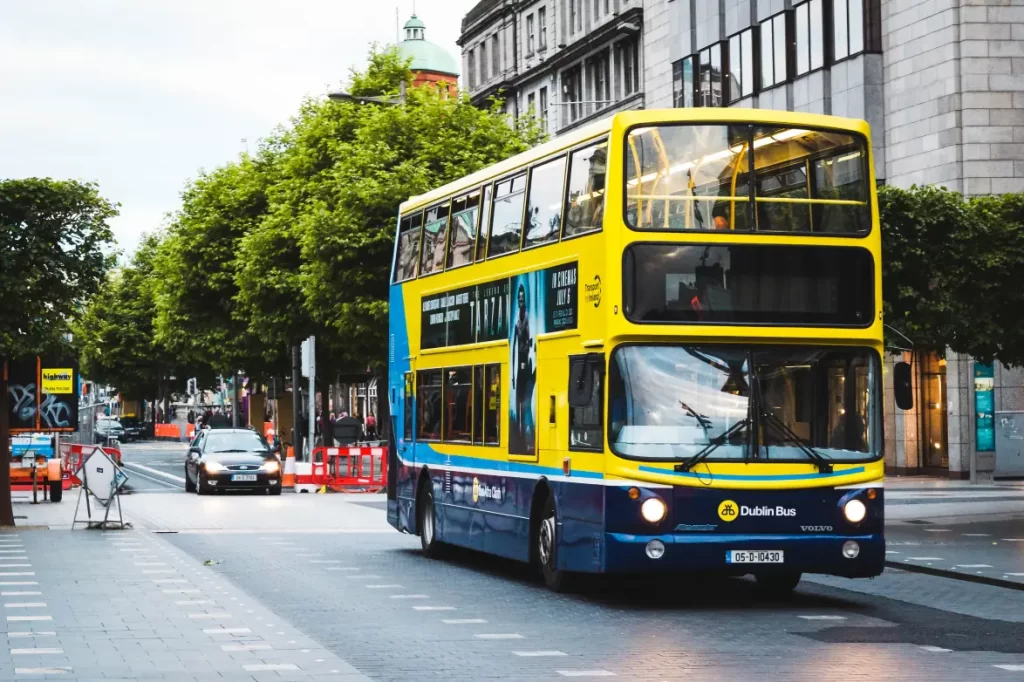
If you’re in Dublin for at least 24 hours, it’s best to buy a Visitor Leap Card, as it’s cheaper than buying individual tickets. You can buy it online, at Dublin Airport, or their Dublin Central office. It offers unlimited travel on buses, LUAS trams, and DART and Commuter Trains.
If you’re just staying in and around Dublin, renting a car is not necessary. Traffic is often very busy and parking spots can be hard to find and expensive. Moreover, driving on the left side of the road can be a challenge for tourists who are not used to this.
You can also join a bike tour or walking tour of Dublin to get lots of insider information from a local guide. Or renting a bike or just walking around are great ways to explore the city as well, especially because many attractions are within the City Centre.
Conclusion: My Opinion on Dublin
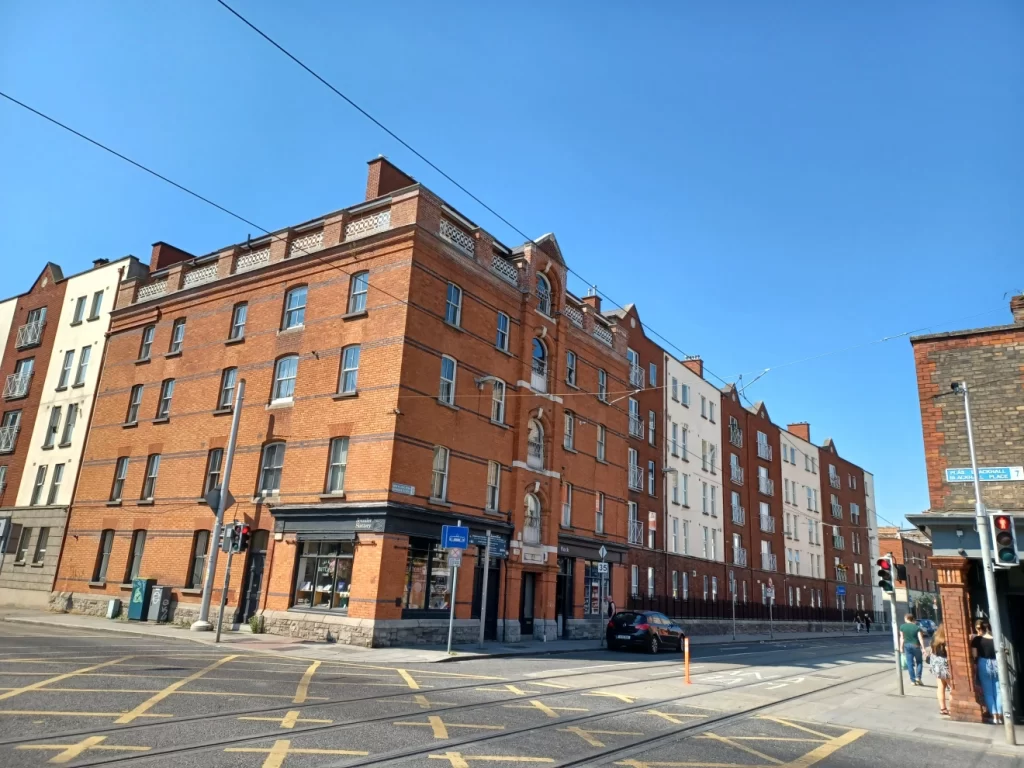
Wow, we loved our stay in Dublin! It gave us a great first impression of what Ireland is like. The many red brick buildings were very cool as well.
We also met some friendly Dubliners who made us feel very welcome in their city. They all had cool stories to tell and their sense of humour made us laugh a lot!
My favourite things to see and do in Dublin are the Irish Rock’n’Roll Museum and the EPIC Museum, hanging at the parks, and shopping at George’s St Arcade.
Although it rains a lot in Dublin, there are lots of indoor things to do, whether it’s shopping at a mall, touring one of the many museums, or hanging and drinking at a pub, lol! So bring some rain gear and just hope for the best! 😉

If your kids are joining you on your Dublin trip, don’t miss Christine’s post.
For other cool places in Ireland, check out these blog posts below:
How To Spend A Day in Athlone, Ireland
A 3-Day Travel Guide for Killarney, Ireland


Writing and traveling have been my passions for 25+ years, so I launched this travel blog in May 2020. I love writing travel guides about amazing destinations and I'm passionate about music tourism and animal-friendly and sustainable travel.
So far, I've been to 20 countries on five continents, and Japan and Iceland were my favourites!
- THE TOP 5 THINGS TO DO IN KAMAKURA: THE PERFECT SIDE TRIP FROM TOKYO - March 1, 2026
- ONE DAY IN NAPIER: THE 10 BEST THINGS TO DO INTHE ART DECO CAPITAL OF NEW ZEALAND - February 8, 2026
- A DAY TRIP TO MILFORD SOUND: NEW ZEALAND’S TOP NATURAL ATTRACTION - December 27, 2025