
Rotorua is a city in the Bay of Plenty region on New Zealand’s North Island. It’s nestled along the southern shore of Lake Rotorua, the second largest lake on the North Island. Maori people first settled in this region in the 14th century and the first Europeans arrived in the early 19th century.
Soon after, Rotorua was turned into a spa town thanks to its unique geothermal activity. Rotorua has been a tourist hot spot since the 1800’s. There’s a “rotten eggs” (hydrogen sulfide) smell lingering all over Rotorua, that’s why its nickname is the Sulphur City.
After hearing about Rotorua’s breathtaking attractions (e.g. geothermal mud pools and hot springs, fascinating Maori culture, stunning forest areas, and great shopping), stopping here on my New Zealand trip in May 2025 was a must!
While many tourists rent a car to get around New Zealand, spending 36 Hours in Rotorua Without a Car is totally possible.
Disclosure: I only recommend products that I’ve used in the past, and all opinions expressed in this post are my own. This post contains affiliate links. If you use one of the links throughout the page to buy something, I may earn a small commission at no extra cost to you. Thank you!
The Best Things to See and Do in Rotorua
Visit Whakarewarewa Forest
Address: 1 Long Mile Road/Titokorangi Drive, Whakarewarewa, Rotorua 3074, New Zealand
Many outdoor fans flock to New Zealand every year – and for good reason, as lots of its flora and fauna can only be found here! In Rotorua, one of the best examples for natural assets is Whakarewarewa Forest (aka The Redwoods, as the locals call it).
With more than 160 km (100 miles) of trails, this 5,600 hectare forest is a paradise for hikers, mountain bikers, horse riders, runners, and walkers of all ages and fitness levels. Walking trails range from 2 km to 11.5 km (1.2 to 7.1 miles) and some paths are stroller and wheelchair accessible in dry conditions.
Whakarewarewa Forest’s major attraction are the towering Californian Coastal Redwoods, which are more than 120 years old and up to 75 meters (246 ft) high!
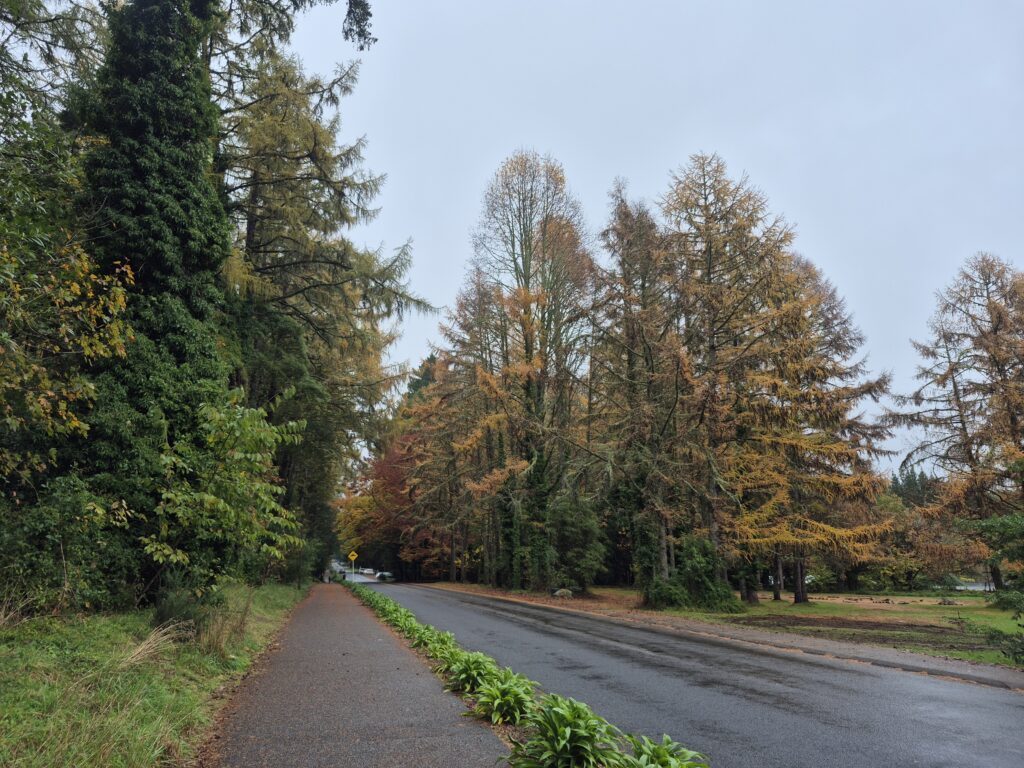
Other exotic and native plants growing here are Ferns, Radiata, Douglas Fir, Eucalyptus, and Larch trees. It’s completely free to walk or bike on these stunning trails. It was a bit drizzly during my visit, which created a rather mystic vibe, kind of similar to forests I’d visited in Japan!
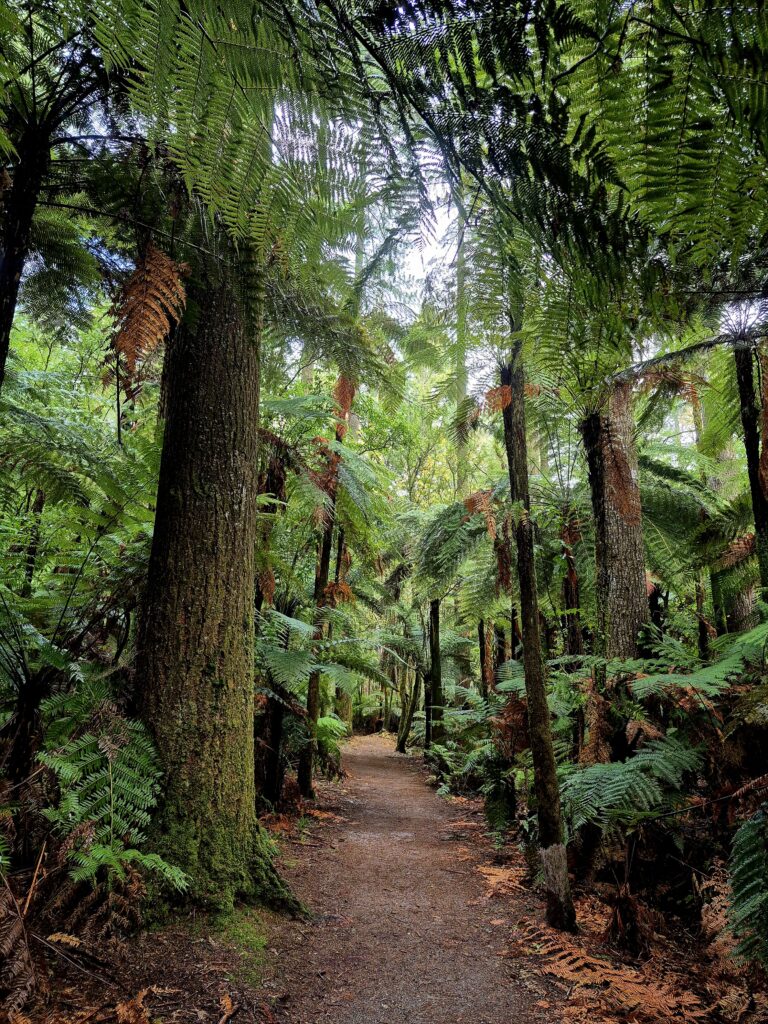
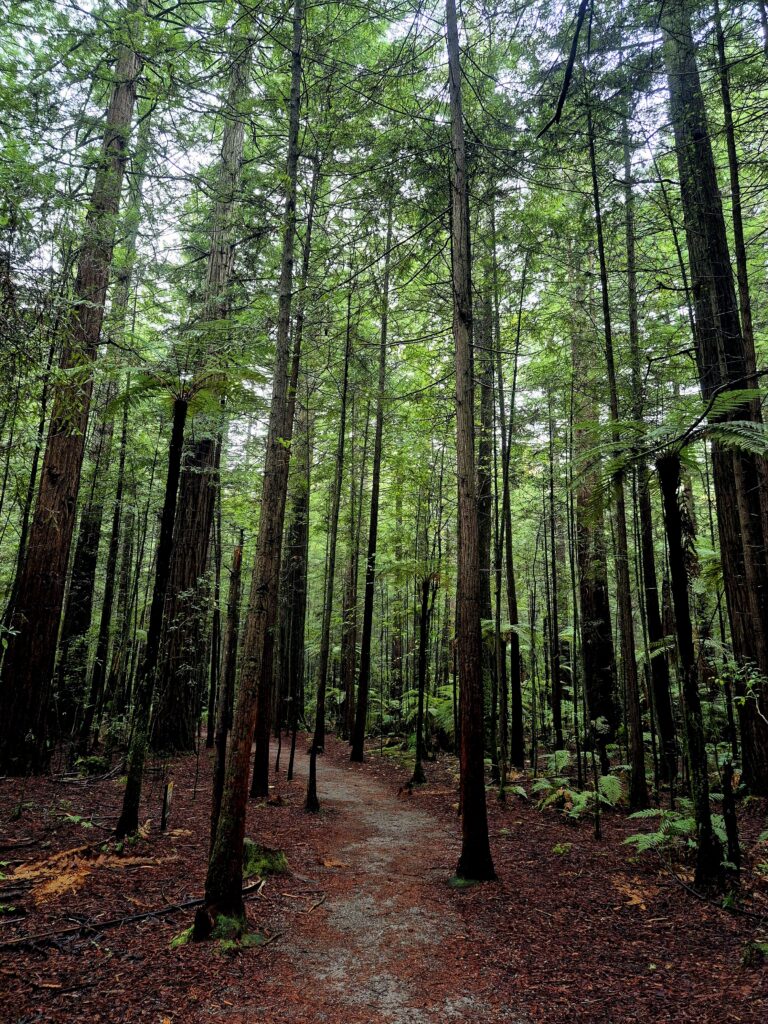
Walking on Mokopuna Trail at Whakarewarewa Forest was so peaceful! 😀
If you feel adventurous, consider adding the Redwoods Treewalk to your experience. This treetop path is 20 meters (65 ft) above ground and consists of 28 suspension bridges that are built around the Redwood trees. This way, you’ll see how tall these trees really are!
It usually takes 30 to 40 minutes to complete the Redwoods Treewalk. You can choose between the Daytime (NZ$ 42 pp) or Nightlights Treewalk (NZ$ 52 pp). Since this activity is very popular, it’s best to reserve online before your visit.
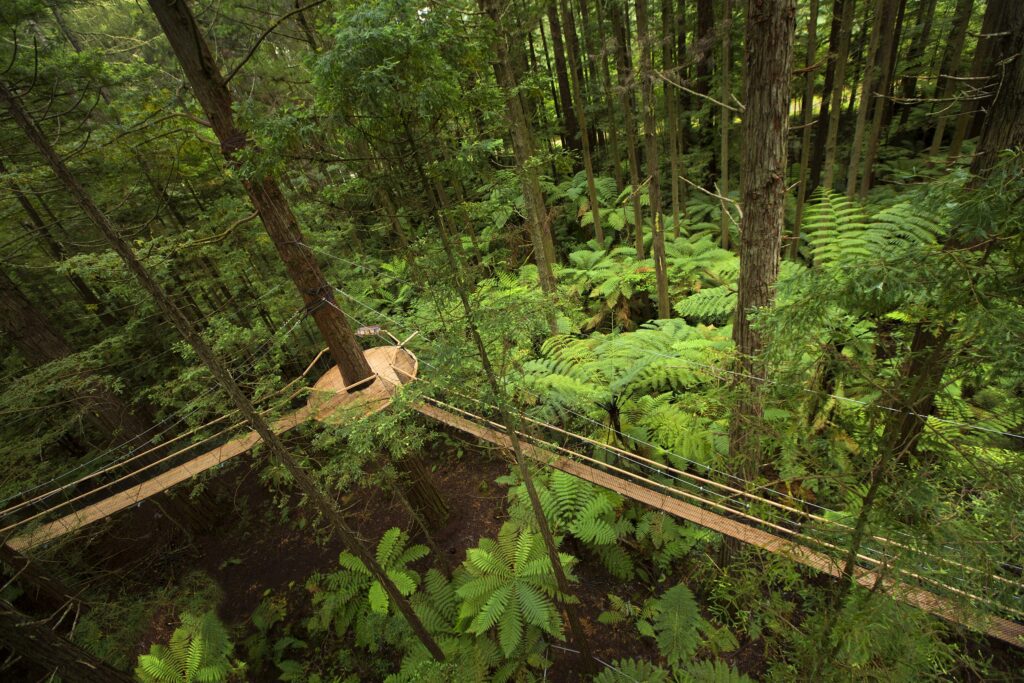
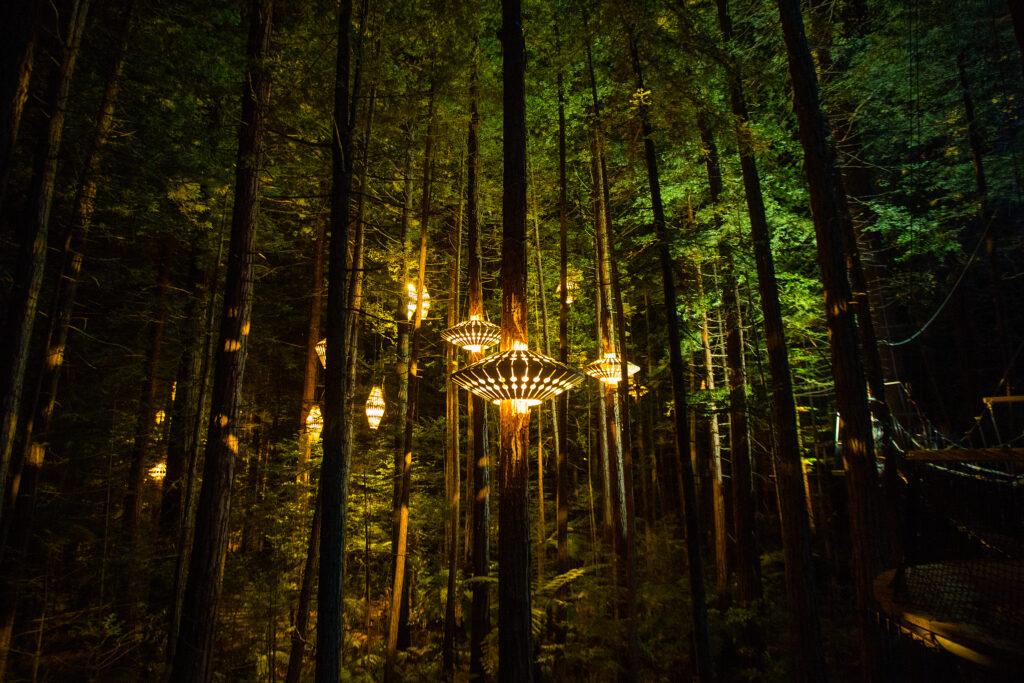
Redwoods Treewalk during the day and night. Photo credit for both: Redwoods Treewalk/Tourism NZ Visual Library.
For the ultimate thrill, look at Redwoods Altitude, a 2.5-hour guided experience up in the trees. It includes 25 jungle bridges, three flying foxes (ziplines), and two spirals, all at 25 meters/82 feet above the ground! It starts at NZ$ 125 per person.
It’s around 35 minutes from Rotorua’s city centre to Whakarewarewa Forest without a car (via local bus #3 and walking). If you’re driving, it only takes about 10 minutes to get here.
Explore Kuirau Park
Address: 1371 Pukuatua Street, Ranolf Street, Rotorua 3010, New Zealand
Just a short stroll from downtown Rotorua sits stunning Kuirau Park. It’s the only public park in New Zealand where you can see breathtaking geothermal activity (i.e. boiling, bubbling, and steaming in many spots) for free!
Kuirau Park has several paths that lead visitors to its crater lake, mud pools, hot springs, and a free thermal foot bath. The latter is a great way to relax for a bit while exploring Rotorua (just bring a towel)!
There are also flowerbeds, native plants, and lots of trees all over the park. I was lucky to visit Kuirau Park on a partial sunny day and the fall foliage was so pretty!

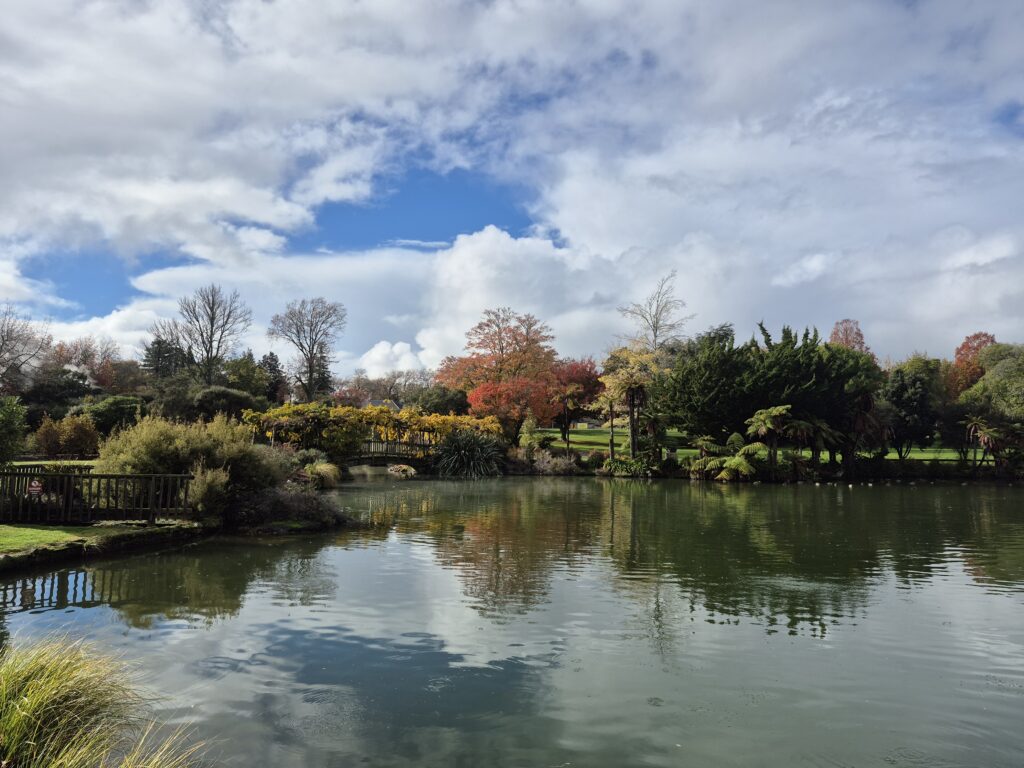
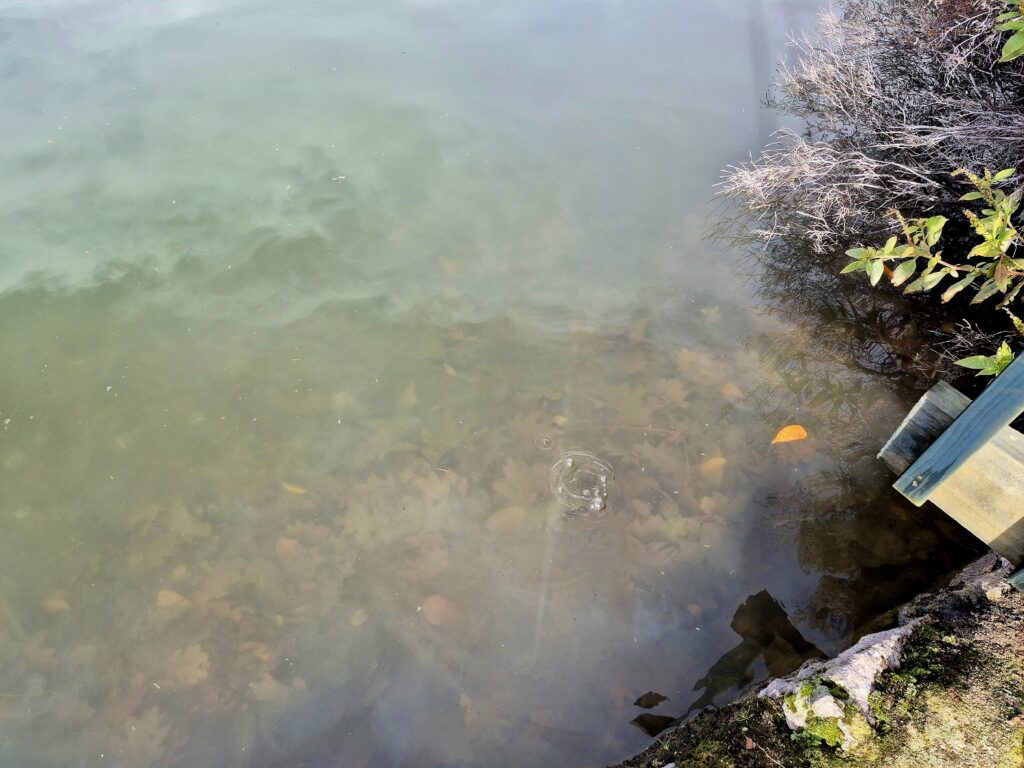
Watching tiny bubbles rising up to the mud pool surface at Kuirau Park was so much fun!
Kuirau Park is also popular with locals and visitors for having a barbeque or picnic, and there’s a playground, too.
Finally, if you’re in Rotorua on a Saturday, check out the Farmers Market at Kuirau Park for some local vendors and food trucks! It goes from 6 am to 1 pm every week.
Hell’s Gate Geothermal Reserve & Mud Spa
Address: 351 State Highway 30, Tikitere, Rotorua 3010, New Zealand
If you want to see more mud pools and geothermal activity, check out Hell’s Gate Geothermal Reserve & Mud Spa. Also known as Tikitere in the Maori language, this is the only Geothermal Reserve owned by indigenous people in the region. Besides, Hell’s Gate is New Zealand’s most active geothermal reserve.
This reserve originated about 10,000 years ago. Maori warriors started bathing in its mud pools about 800 years ago to heal wounds from their battles. Today everyone is welcome to soak in these baths, which are rich in nutrients and a great way to soothe inflammation or arthritis pain.
Tikitere first opened as a spa in 1871. Irish playwright George Bernard Shaw visited in 1934 and said “This could be the very Gates of Hell”, but he couldn’t be more wrong! Apparently, the Maori people thought this was funny, so they decided to call it Hell’s Gate in English.
Here are the experiences you can book at this unique place:
Hell’s Gate Geothermal Walk & Maori Carving session
First, I recommend checking out the Geothermal Walk, which includes many bubbling mud pools, erupting waters, an active mud volcano, land coral, a short bush walk with native plans, and Kakahi Falls, the highest hot waterfall of the Southern Hemisphere!
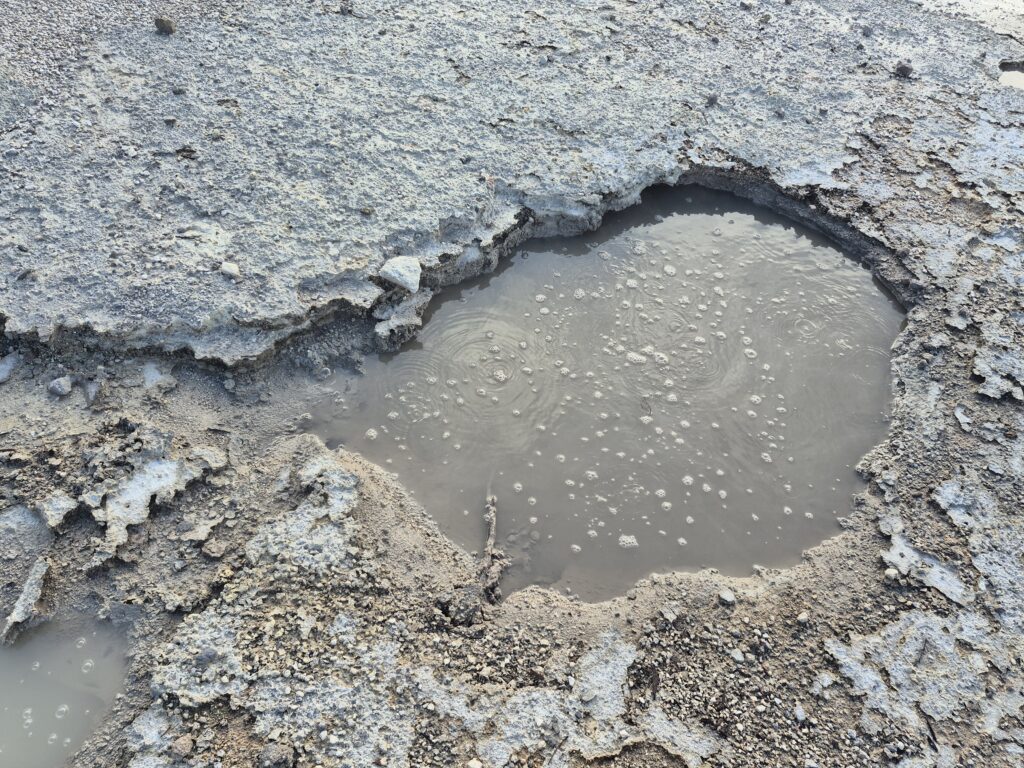
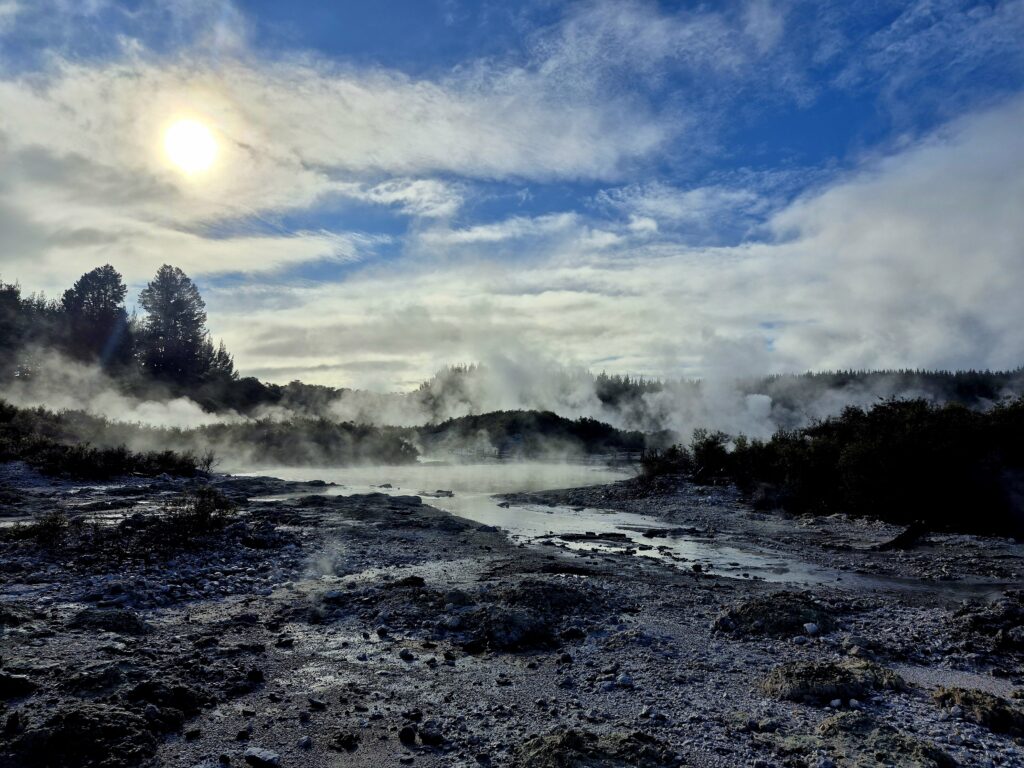
Geothermal steam is rising up pretty much everywhere here and visitors can book a self guided or guided tour of this unique area. Self guided tours take 1 to 1.5 hours and guided tours take 1.5 to 2 hours.
Visitors must stay on the designated walking paths at all times.
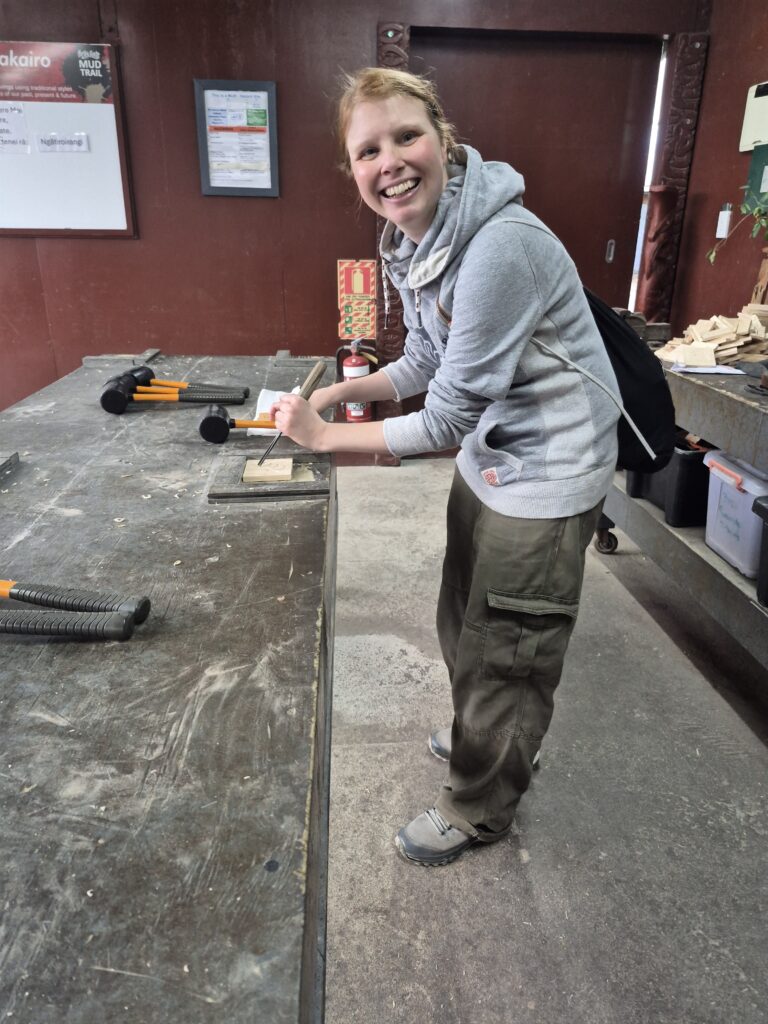
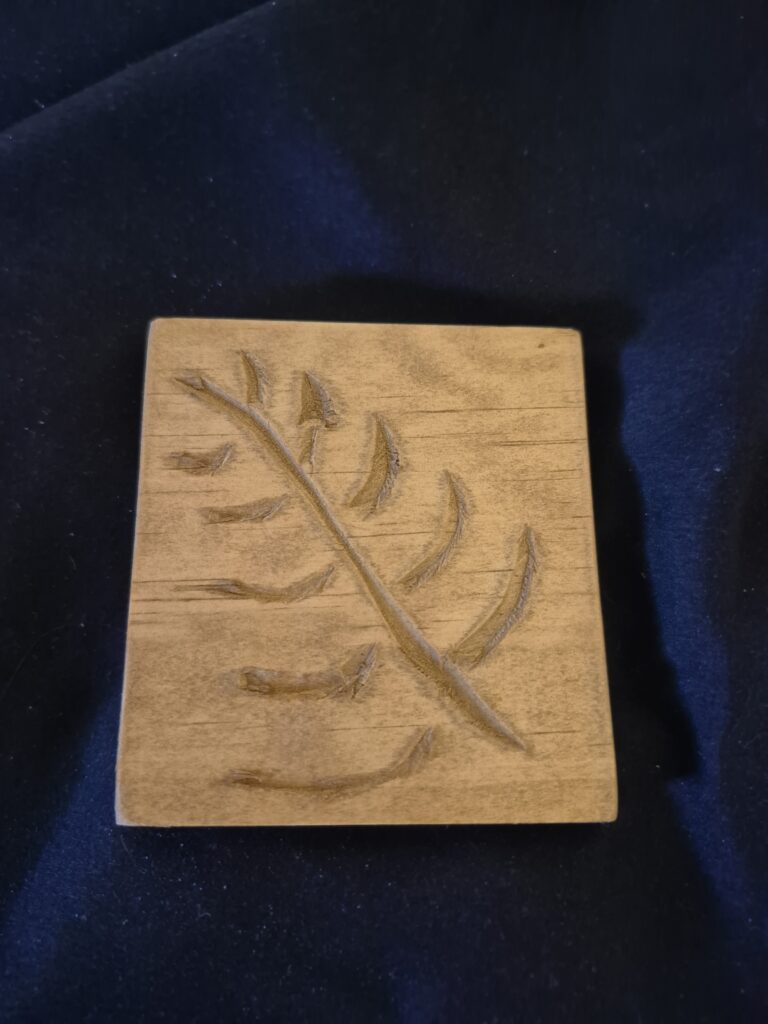
At the end of the Geothermal Walk, be sure to stop at the Carving House to try your luck at Whakairo (Maori wood carving)! There are several Maori carving patterns to choose from.
While wood carving is more difficult than it looks, it usually gets easier after practicing for a few minutes. In the end, visitors are allowed to take their carving home. What a special souvenir to bring back from New Zealand!
Hell’s Gate Mud Bath & Spa
After all this excitement, your body deserves to soak in the famous geothermal mud baths! Bathing and lathering your skin with mud water is a great way to help with inflammation and arthritis pain, but also to relax and chat with other visitors. Besides, your skin will feel super soft afterwards.
Mud bathing is only possible for twenty minutes for health and safety reasons, but you’re welcome to relax at Hell’s Gate Sulphur spa pool as long as you like. Also, if you dare, try out their Cold Plunge pool!

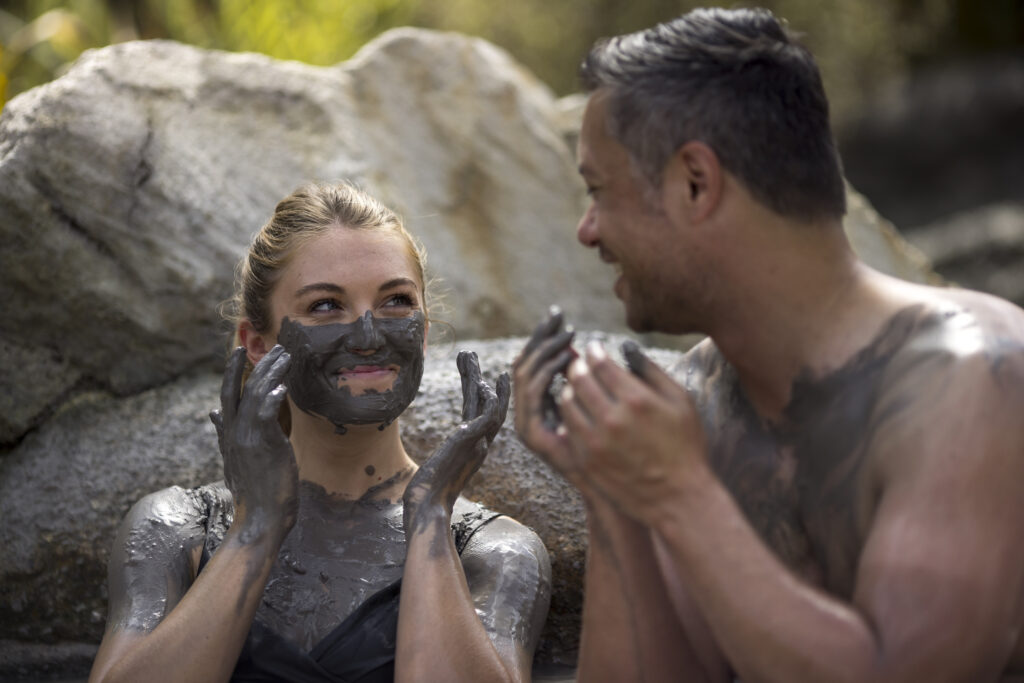
Finally, visitors can book the Hell’s Gate Twilight Spa Experience. This includes mud bathing, soaking in the Sulphur spa, and Cold Plunge pool under the stars, which sounds like a cool experience as well!
Visitors can wear their own swimsuit or rent or buy one at the reception. Towels are available as well.
Hell’s Gate Geothermal Reserve & Mud Spa is about 30 minutes outside of Rotorua. While no public buses go here, visitors without a car can take their free shuttle bus from downtown and return. This service has to be booked directly (or at the Isite Tourist Info in downtown) in advance.
While the Hell’s Gate Experience (Geothermal Walk, Mud baths, Sulphur bath, and Maori carving) is a bit pricey (115 NZ$ per person), it’s really worth it! This is a unique experience that surely you will never forget!
Rotorua Lakefront Boardwalk
Address: Lakefront Drive, Ohinemutu, Rotorua 3010, New Zealand
Another fun thing to do in Rotorua is going for a stroll or bike ride on the Lakefront Boardwalk. Located inside the War Memorial Park, this is an awesome opportunity to explore the outdoors along the shores of Lake Rotorua. It’s just a short walk from the city centre.
This area is a great spot to relax, admire the beautiful scenery, and watch out for local flora and fauna. There’s a playground and picnic area with barbeques, and Volcanic Air float plane tours start and land on the water as well.
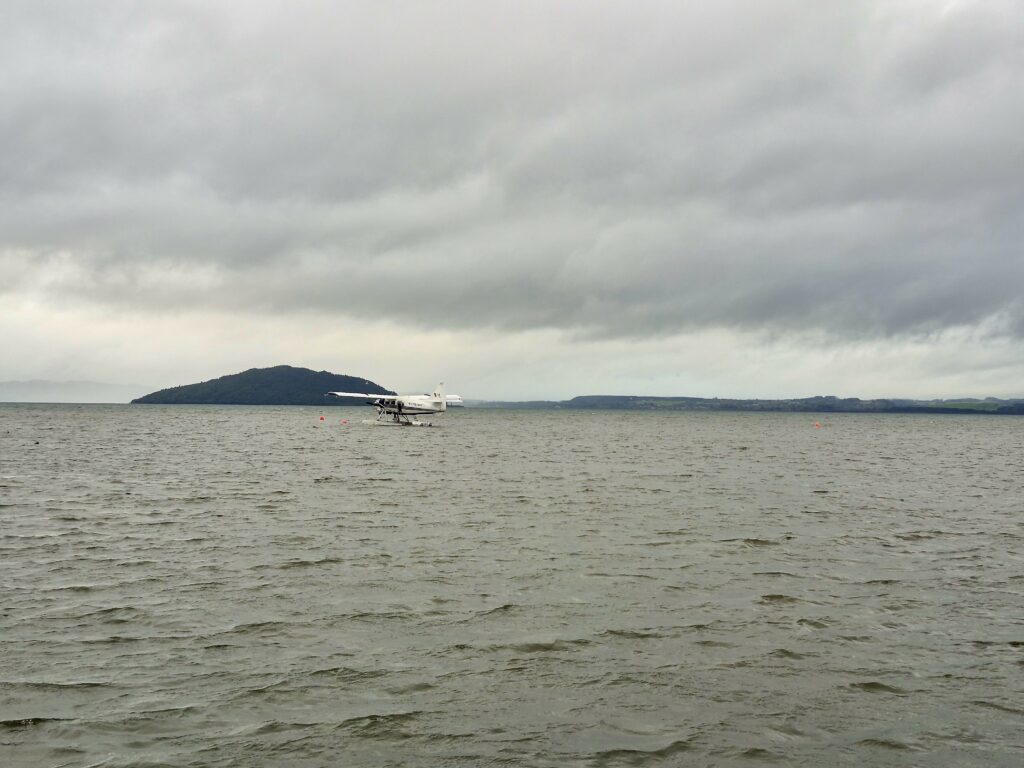
By the way, the island behind the float plane above inside the lake is Mokoia Island. It is privately owned by local Maori people and is a bird sanctuary that can only be accessed by tour parties. The island is home to rare bird species, e.g. the North Island Brown Kiwi and the North Island Saddleback.
Adrenaline junkies can also book a 30-minute Katoa Jet Boat tour on Lake Rotorua, which starts and ends at Lakefront Boardwalk all year. Finally, you cannot miss the three Maori Pou Tumu (sculptures) on the boardwalk telling stories of local history.
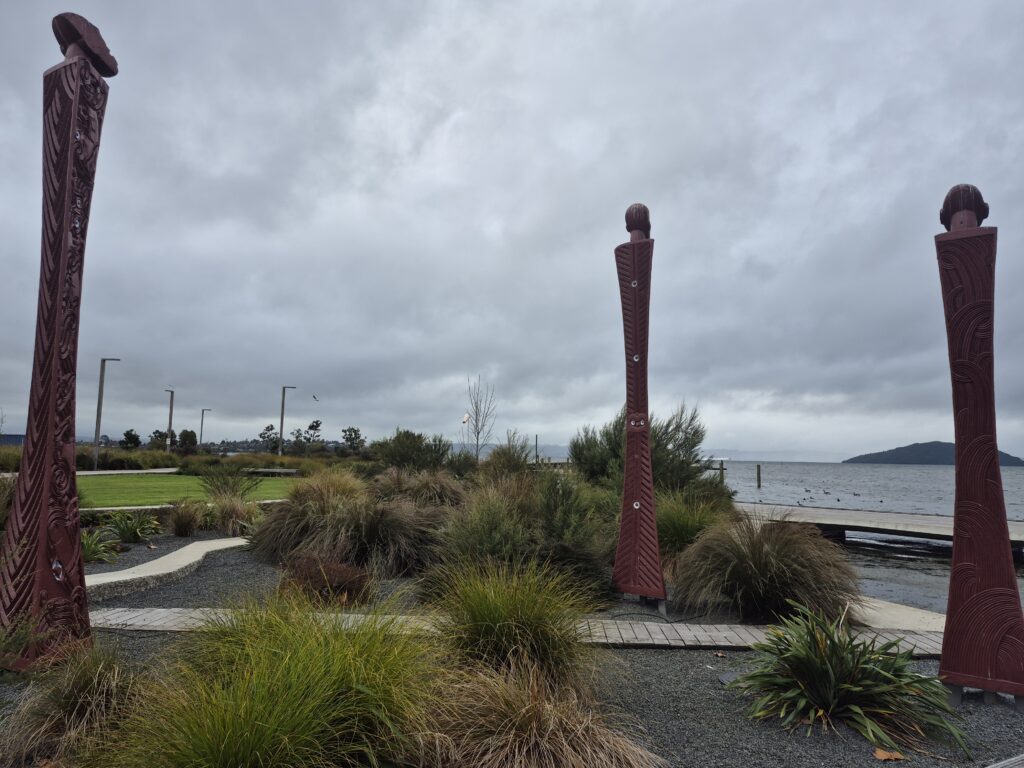
Learn about Maori Culture & Traditions in Rotorua
Many Maori people live in the Rotorua area, so it’s the perfect place to learn about Maori culture and traditions.
Here are a few attraction ideas to find out more about Maori culture in and close to Rotorua:
Te Pa Tu
Address: 1072 State Highway 5, Tumunui 3073, New Zealand
Te Pa Tu is a recreated traditional Maori village about 20 minutes south of Rotorua. The village sits underneath an ancient 200-year-old native Tawa forest. It’s known as New Zealand’s most award-winning cultural attraction!
Te Pa Tu offers 3.5-to 4-hour evening experiences that change with each season of maramataka, the Maori lunar calendar. From May to September, visitors can join Tu Te Ihi (Winter Matariki Celebration) and Tu Te Ra (Summer Harvest Celebration) happens from October to April.
Here you can watch traditional Maori dance performances and rituals, listen to stories, witness a fire ceremony, play games, and taste Maori kai (cuisine) consisting of four courses! The Maori chefs slow-cook meat and veggies in an underground oven (the cooking method is called hangi).

This unique experience at Te Pa Tu starts at NZ$ 270 per person. If you don’t have a car, there’s a year round free shuttle taking guests from central Rotorua to Te Pa Tu and back.
Te Puia
Address: 20 Hemo Road, Whakarewarewa, Rotorua 3010, New Zealand
Te Puia is inside Whakarewarewa geothermal valley and is another awesome spot to learn about Maori history, culture, and traditions.
Entry is only allowed on a guided tour, which includes a 90-minute stroll through the geothermal valley, where you’ll see Pohutu Geyser (the largest active geyser in the Southern Hemisphere), the Kiwi Conservation Centre, and the New Zealand Maori Arts and Crafts Institute.

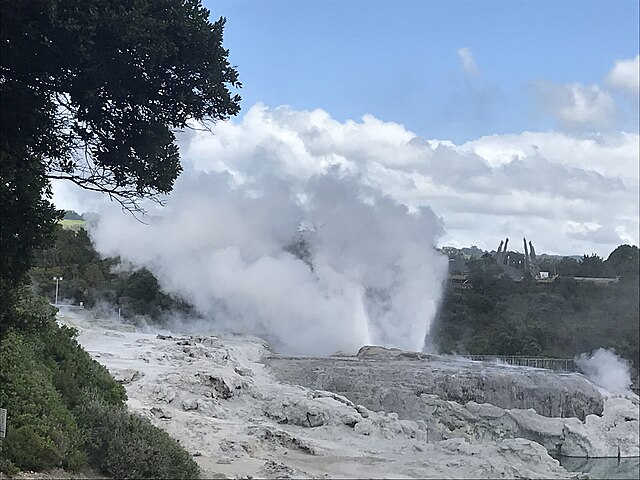
It’s also possible to add a cultural performance in their stunning carved meeting house. This add-on consists of a pohiri (traditional Maori welcome), waiata (song), moteatea (traditional chant), and haka (traditional war dance).
At night, guests can book a guided tour at Te Puia, traditional hangi buffet dinner, haka performance, and seeing Pohutu Geysir after dark! Finally, be sure to stop at the Oha Gift Store, Ahua Gallery, and Pataka Kai Restaurant & Bar.
There’s a winter deal until late September 2025, with admission starting at NZ$ 100 per person! Visitors in Rotorua without a car can take bus #11 from downtown to Te Puia (about 17 minutes). Bus service stops at 6 pm, but Uber and taxis are available to pick you up if needed.
Whakarewarewa – The Living Maori Village
Address: 17 Tryon Street, Whakarewarewa, Rotorua 3010, New Zealand
Whakarewarewa – The Living Maori Village is the legacy and home of the Tuhourangi Ngati Wahiao people, who have been telling their stories to visitors for more than 200 years.
Here you can join Whaka Geothermal Walks with its mud pools and manuka bushlands, cultural performances (including haka), and learn about Maori history and myths. Visitors are welcome to rent E-bikes to explore the natural surroundings of Whakarewarewa as well.
Visitors without a car can hop on local bus #11 to get to Whakarewarewa village (about 19 minutes).
Check out Rotorua’s Shops & Street art in Downtown
Rotorua has a nice selection of souvenir shops in downtown. Some souvenirs are made in New Zealand, like Manuka Honey and Rotorua Thermal Mud Masks to use at home! Of course, you can also find New Zealand themed apparel, stickers, magnets, mugs, etc. here.
If you’re looking for good deals, be sure to visit some of the dollar stores or thrift stores in the city centre!
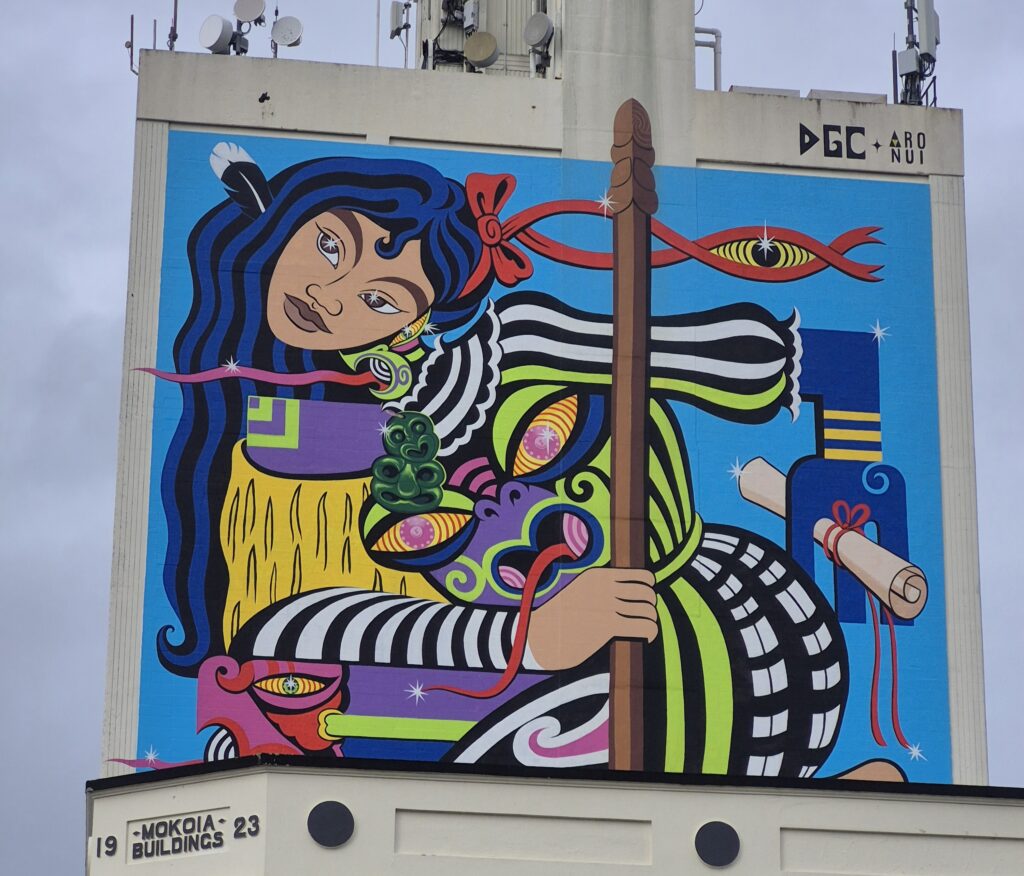
Last but not least, Rotorua’s city centre has some cool street art in random spots, if that’s your thing 😀

Where to Stay in Rotorua
As a touristy city, Rotorua has great accommodation options for every traveler’s budget.
I booked a private room at Stay Hostel Rotorua (1202a Pukuatua Street, 3010 Rotorua, New Zealand), a simple but very clean hostel in the city centre. They even upgraded me to a larger room with two bunk beds for myself, which I appreciated a lot!
Aside from that, there’s free wifi, laundry facilities, a spacious kitchen and lounge, and the staff was very friendly.
Where to Eat & Drink in Rotorua
Of course, there’s also a large variety of restaurants in Rotorua.
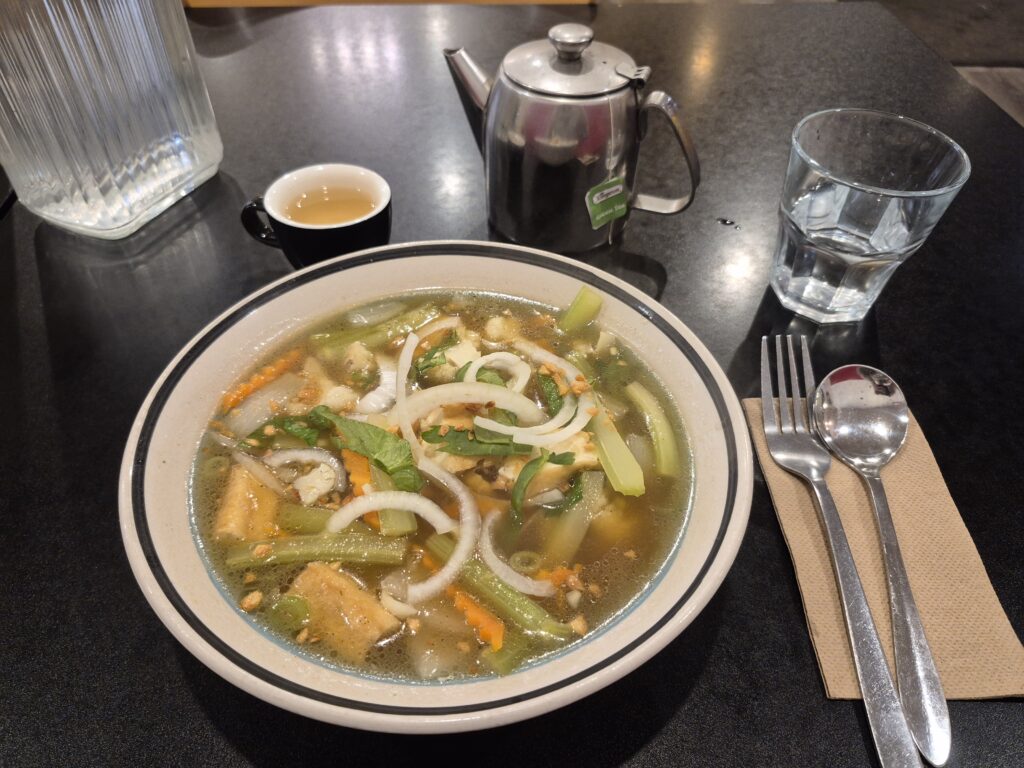
My favourite restaurant was Sweet as Rice (1205 Tutanekai Street, Rotorua 3010, New Zealand), a Vietnamese restaurant in downtown Rotorua. The inside of the restaurant was quite cozy and the staff was friendly and efficient. The price was not too bad, either.
I tried their Vegetarian Pho and after eating all the healthy veggies and broth, the cold that’d been bugging me was pretty much gone the next day!
There are also tons of grocery stores in Rotorua if you prefer to cook your own meals. Pak’nSave and Woolworths were the best ones, in my opinion.
How to Get to Rotorua with Public Transit
Getting to Rotorua without a car is pretty easy. Many people (tourists and Kiwis alike) take InterCity Bus to get around the country. This bus company goes from larger cities on the North Island (like Auckland or Wellington) to Rotorua (and vice-versa) several times a day.
The buses are clean, comfortable, (mostly) on time, and there’s free wifi on board. The ticket cost was reasonable as well.
The Best Time to Visit Rotorua
Rotorua is known for its temperate oceanic climate, which means warm summers and mild winters. It’s best to visit Rotorua in the fall (March to mid-May) or spring (September to November), as the weather is mostly pleasant, with not too many crowds.
While summer (December to February) is perfect to visit for outdoor activities, these are the busiest months for tourism and the highest accommodation prices of the year.
The winter months (late May to August) are the wettest and coldest months in Rotorua, but this is the time with the fewest crowds and lowest accommodation prices.
When I visited Rotorua in late May 2025, there was a mix of partly sunny and rainy weather conditions. Temperatures were around 15C (59F) during the day, but it got colder at night and the sun set around 5 pm. So while I loved this trip, I’ll come back to Rotorua a few months earlier next time 😉
Conclusion: 36 Hours in Rotorua Without a Car
Whether you’re traveling around New Zealand with or without a car, stopping in Rotorua is a must. Only here, you can soak in mud pools at Hell’s Gate Mud Bath & Spa. Besides, be sure to admire beautiful nature at Whakarewarewa Forest and learn about the fascinating Maori culture and traditions.
Rotorua is not super spread out, so it’s quite easy to get around via public transit (often without transfers) or walking/riding a bike. While some attractions are outside of town, like Te Pa Tu Maori Village, there are free shuttles or Uber/taxis available from/to the city centre.
Besides, Rotorua has great accommodation and restaurant (or grocery store) options for every traveler’s budget. If you’re on the lookout for souvenirs, Rotorua shouldn’t disappoint you, either. So it’s a perfect spot to spend (at least) 36 Hours on your New Zealand trip!


Writing and traveling have been my passions for 25+ years, so I launched this travel blog in May 2020. I love writing travel guides about amazing destinations and I'm passionate about music tourism and animal-friendly and sustainable travel.
So far, I've been to 20 countries on five continents, and Japan and Iceland were my favourites!
- THE TOP 5 THINGS TO DO IN KAMAKURA: THE PERFECT SIDE TRIP FROM TOKYO - March 1, 2026
- ONE DAY IN NAPIER: THE 10 BEST THINGS TO DO INTHE ART DECO CAPITAL OF NEW ZEALAND - February 8, 2026
- A DAY TRIP TO MILFORD SOUND: NEW ZEALAND’S TOP NATURAL ATTRACTION - December 27, 2025