
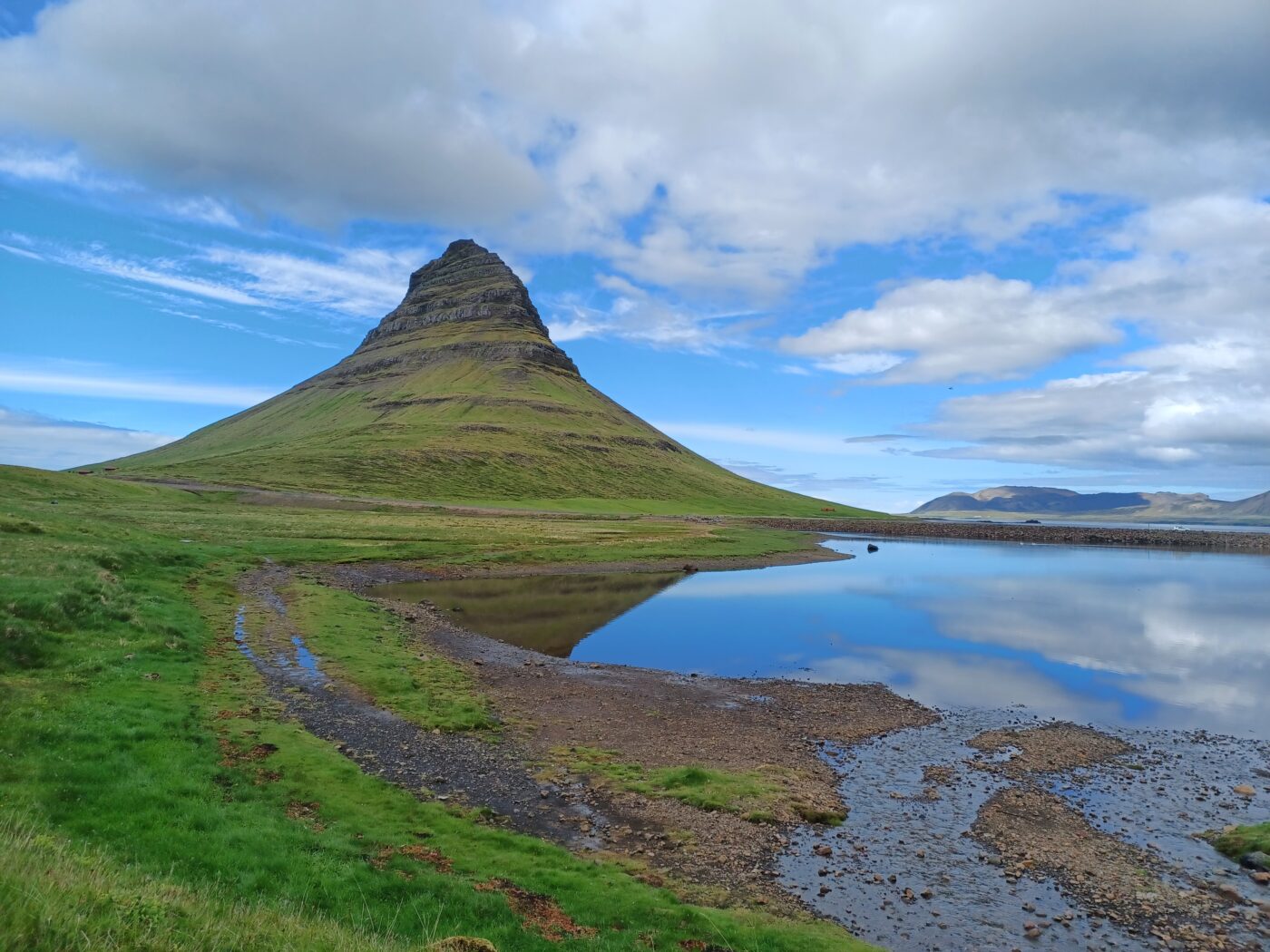
Snæfellsnes Peninsula in West Iceland is right next to the North Atlantic Ocean, about two hours from Reykjavik. It takes about 10-12 hours to go around it, so it’s a great idea for a trip from Iceland’s capital. So is a Day Trip around Iceland’s Snaefellsnes Peninsula Worth it?
Well, this region is famous for tons of breathtaking attractions in a small area, from rugged cliffs, wildlife, lava fields, majestic Mount Kirkjufell, beaches, waterfalls, and more! That’s why it’s known as Iceland in Miniature.
Besides, Snæfellsnes Peninsula inspired Jules Verne’s book “Journey to the Centre of the Earth” during his travels around Iceland.
After seeing a few of Iceland’s most popular (and stunning) tourist attractions, I was eager to visit some less crowded spots. So to find out if Iceland’s Snæfellsnes Peninsula is worth it, I booked a Day Trip from Reykjavik with Bus Travel Iceland to this region in June 2024.
Here’s a map of Snæfellsnes Peninsula so you can follow along:
Disclosure: I only recommend products that I’ve used in the past, and all opinions expressed in this post are my own. This post contains affiliate links. If you use one of the links throughout the page to buy something, I may earn a small commission at no extra cost to you. Thank you!
Ytri Tunga Beach
Ytri Tunga Beach, the first stop on our trip, already turned out to be amazing! After a quick walk from the parking lot and climbing on rocks that led to the beach, we were rewarded with stunning scenery and seals sunbathing on the rocks in the water!
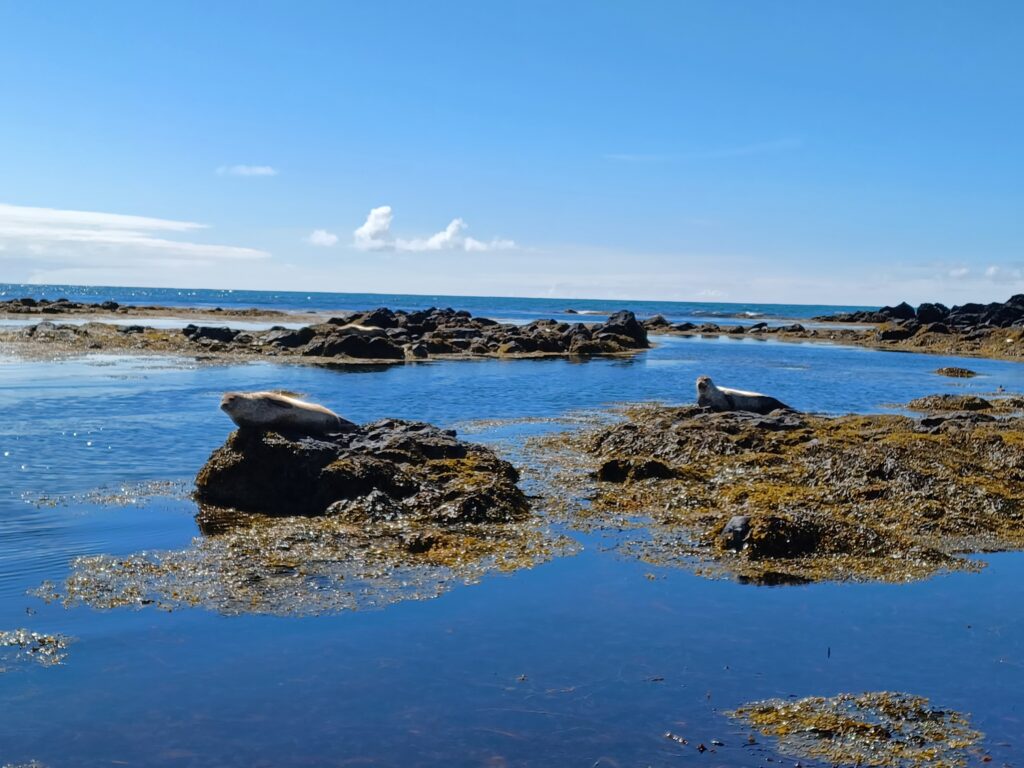
Ytri Tunga Beach is one of the most reliable places in Iceland for seal-watching all year, but the best time to see them is during low tide in June and July.
Mostly harbour seals show up here, while grey seals are seen less often. Visitors are strongly encouraged to look at them from a respectful distance and it’s forbidden to feed the seals.
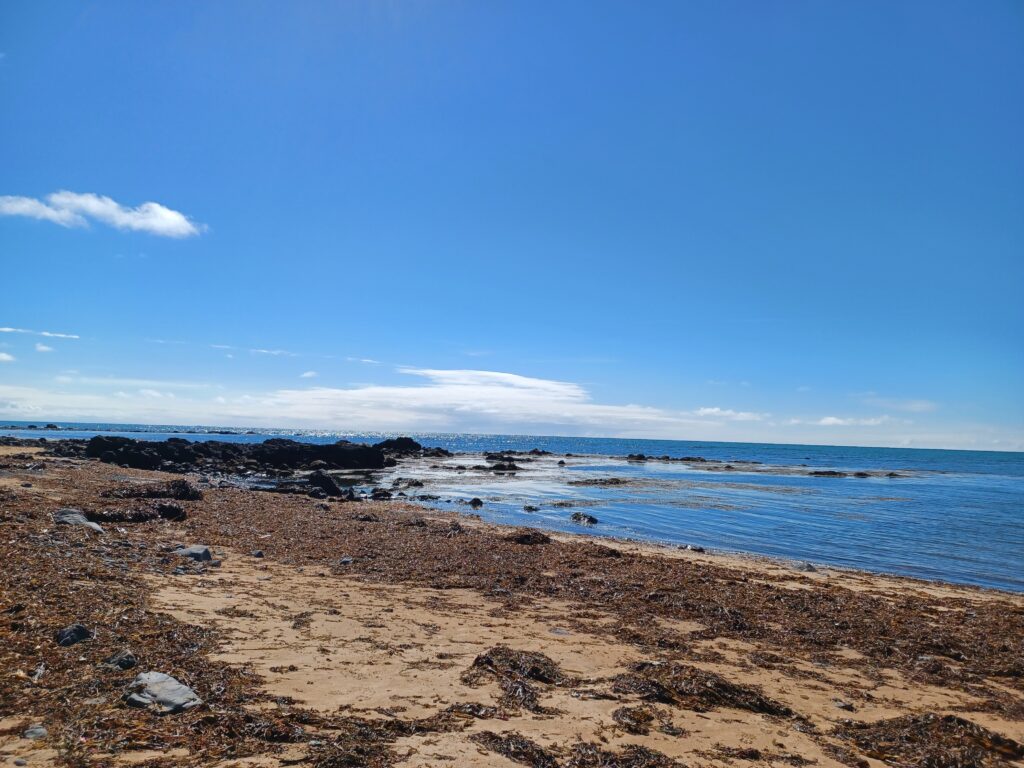
Ytri Tunga Beach is one of the few golden sand beaches in Iceland, as black sand beaches are way more common. It’s open 24 hours a day and there are no admission or parking fees.
Búðakirkja
Next, we stop at Búðakirkja, a small wooden church by the tiny village of Búðir. Thanks to its black exterior and location inside a lava field, with nothing else around it, it’s one of Iceland’s most photographed buildings.
The original Búðakirkja dated back to 1703 and was built out of turf. After a while, it fell into despair, and was demolished in 1816. But in 1847, Steinunn Sveinsdóttir, a wealthy widow from Búðir, fought for Búðakirkja to be rebuilt.
The current church was completed in 1848 and has stood here ever since.
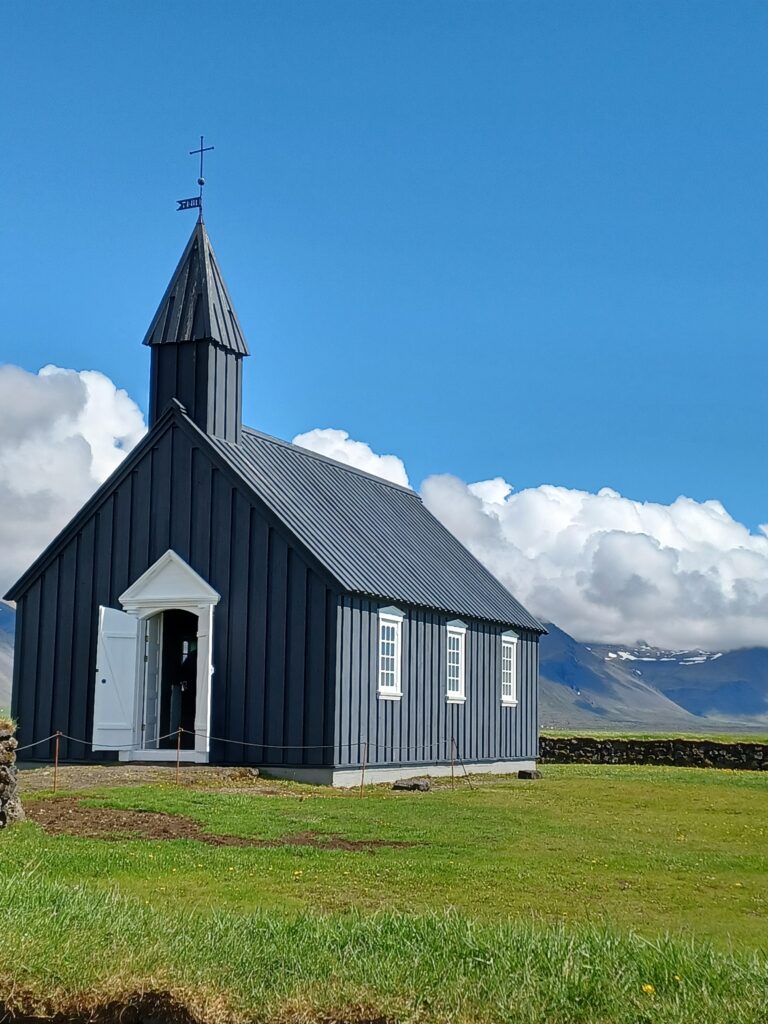
Búðakirkja was painted black because the exterior wood is coated in pitch. This was a common solution in the past to protect the wood from the harsh weather in Iceland.
Today Búðakirkja is a popular wedding and concert location, but it’s usually not open to the public. It has an organ and seats up to fifty people. There are two church bells in the tower and a cemetery is right next to the church as well.
Arnarstapi Cliffs
The peaceful Arnarstapi Cliffs pathway along the Atlantic Ocean are what makes the village of Arnarstapi very special! While walking around the trail, be sure to stop for a couple minutes and take in the picturesque views from pretty much every angle.
For example, the most unique attraction is Gatklettur, a rock formation that looks like an arch, so it’s a popular photo spot! Besides, many seabirds, like arctic terns, kittiwakes, and gulls, like to nest at Arnarstapi Cliffs. So it’s a great spot for bird watching and there are basalt columns as well.
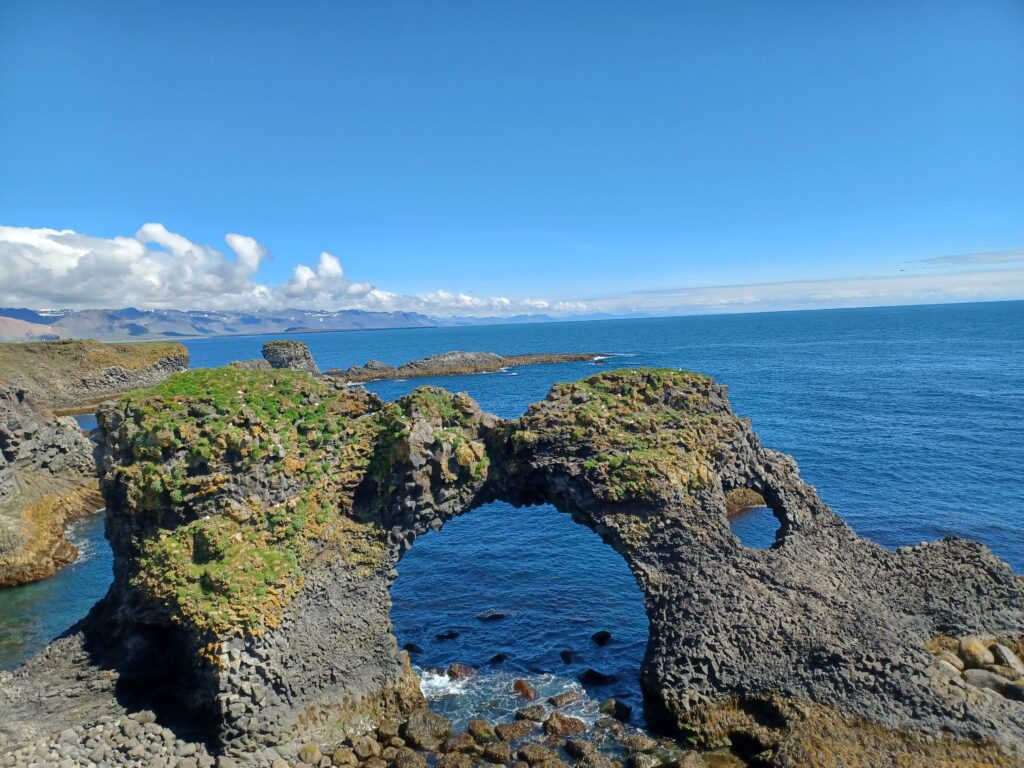
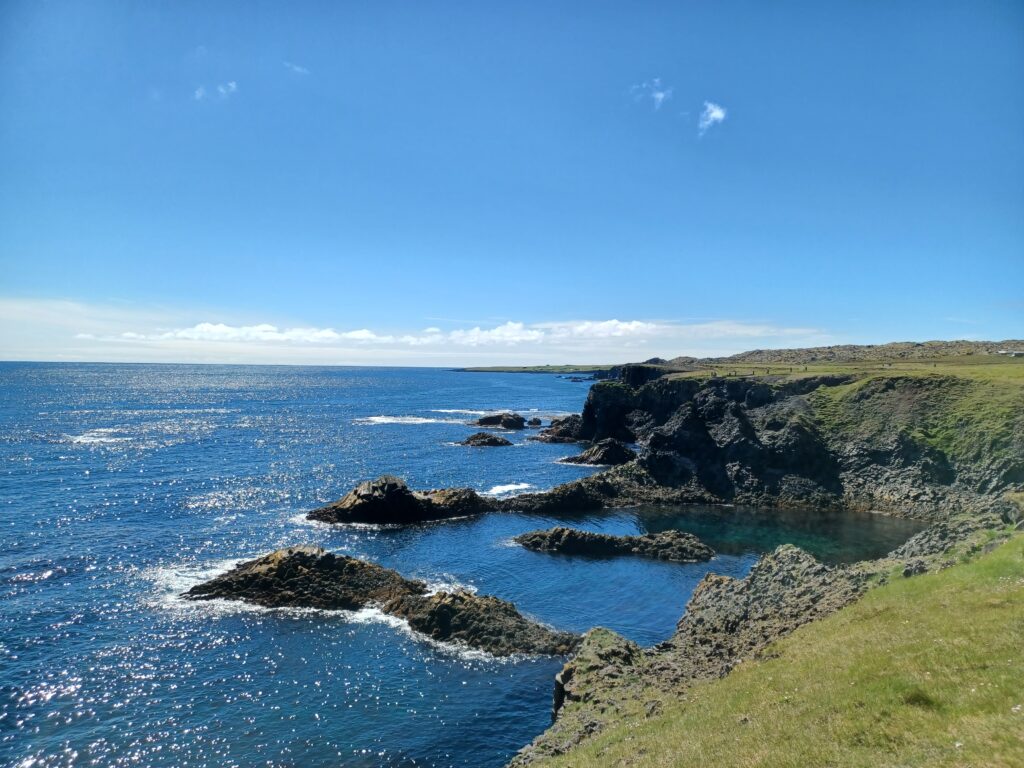
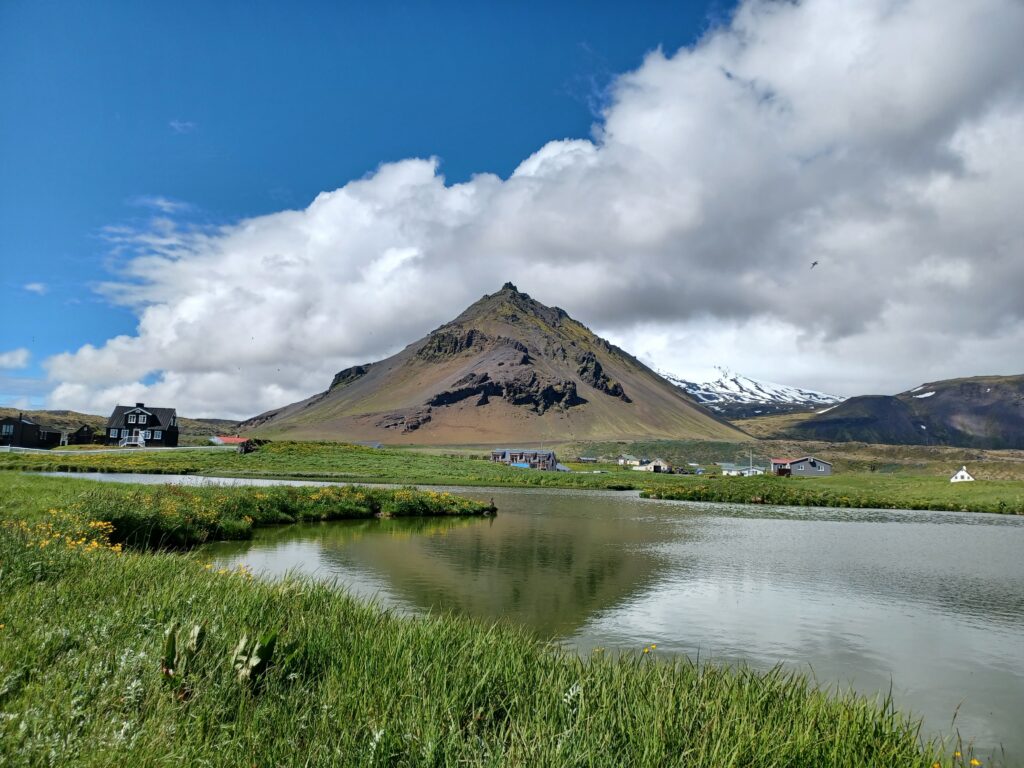
You can’t miss the impressive Mount Stapafell volcano and there’s a stone bridge, too. Besides, Arnarstapi Cliffs has a marina and is one of Iceland’s most beautiful natural harbours.
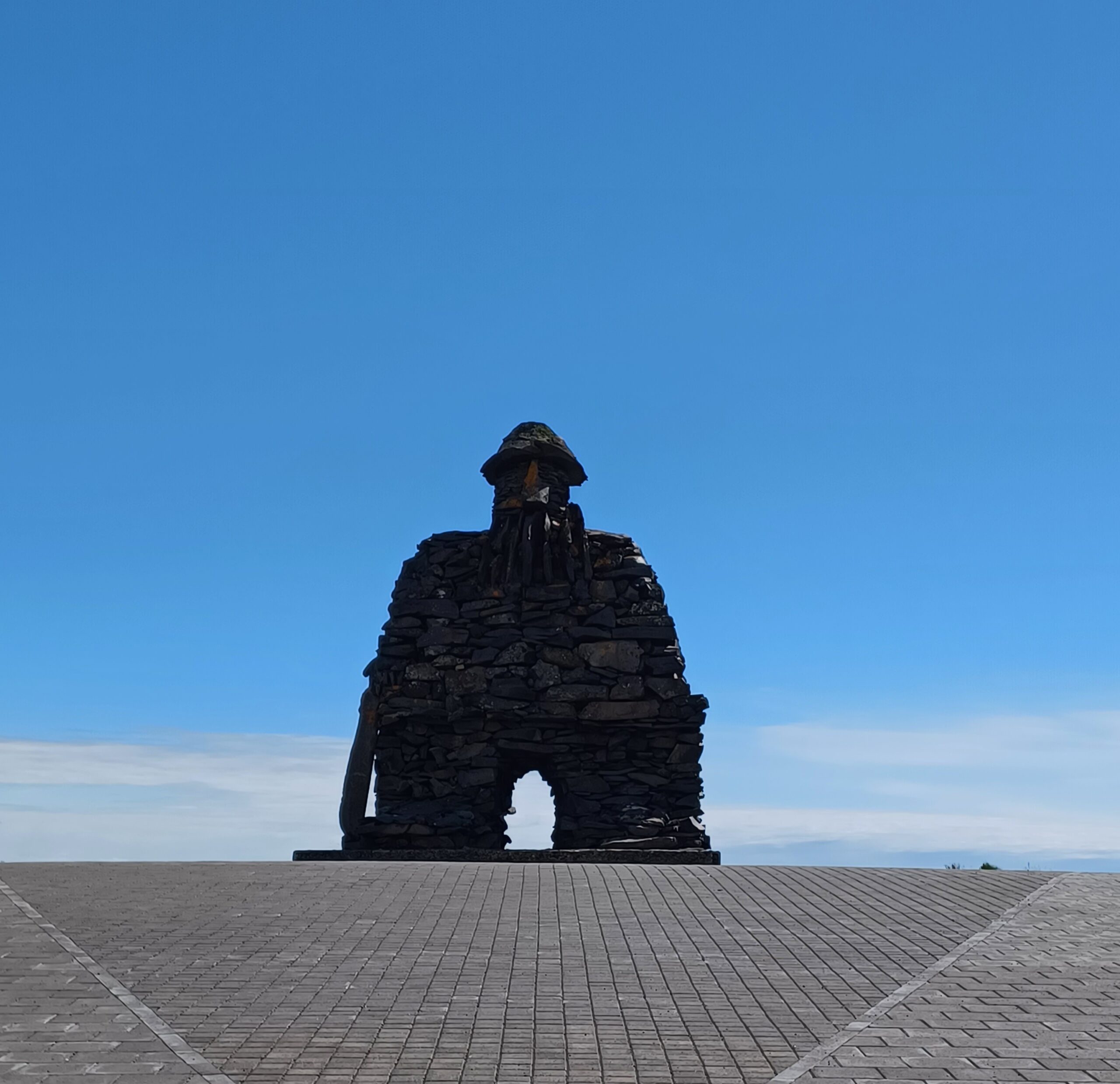
Finally, we checked out the Bárður Snæfellsás statue, which was created by Icelandic sculptor Ragnar Kjartansson in 1978. This impressive stone sculpture is 6 meters (19 ft) tall. It depicts the saga of Bárður Snæfellsás, a mythical guardian who was half-human, half-giant, and lived on Snæfellsnes Peninsula.
Snæfellsnesjökull National Park Visitor Centre & Malarrifsviti Lighthouse
After entering Snæfellsnesjökull National Park, we stopped at the Visitor Centre. Here you can learn about animals and plants that live in this region, such as arctic foxes, minks, seals, whales, and seabirds (e.g. guillemots, cormorants, and razorbills).
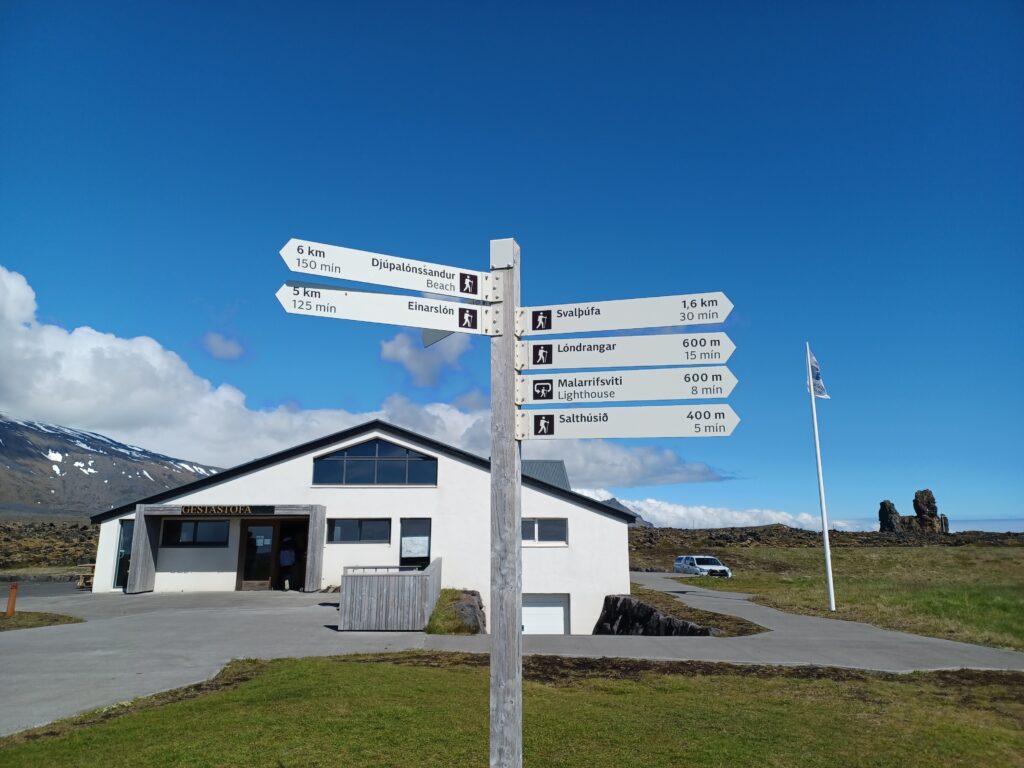
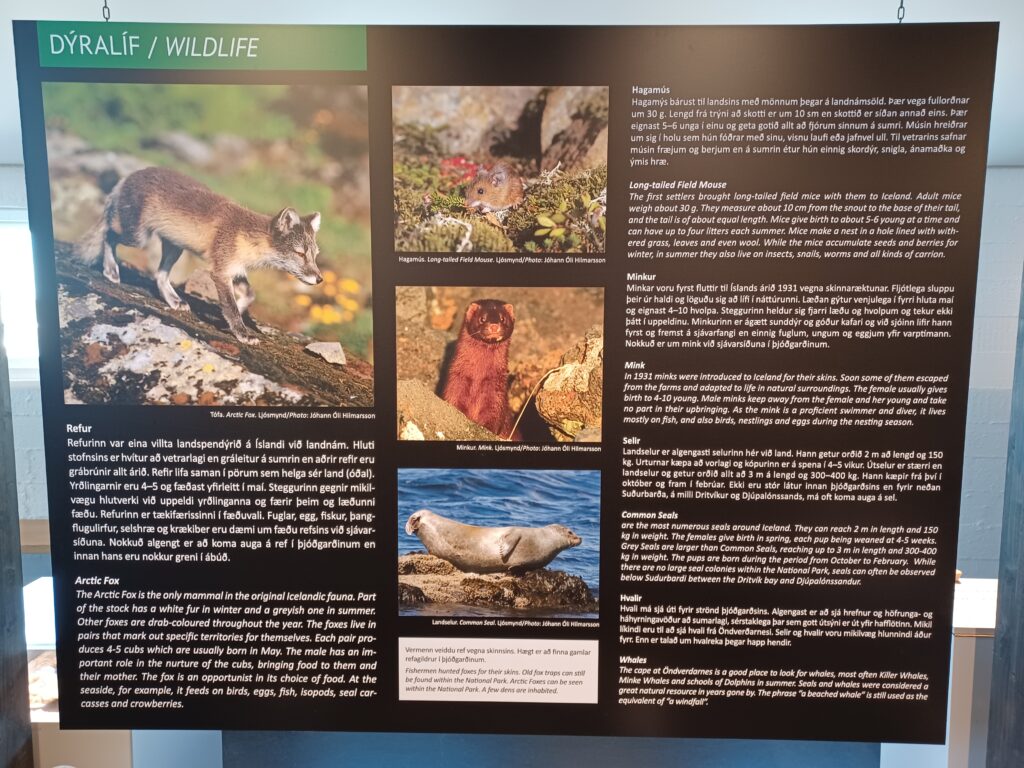
There’s also bathrooms, water fountains, a gift shop, indoor play area for kids, and a playground and picnic tables outside. The Visitor Centre is open daily from 11 am to 4 pm.
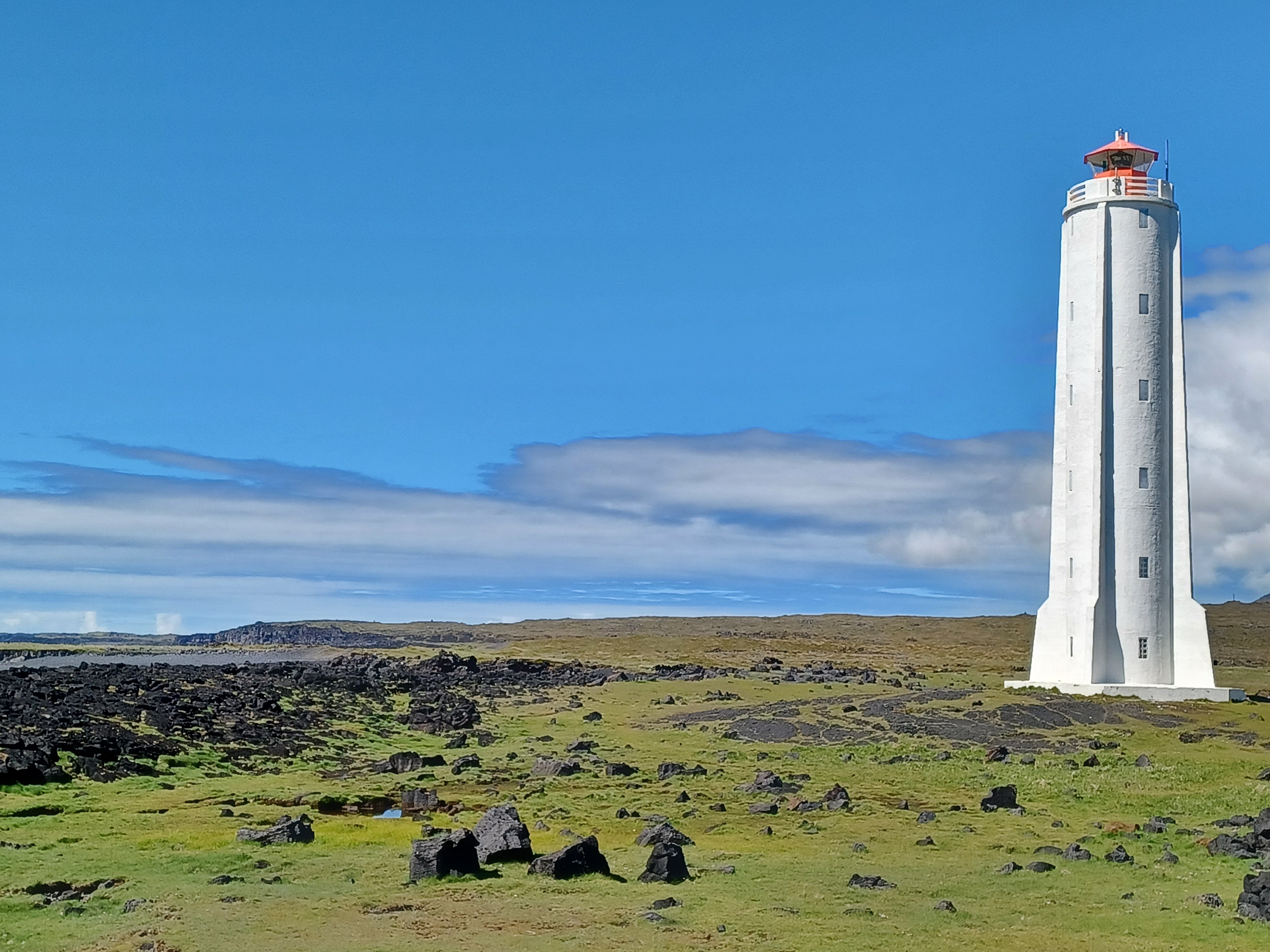
Just a few steps from the visitor centre is the beautiful Malarrifsviti Lighthouse. First built in 1917 (and rebuilt in 1947), it played an important role in guiding local fishermen around the shores.
The lighthouse is 20 meters (65 ft) high and its light reaches up to 28 km (18 miles) into the sea. Similar to Búðakirkja, Malarrifsviti Lighthouse is surrounded by lava fields and lush green landscapes, which makes it a great photo scene!
Lóndrangar Basalt Cliffs
Just a few minutes down the road are the truly stunning Lóndrangar Basalt Cliffs. These two rugged rock columns sit upon a cliff and are 75 meters (246 ft) and 61 meters (200 ft) tall. They used to be a volcanic crater and are the result of erosion and ocean waves hitting the crater for thousands of years.
Many people come here to learn about the area’s geology.
Since the columns create a great contrast to the rather rugged landscape, many visitors also stop here for an Instaworthy shot of the cliffs and the breathtaking scenery around them. It’s best at sunrise or sunset, when the golden light hits the stacks! Lóndrangar’s nickname is “the rocky castle”.
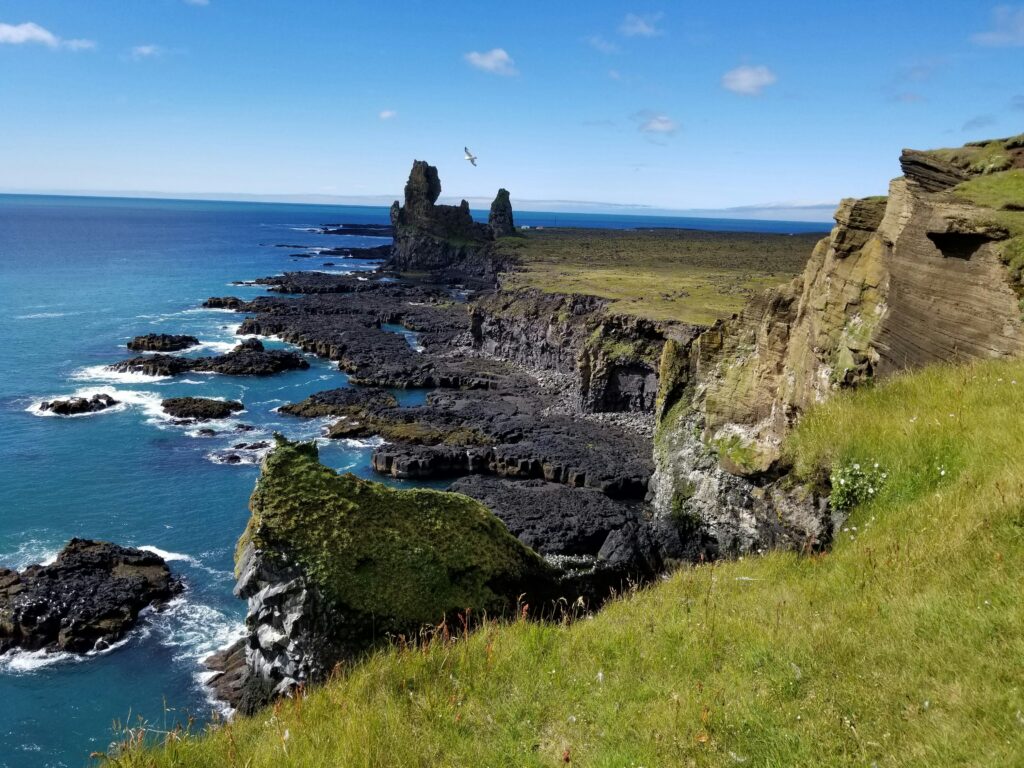
According to Icelandic folklore, the two columns used to be trolls who wanted to pull a ship to the shore. But then they were hit by sunlight and transformed into stone.
Djúpalónssandur Beach
Then we spent some time at Djúpalónssandur Beach. It’s a beautiful black pebble beach that shouldn’t be missed when visiting Snæfellsnes Peninsula.
Djúpalónssandur Beach originated due to volcanic activity and is surrounded by rugged cliffs and lush green landscapes. So it’s quite similar to Reynisfjara Beach along Iceland’s South Coast. It’s not as crowded though, because not as many tourists come to this area.
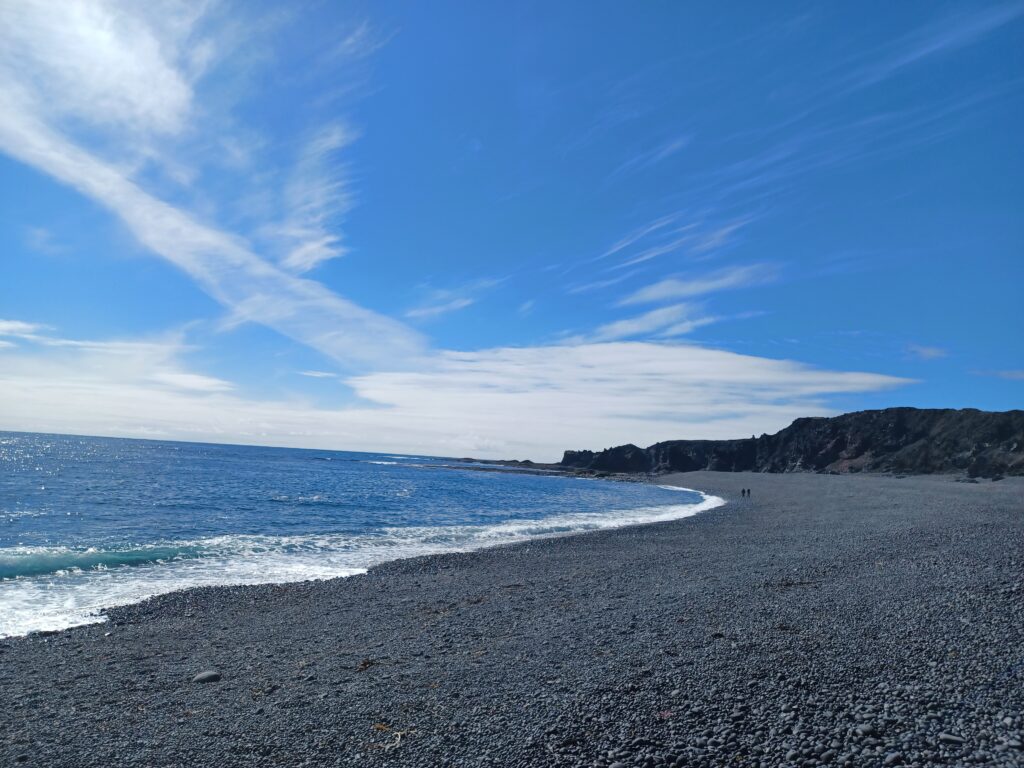
Djúpalónssandur Beach is also known for the four lifting stones on the right side of the beach.
When someone applied as a sailor in the fishing industry back in the day, he first had to prove his strength by lifting these stones. They range from 23 to 53 kg (50 to 116 lbs)! Visitors are welcome to test their strength by lifting them as well.
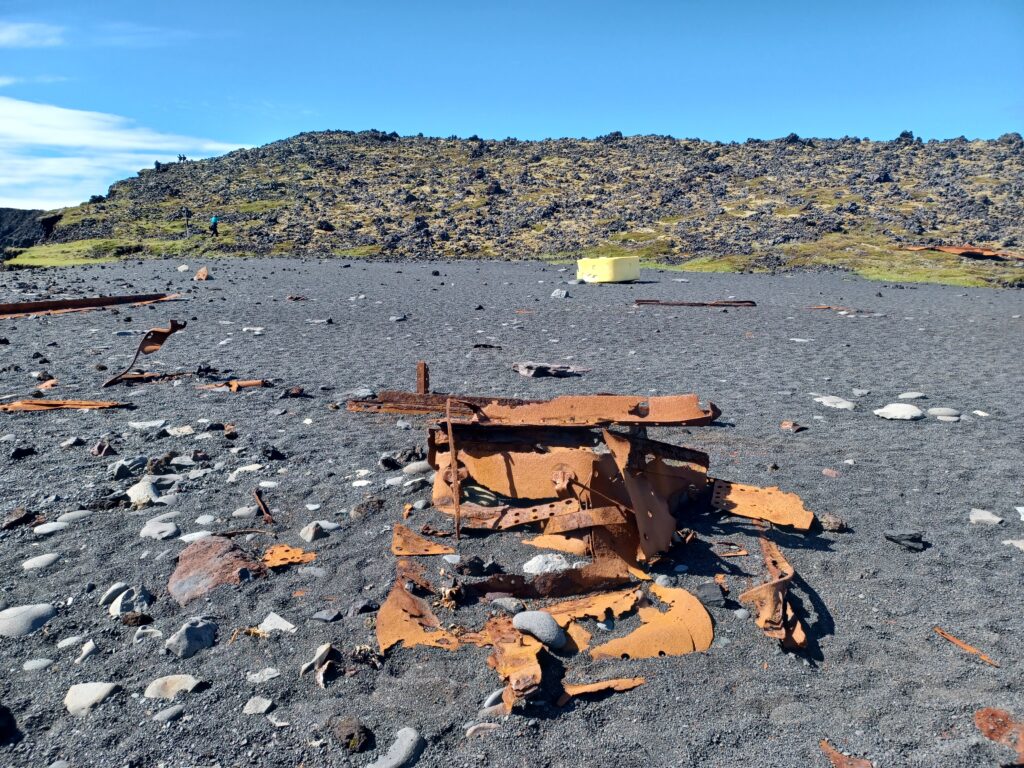
While walking on Djúpalónssandur Beach, you may be wondering about the rusty iron chunks scattered all over the place. Well, these are the remains of the Epine GY7, a British trawler that shipwrecked on March 13, 1948. 14 of the 19 crew members on board died in this accident.
Visitors are strongly advised not to touch the shipwreck remains.
Mount Kirkjufell and Kirkjufellsfoss Waterfall
Mount Kirkjufell is another of Iceland’s most famous sites, especially thanks to its presence in the Game of Thrones series. While it’s only 463 meters (1,519 ft) high, Kirkjufell is unique thanks to its church steeple shape. That’s why it translates to Church mountain.
For an even more breathtaking scenery, try to include beautiful Kirkjufellsfoss Waterfall while taking photos of Kirkjufell! No matter what time of the year you’re visiting, these two Icelandic hotspots are guaranteed to knock your socks off!
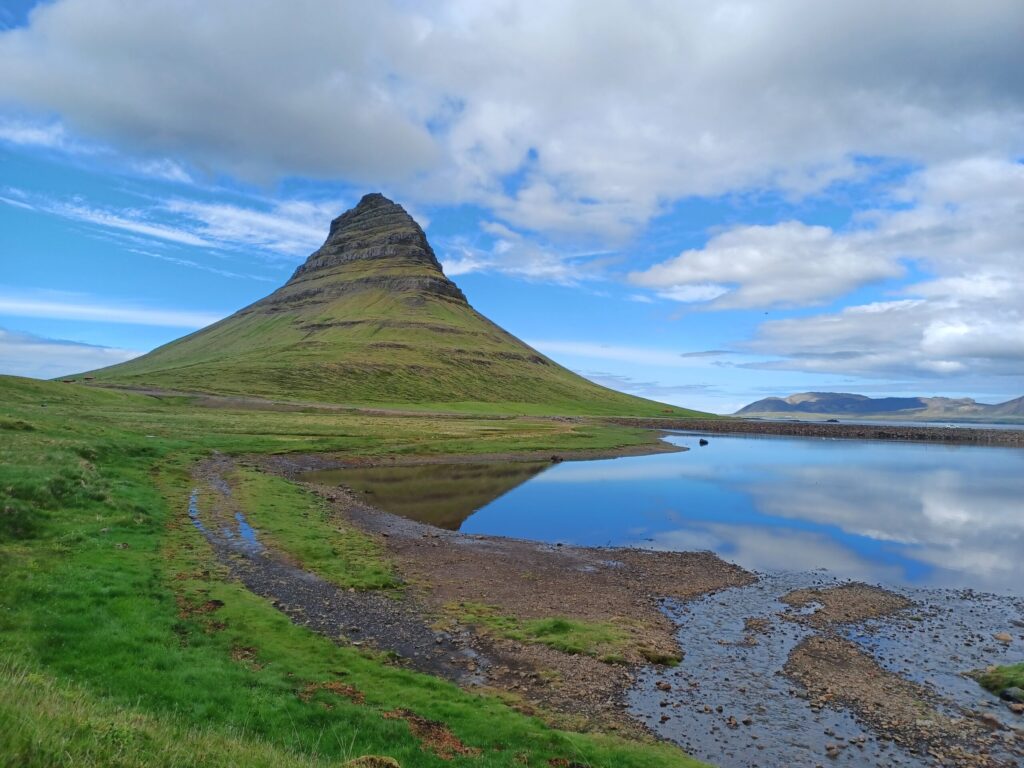
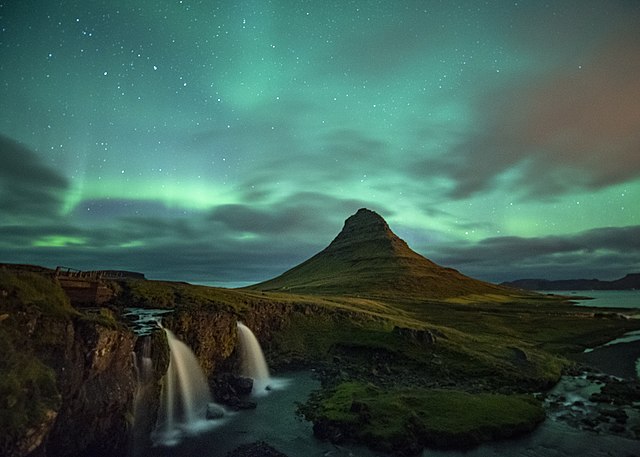
Left: Mount Kirkjufell on its own in the summer. Right: Mount Kirkjufell with Kirkjufellsfoss Waterfall in the foreground during aurora borealis. This photo is courtesy of vaidyanathan on Wikimedia Commons.
Climbing up Mount Kirkjufell is possible during the summer months, but it’s very steep and dangerous, so only experienced hikers with a guide should do this. It takes about three hours roundtrip to complete.
It’s not allowed to hike up Mount Kirkjufell from November 1 to June 15 because of the perilous conditions. Visiting Mount Kirkjufell and Kirkjufellsfoss Waterfall is free, but there may be a small parking fee in some areas during the busy tourist season (June to August).
Selvallafoss Waterfall
Our final stop of the day was Selvallafoss Waterfall. While not as famous as Skogafoss or Gullfoss Waterfall, its three cascades and the fact that you can walk behind it make it stand out! Just be careful, as the trails around it are narrow and can be slippery.
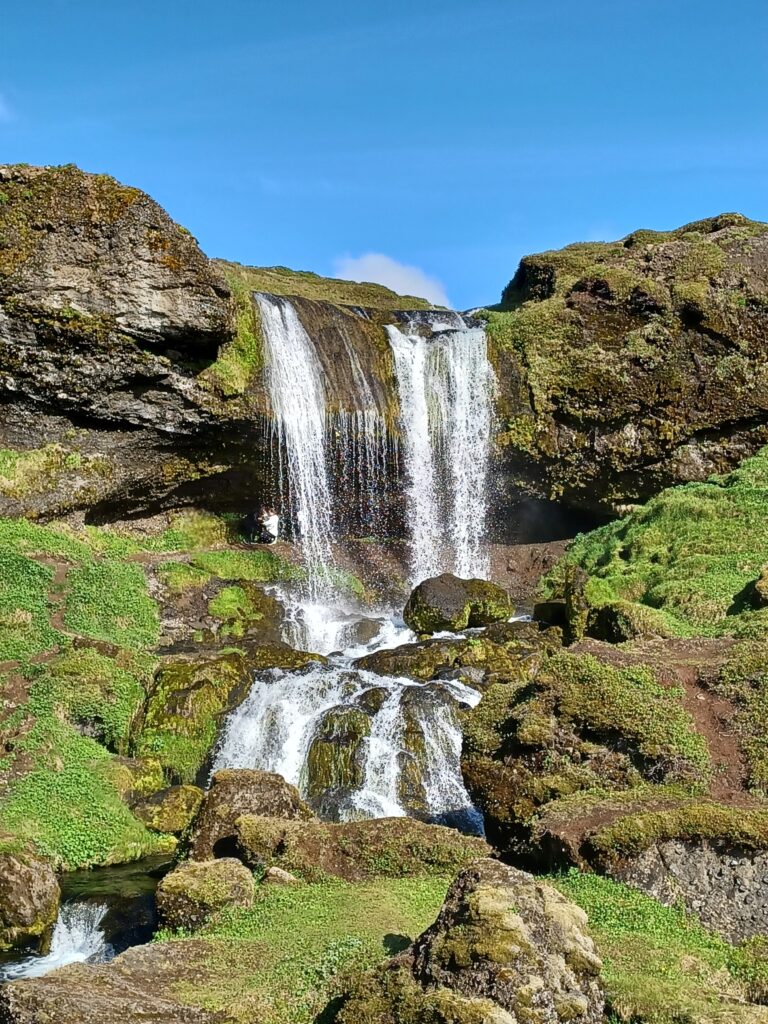
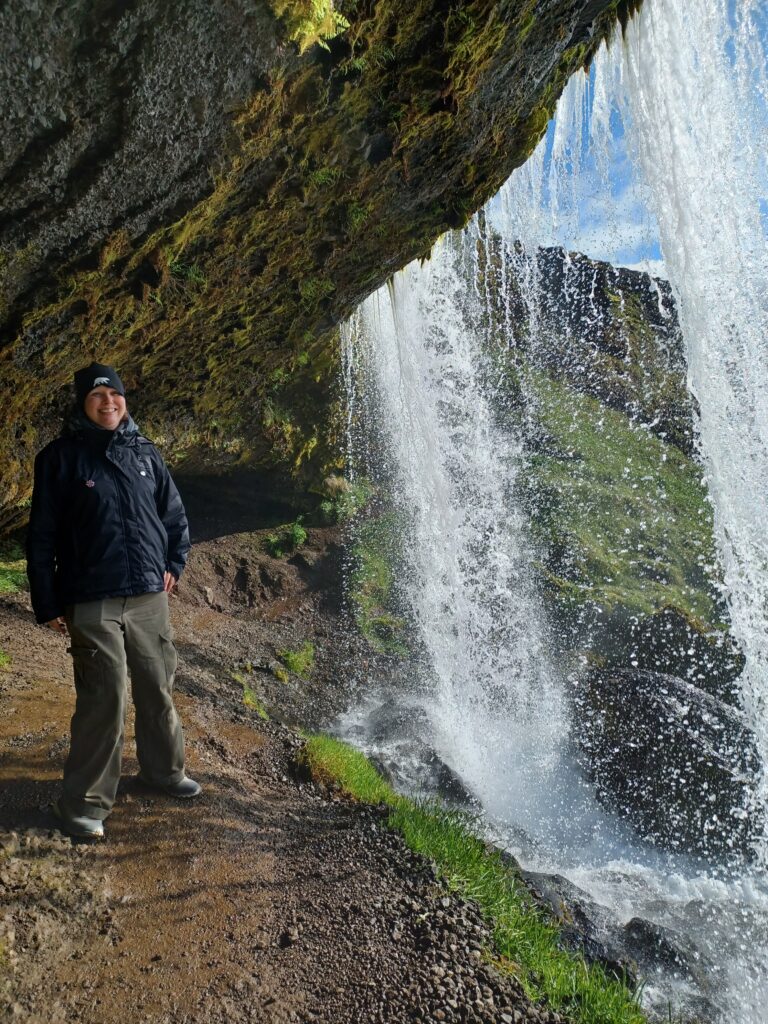
The longest of the cascades is 35 meters (11 ft) tall. Selvallafoss is also known as the sheep’s waterfall, because lots of sheep like to graze in the nearby lush green spaces and drink the fresh water.
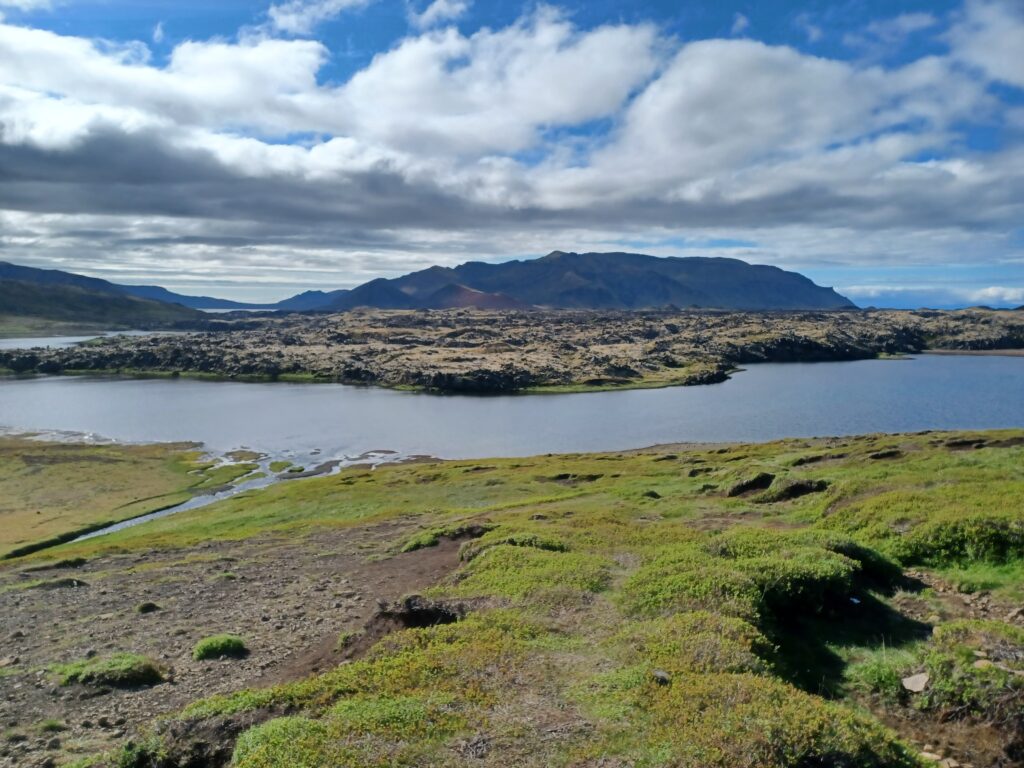
Although Selvallafoss is not visible from the road, it’s just a short hike to get there. The views of the surrounding region make visiting this waterfall even more worth it! You can also walk to the top of the waterfall to appreciate the scenery even more.
Wrap Up: Is a Day Trip along Iceland’s Snæfellsnes Peninsula Worth it?
Yes, a Day Trip along Iceland’s Snæfellsnes Peninsula is Worth it! No matter what time of the year you visit, there’s a great variety of attractions to see in a compact area. Some of them, like a golden sand beach and harbour and grey seals, can be hard to find elsewhere in Iceland.
The day tour with Bus Travel Iceland from Reykjavik was really good! Our guide was friendly and knowledgeable, and went above and beyond to make sure everyone had a great time. We also stopped for a breaks in Ólafsvík and Borgarnes along the way.
If you’re self driving, Snæfellsnes Peninsula has a few more attractions that the bus didn’t stop at. It’s also possible to stay here for two days or longer, as there are accommodation options along the way.
If you visit Snæfellsnes Peninsula, you can see some of the best of Iceland’s highlights in just one day! So whether you’re into stunning nature, photography, beaches, or geology and history, I highly recommend adding Snæfellsnes Peninsula to your Iceland itinerary!

Writing and traveling have been my passions for 25+ years, so I launched this travel blog in May 2020. I love writing travel guides about amazing destinations and I'm passionate about music tourism and animal-friendly and sustainable travel.
So far, I've been to 20 countries on five continents, and Japan and Iceland were my favourites!
- IS WROCLAW, POLAND WORTH A VISIT IN 2026? - September 6, 2026
- A FIRST-TIME VISITOR’S GUIDE TO VICTORIA, BC: THE 18 BEST THINGS TO DO - May 31, 2026
- THE 6 BEST THINGS TO DO IN BEPPU IN ONE DAY - April 29, 2026

Leave a Reply