
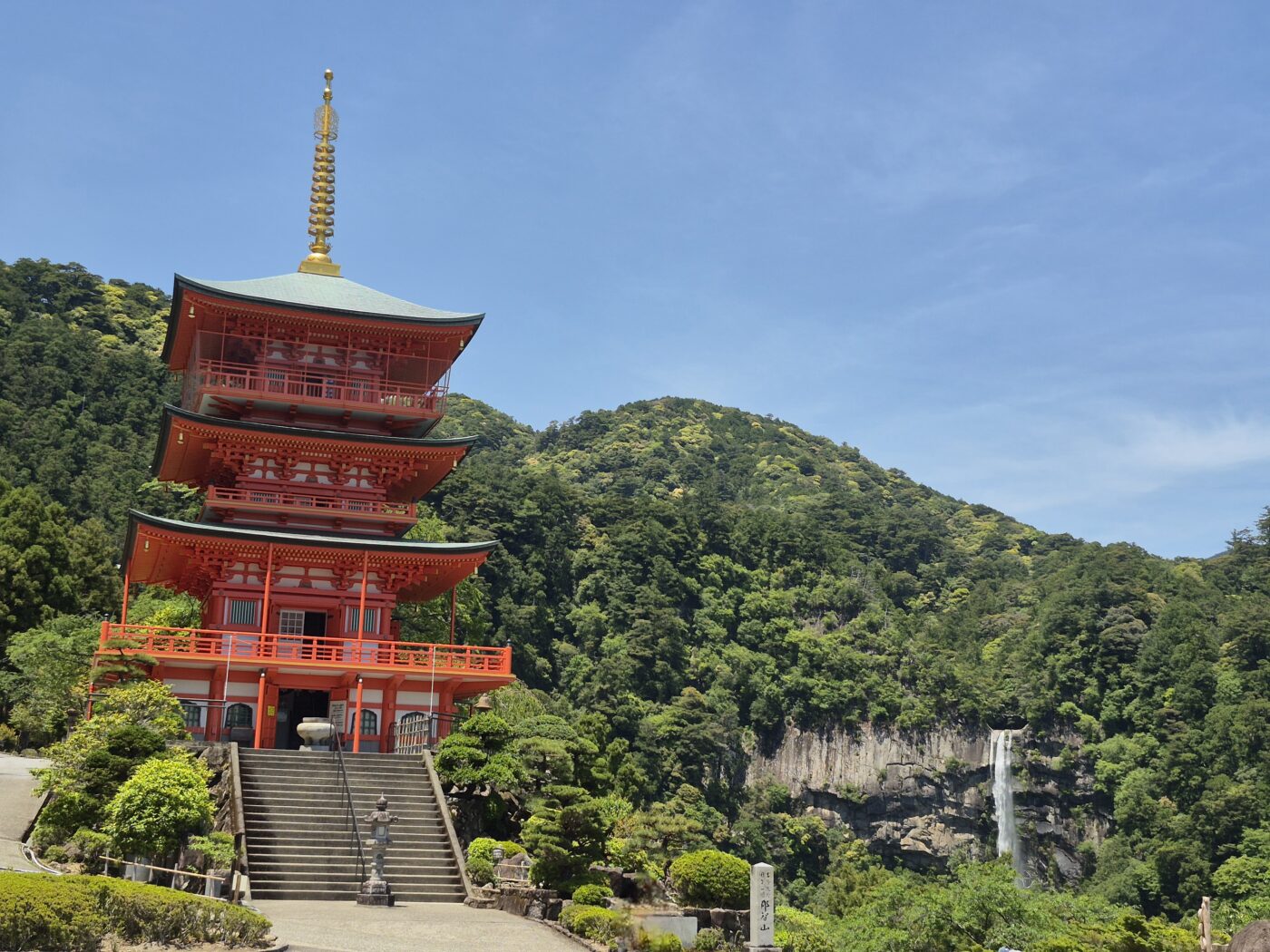
Is Nachi Falls Worth Visiting in 2026? You betcha! Not only is it Japan’s highest waterfall, with a single drop of 133 meters (436 ft), but also one of the most scenic and sacred spots in the country.
Nachi Falls (aka Nachi no Taki) is in the Wakayama prefecture on the southwestern coast of the Kii Peninsula. It belongs to the Sacred Sites and Pilgrimage Routes in the Kii Mountain Range, which became a UNESCO World Heritage Site in 2004. Nachi Falls is also a part of the Mount Nachi (Nachisan) area.
While Nachi Falls is the top attraction, there’s much more to see and do. For example, don’t miss Kumano Nachi Taisha Grand Shrine, Nachisan Seiganto-ji Temple, and the stunning Three-Storied Pagoda on your way to the waterfall.
I was thrilled to visit Nachi Falls in May 2025 and it’s one of my favourite places in Japan. I spent one night in the nearby coastal town of Kii-Katsuura and will give suggestions on hotels and where to get a yummy meal as well.
Disclosure: I only recommend products that I’ve used in the past, and all opinions expressed in this post are my own. This post contains affiliate links. If you use one of the links throughout the page to buy something, I may earn a small commission at no extra cost to you. Thank you!
How to Get to Nachi Falls with Public Transit
First of all, let’s find out how to get to Nachi Falls! Nachi Falls is a quite remote location in the Wakayama prefecture. In fact, way less tourists go here compared to Tokyo, Osaka, or Kyoto. But if you really want to see it, there’s a way!
The fastest option is taking the Kuroshio Limited Express train from Osaka Station to Kii-Katsuura (4 hours). Beautiful ocean views are a part of this longer journey as well! 😀
From Kyoto, take the Shinkansen to Nagoya, then transfer to the Nanki Limited Express train to Kii-Katsuura (about 4.5 hours). Trains from both cities only go a few times a day though, so it’s good to plan ahead or stop at another location for a few hours along the way.
After you arrive at Kii-Katsuura Station, just hop on bus #31 (Nachisan line) that takes you to Nachi Falls in 25 minutes! Or if you’re closer to Nachi Station, the same bus stops here and it’s only 17 minutes to the waterfall.
The bus to Nachisan goes once or twice an hour between 6:45 am to 5:35 pm. You can find the bus schedule here.
If you have the Japan Rail Pass, the cost to Kii-Katsuura Station is covered. Or regional passes, such as the Kansai WIDE Area Excursion Pass, work as well. Unfortunately, the bus to Nachisan is not included, but cash or credit cards are accepted as payment.
Things to See and Do in the Nachisan complex
Take the Daimonzaka Walking Trail
If you’re into hiking and nature, get off the bus at Daimonzaka (two stops before Nachi Falls) and take Daimonzaka Walking Trail to the Nachi Falls area. This peaceful cedar forest path is a part of the Kumano Kodo, a series of Japan’s most sacred ancient pilgrimage trails.
Visitors can grab a hiking pole next to the bus stop to help with their balance on Daimonzaka Walking Trail. The stone path is rather uneven and might be slippery when wet. Then, you’ll pass the Daimonzaka Stone Plate, which is the gateway to the trail.
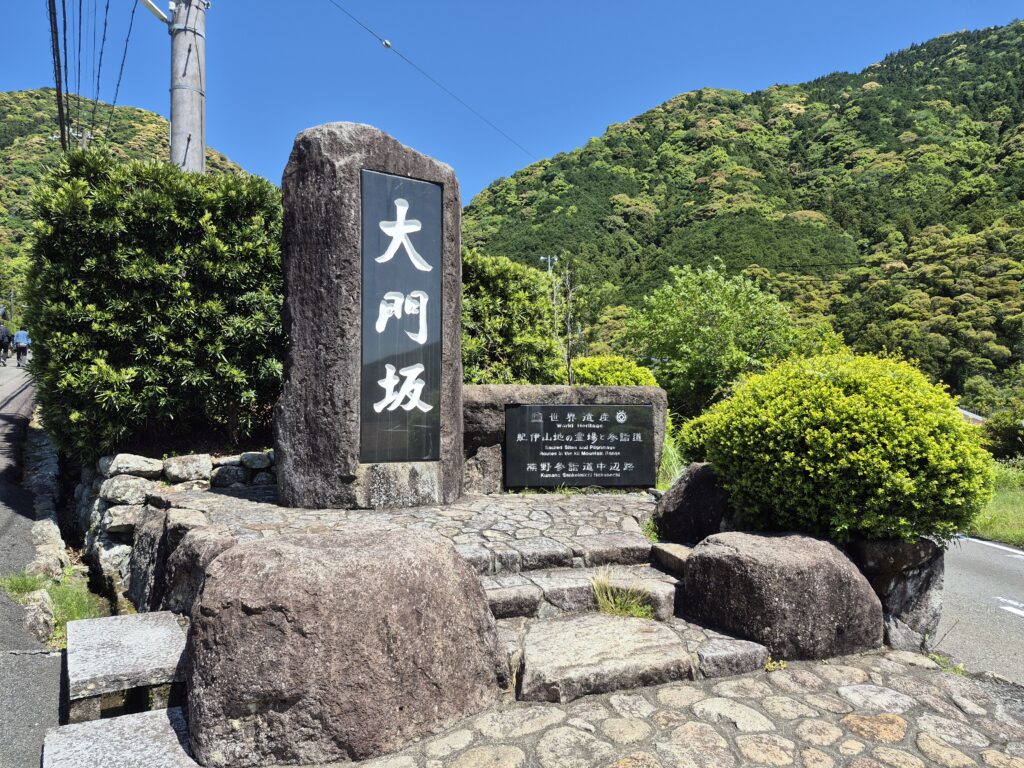
There’s a Japanese restaurant along the way if you need a break. Some people also like to rent a pilgrim’s costume from the Heian period at Daimonzaka Chaya and wear it along the way. Finally, if you collect Eki Stamps, you can get a Kumano Kodo themed stamp here!
Walking on Daimonzaka Walking Trail was such a special experience. I loved looking at the trees, like 800-year old Meoto-sugi (Husband and Wife tree), breathing in the fresh air, listening to bugs flying around, and often feeling a soft breeze in my hair.
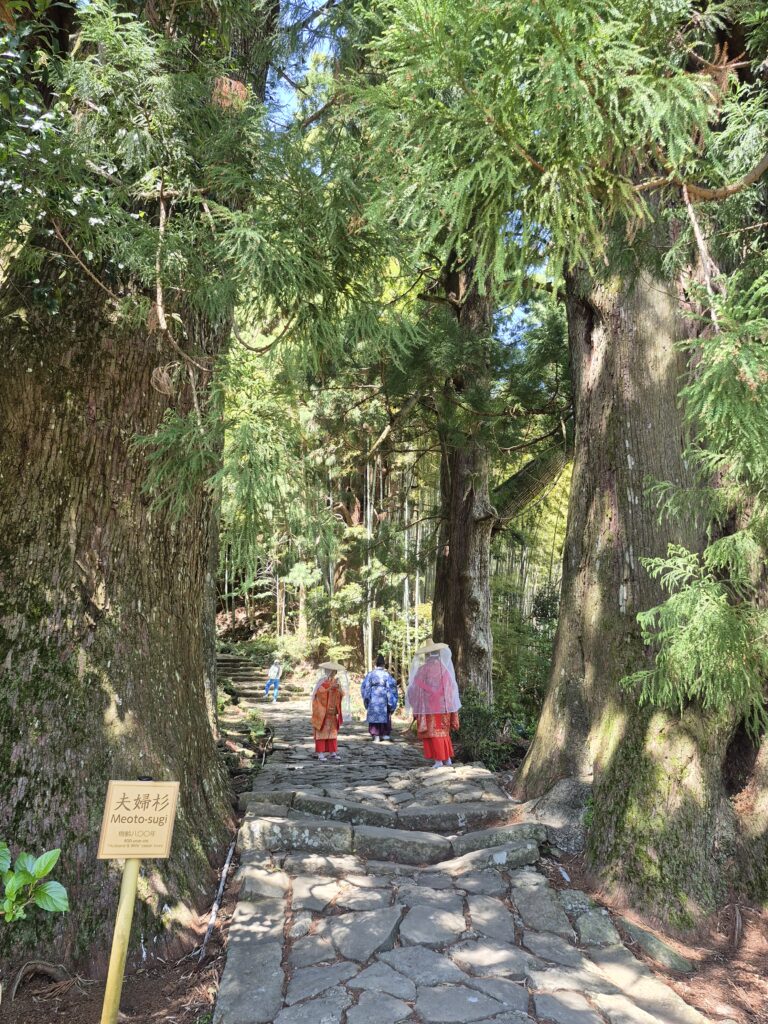
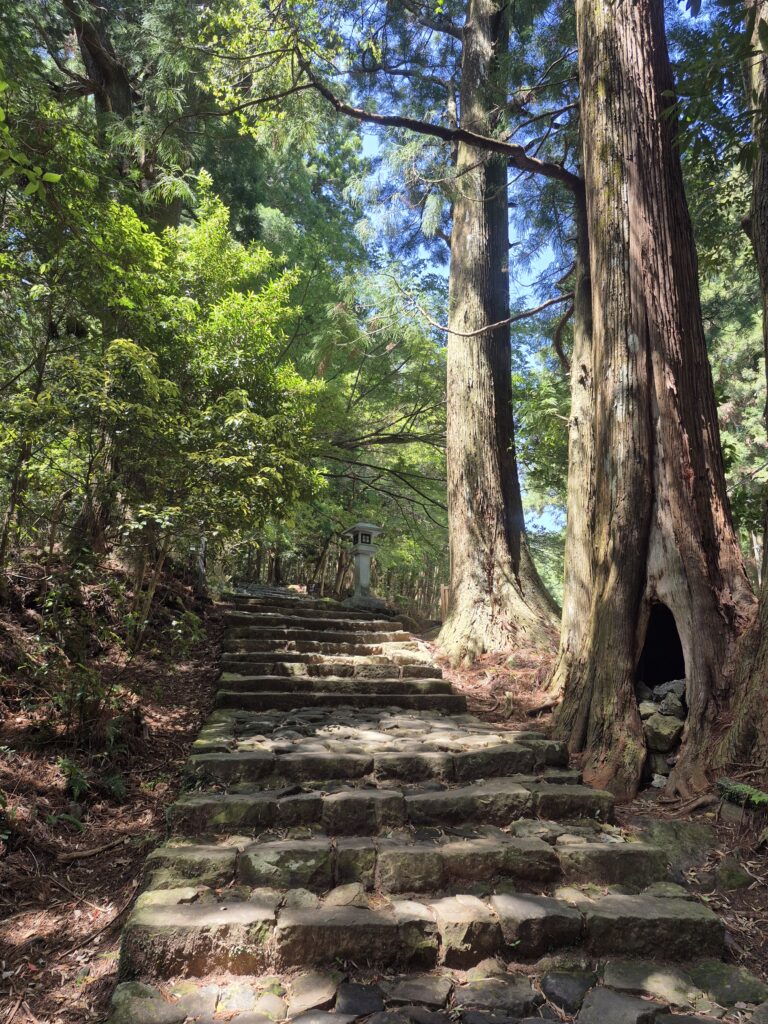
Daimonzaka Walking Trail is about 650 meters (0.40 miles) long. Once you reach the Nachi Falls area, there are a few souvenir shops where you can also get drinks and snacks before moving on, as well as a few restaurants and tea houses.
If you’re not able to hike this path, I recommend skipping it and getting off the bus at Nachi-no-Taki-Mae, which is just a few minutes walk from Nachi Falls and its surroundings.
Kumano Nachi Taisha Grand Shrine
Address: 1 Nachisan, Nachikatsuura, Higashimuro District, Wakayama 649-5301, Japan
Our first stop within the Nachi Falls area is Kumano Nachi Taisha Grand Shrine. It’s one of the three great pilgrimage Shinto shrines of the Kumano Kodo and is often called the most beautiful shrine of the entire pilgrimage.
Kumano Nachi Taisha Grand Shrine dates back to the 5th century, around the same time as Nachi Falls became a sacred spot in Japanese Shinto-Buddhism.
According to legend, this location was chosen after Yatagarasu, a three-legged crow, landed here after guiding the first emperor Jimmu to present-day Nara. Today Yatagarasu is Nachisan’s mascot, so you can find it in random places here.
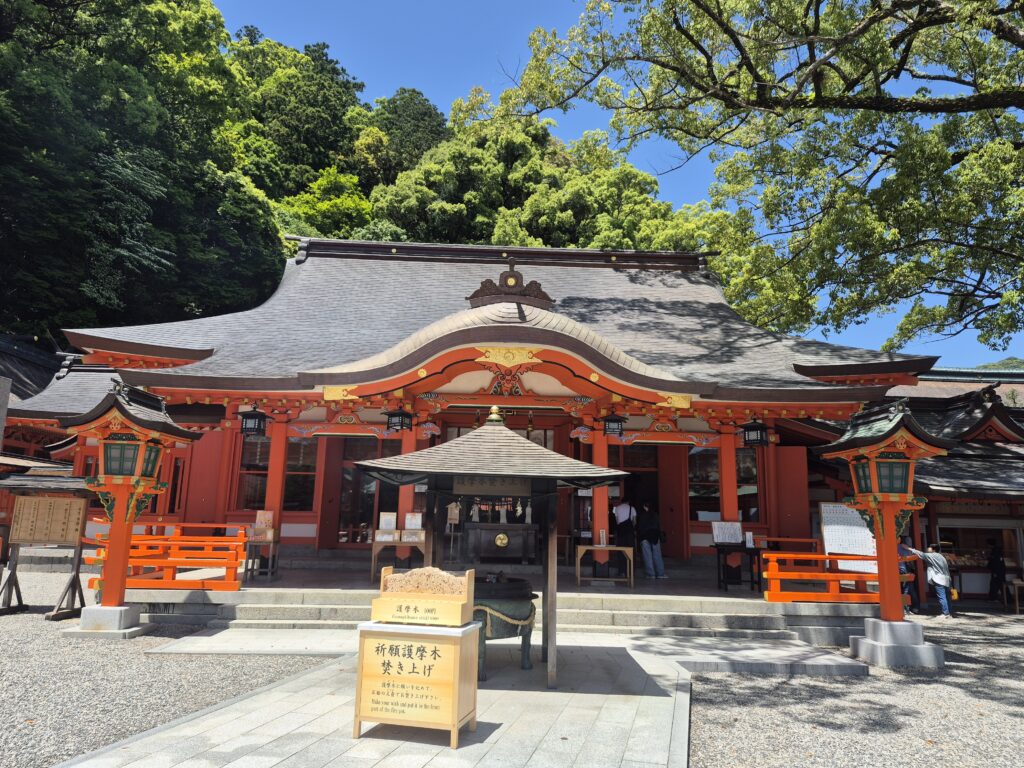
The shrine grounds sit inside a courtyard and include the Treasure Hall (homotsuden), Worship Hall (haiden), and the inner sanctum, which is closed to the public.
The latter consists of six separate sanctuaries (honden). This sacred complex also enshrines 12 deities of Kumano and the deity of Nachi Falls.
For a long time, Kumano Nachi Taisha Shrine and neighbouring Seiganto-ji Temple were a part of the same entity. But after the Meiji Restoration in 1868, the new government decided to separate Shintoism and Buddhism, so the temple is a few minutes away from the shrine.
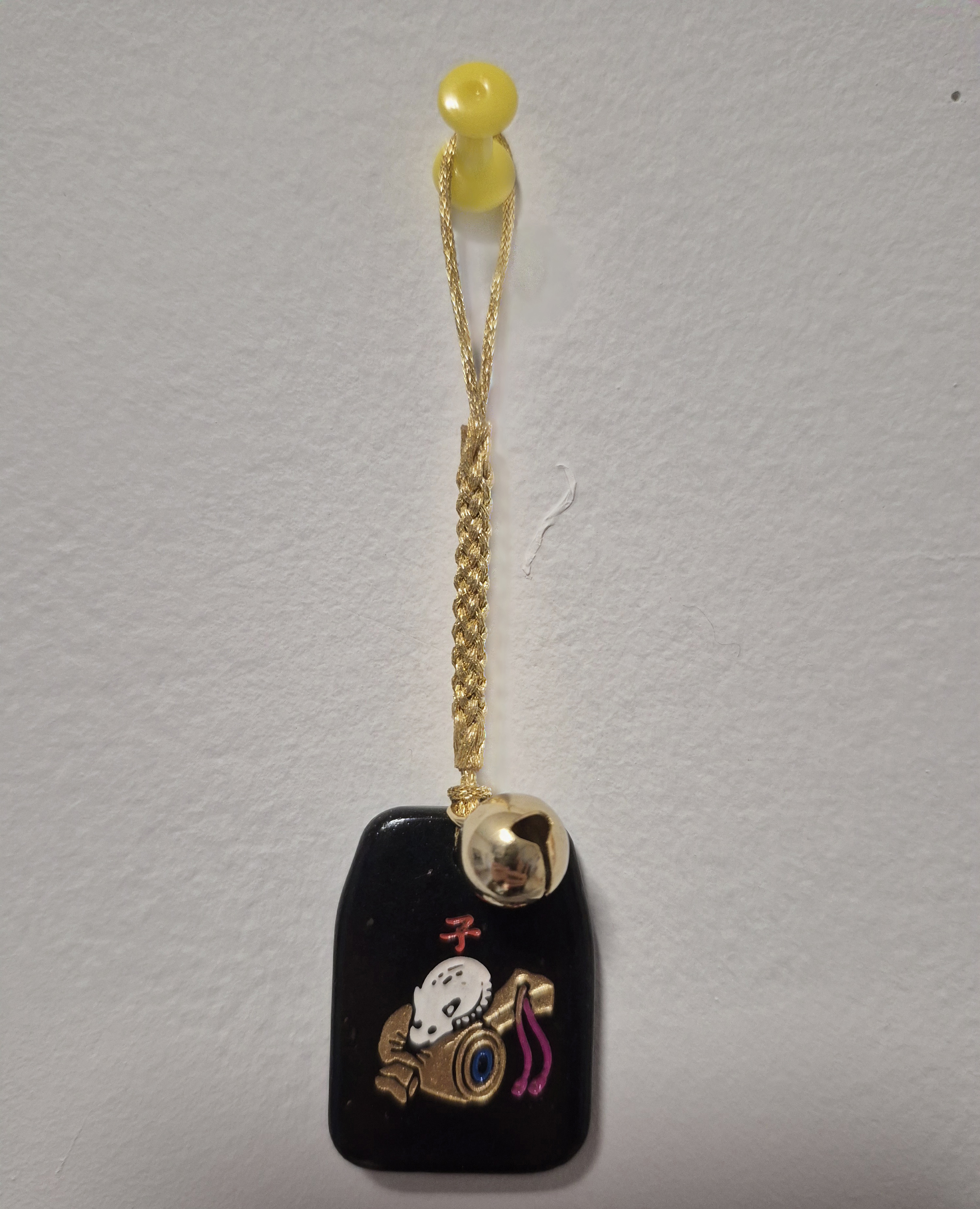
While it’s free to walk around the shrine complex, visitors need to pay 300 ¥ to enter the Treasure Hall. Kumano Nachi Taisha Shrine is open daily from 8:30 am to 4:30 pm. Similar to other shrines in Japan, visitors can buy beautiful lucky charms here as well.
Walk through the Sacred Camphor Tree
Next to the shrine is the Sacred Camphor Tree, which is 850 years old! Visitors are welcome to write a wish and their name on a Gomagi (homa stick) or Kigan Ema (wooden plague), then walk through the tree’s roots to its trunk.
Once you go out of the tree on its back side, you’re supposed to leave the gomagi or ema. It is said that the wish will come true and the gomagi are burned on the 18th of every month during a praying ritual.
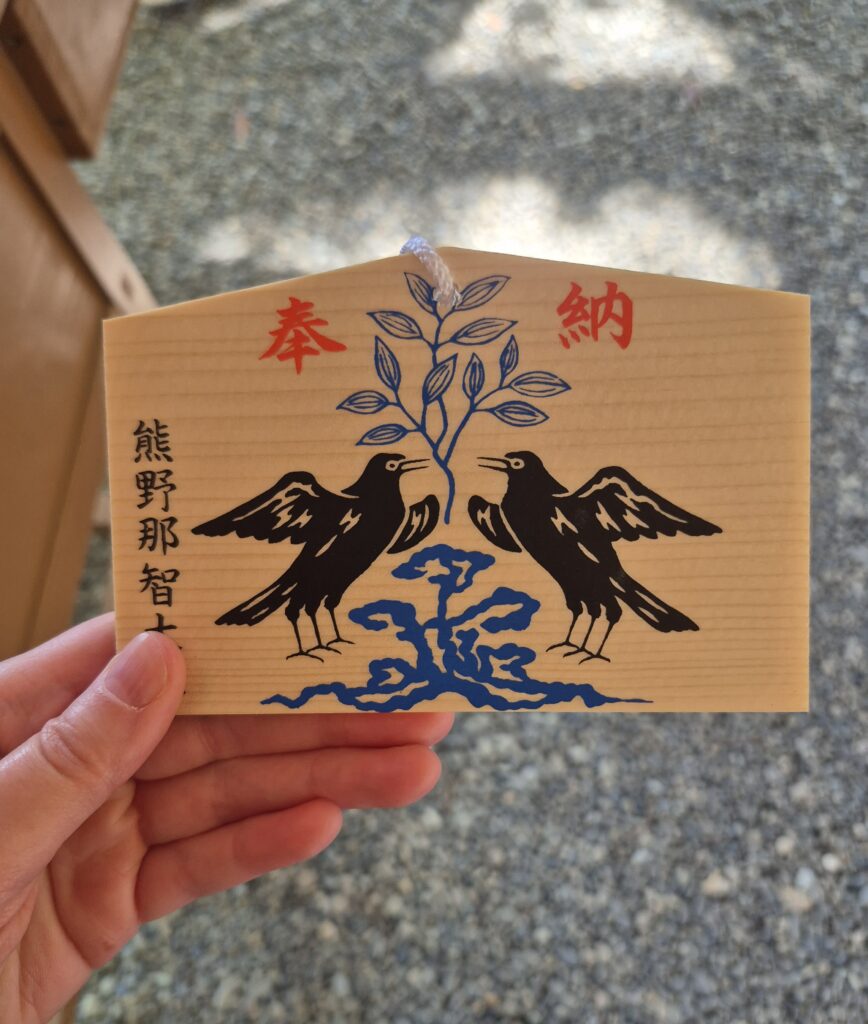
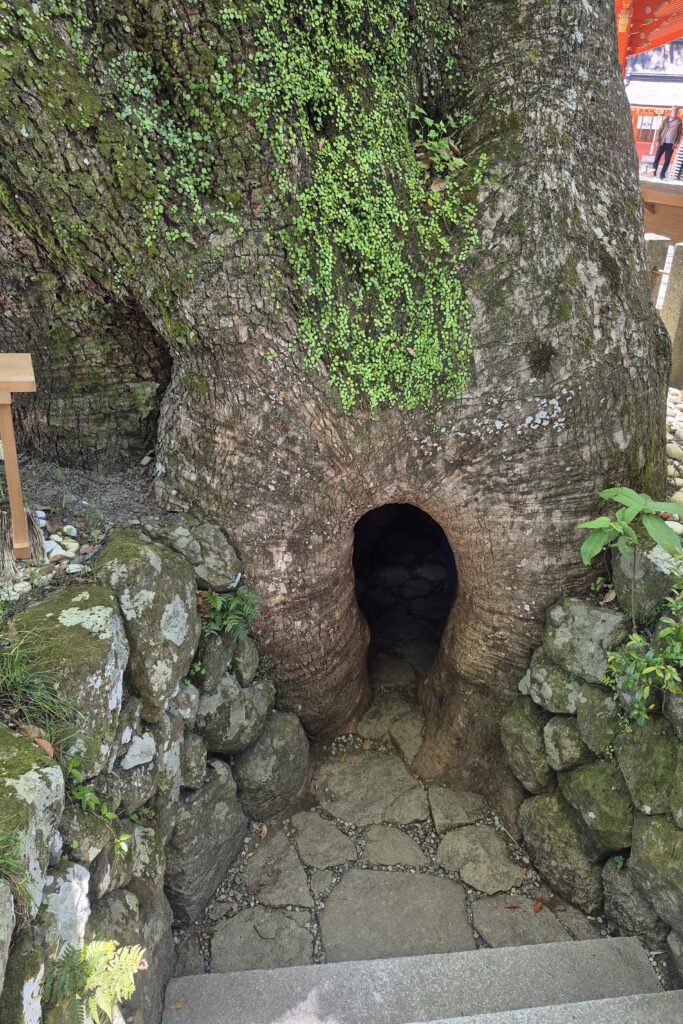
The wooden Kigan Ema and the entrance to the Sacred Camphor Tree.
The cost is 300 ¥ for the gomagi and 500¥ for the ema. You can just put the coins inside the box before the tree entrance.
Nachisan Seiganto-ji Temple
Address: 8 Nachisan, Nachikatsuura, Higashimuro District, Wakayama 649-5301, Japan
The original Nachisan Seiganto-ji Temple dated back to the 4th century. It belongs to the Tendai school in Japanese Buddhism and is the first of 33 temples on the Saigoku Kannon Pilgrimage Route.
Sadly, a big part of the temple buildings, including the Main Hall, were burned down by the warlord Oda Nobunaga in the 16th Century. It was rebuilt in 1590 by the feudal lord Toyotomi Hideyoshi.
In 1868, Seiganto-ji Temple and Kumano Nachi Taisha Grand Shrine were separated as ordered by the new Meiji government.
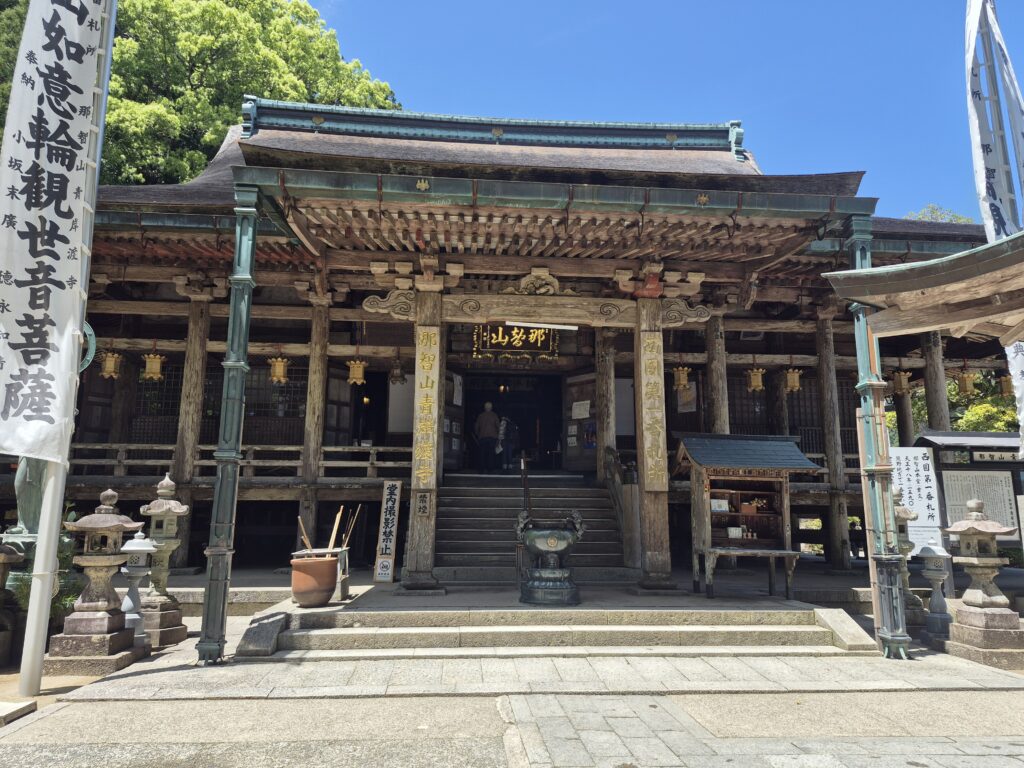
Today visitors can look at the wooden Main Hall (Nyoirin-do), Hokyoin pagoda (built in 1322 and the oldest Hokyoin pagoda in Japan), Sanmon Gate, and the temple bell (built in 1342). The bell is rung every morning at 7 am.
There’s also a secret Buddha statue at the Main Hall, which is only unveiled three times a year.
There’s no fee to enter Seiganto-ji Temple and it’s open daily from 7 am to 4:30 pm. Visitors can look at several Buddhist statues inside the Main Hall (photography was not allowed when I visited). You can also buy amulets, prayer beads, pilgrimage supplies, and sutra books at Seiganto-ji Temple.
Three-Storied Pagoda at Seiganto-ji Temple
Address: 68 Nachisan, Nachikatsuura, Higashimuro District, Wakayama 649-5301, Japan
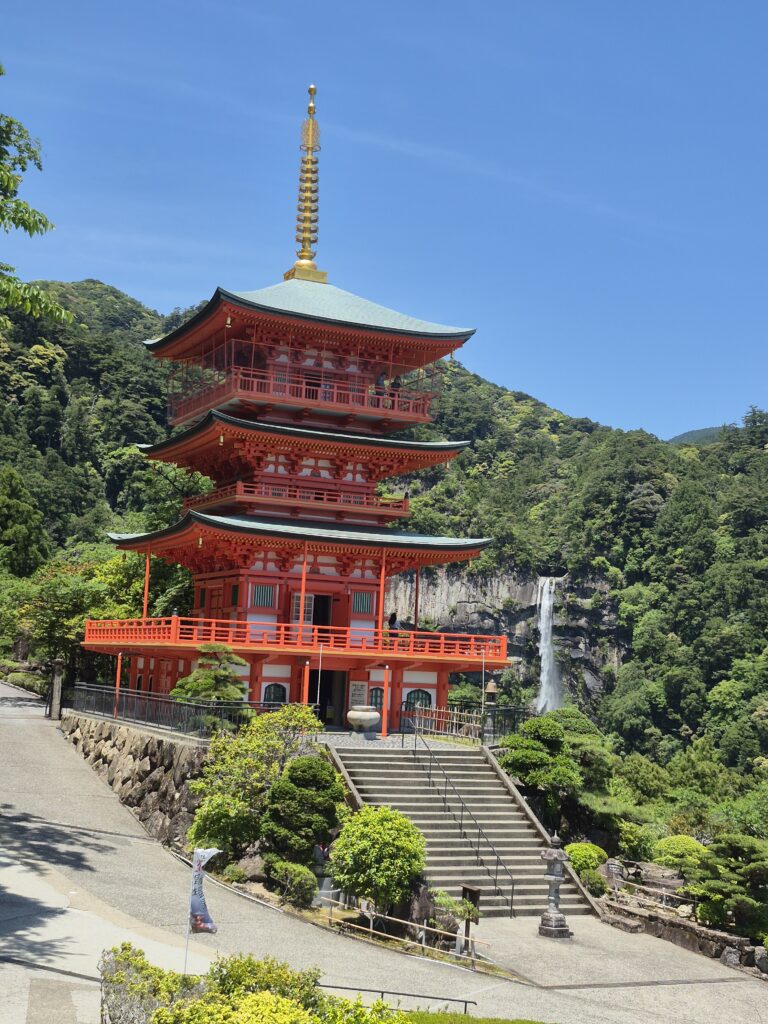
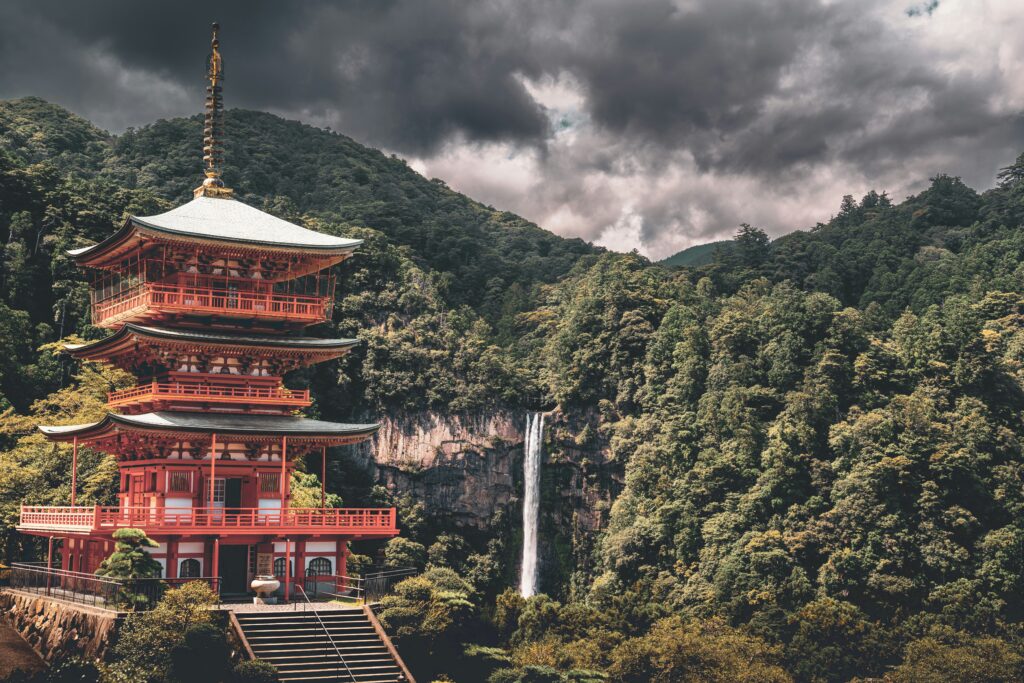
The most eye-catching part of the Seiganto-ji Temple complex is the vermilion Three-Storied Pagoda. It sits proudly in front of Nachi Falls and these two landmarks combined are one of the most photogenic views of Japan.
The original pagoda burned down in 1581 due to the civil unrest of the Warring States period. Unlike other buildings of the temple grounds, it was only reconstructed in 1972. The pagoda has been culturally and spiritually important until the present day.
Every floor of the pagoda (not including the ground floor) contains a statue of a Buddhist deity. You can find a Fudo Myo-o statue on the first floor, Amida Buddha statue on the second floor, and the Thousand-Armed Kannon statue on the third floor.
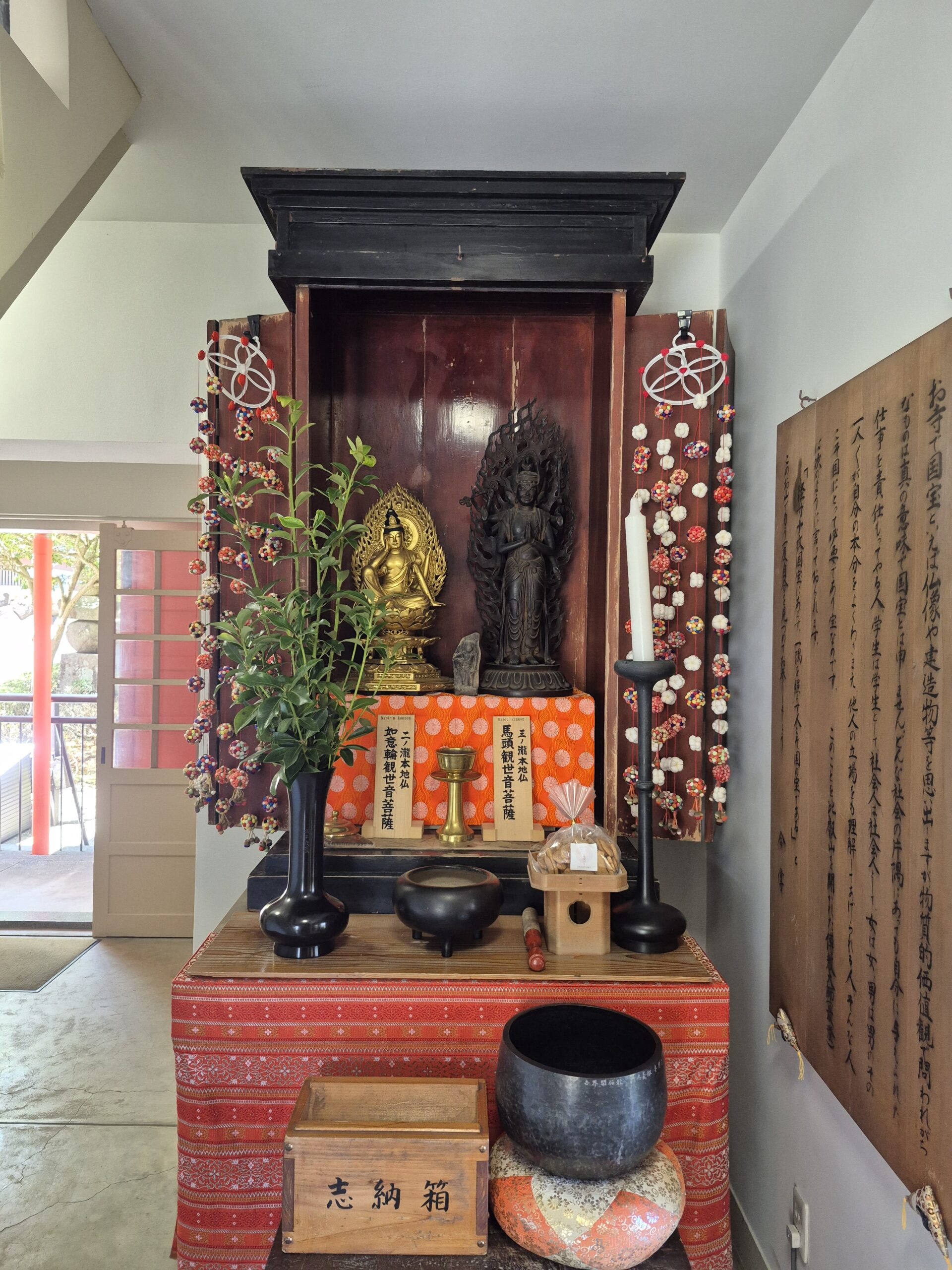
The last one is the bodhisattva of compassion. Buddhists believe that Hiro Gongen, the deity of Nachi Falls, is a manifestation of Kannon. There are also beautiful murals on the walls of the pagoda.
Finally, visitors can enjoy an amazing view of Nachi Falls and the Pacific Ocean from the top floor. There’s an admission fee of 500¥ per person to enter the Three-Storied Pagoda and it’s open daily from 9 am to 4 pm.
Nachi Falls
After walking for another 10 minutes or so, we finally get to see Nachi Falls from up close (though you can already hear it roaring in the distance before seeing it)!
According to legend, Nachi Falls was discovered by Japan’s first emperor Jimmu in the 8th century BC. It felt amazing to stand near the base of this breathtaking waterfall, which has been worshipped by people for so many centuries.
Visitors can stand beneath Nachi Falls on the Viewing Platform after paying the admission of 300¥. It offers a more direct view of the falls, without any distractions. So it’s the perfect spot for taking pictures of Nachi Falls.
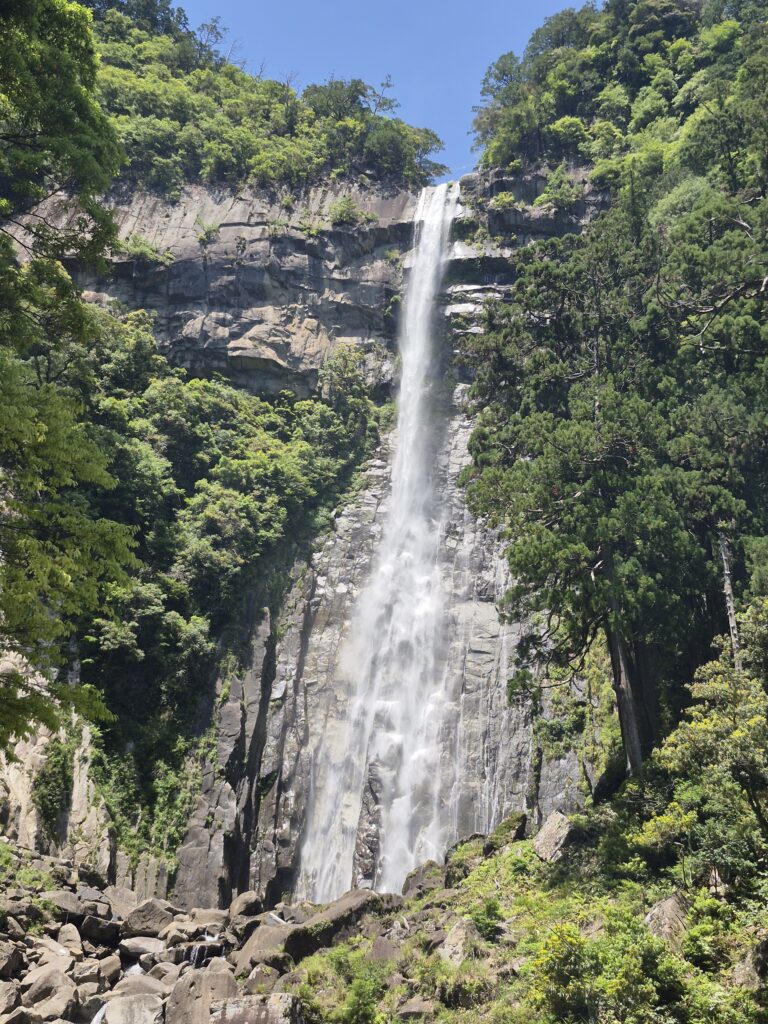
But you can also find other great photo opportunities while walking around the Nachi Falls complex, so paying to go on the Viewing Platform is not necessary.
At the top of Nachi Falls you can see a shimenawa rope, which represents that this is a sacred and pure place. It’s a Shinto ritual to change the rope every year on July 9 and December 27.
Hiro-jinja Shrine
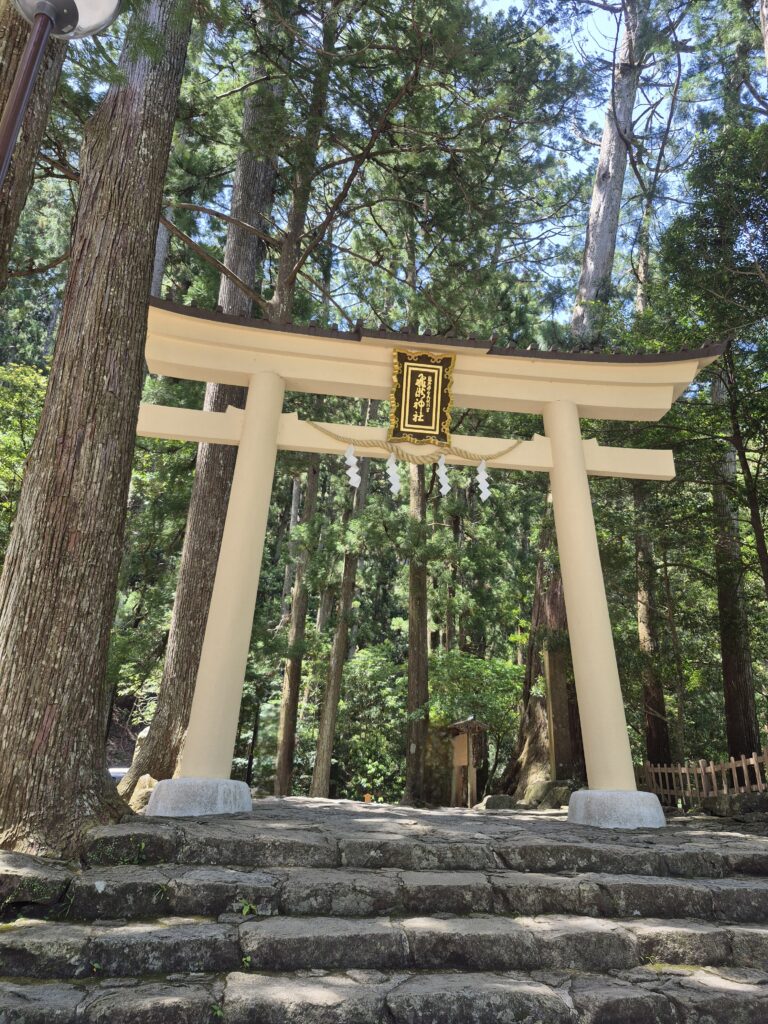
Just a few steps from Nachi Falls is Hiro-jinja Shrine. This Shinto shrine is a branch shrine of the Kumano Nachi Taisha Shrine.
While this shrine has no worship hall, people pray towards Nachi falls as it is the shrine’s shintai (object to worship). In fact, Hiro Gongen, an important deity in Shintoism, is believed to live inside Nachi Falls.
Every year on July 14th, Kumano Nachi Taisha Shrine hosts the annual Nachi Fire Festival. In this Shinto ritual, 12 portable shrines representing 12 divine spirits of the waterfall are purified by flaming torches. They are also carried to Hiro-jinja Shrine for a one-day “Homecoming”.
Where to Stay in Kii-Katsuura
The charming town of Kii-Katsuura (also known as Nachi-Katsuura) is the perfect place to stay if you’re visiting Nachi Falls. From luxury resorts, to ryokans (Japanese traditional inn), hotels, and hostels, Kii-Katsuura has accommodation options for every traveler’s budget.
I booked one night at Hotel Nagisaya, which is a 5-minute drive from Kii-Katsuura Station. This cozy hotel offers Japanese-style rooms with a private bathroom and often a stunning ocean view!
The staff was very nice and the vegetarian Japanese breakfast was super yummy 😛 They also offer indoor and outdoor hot spring baths (with ocean view) at Hotel Nagisaya, so this is a great spot to relax after a long train ride!
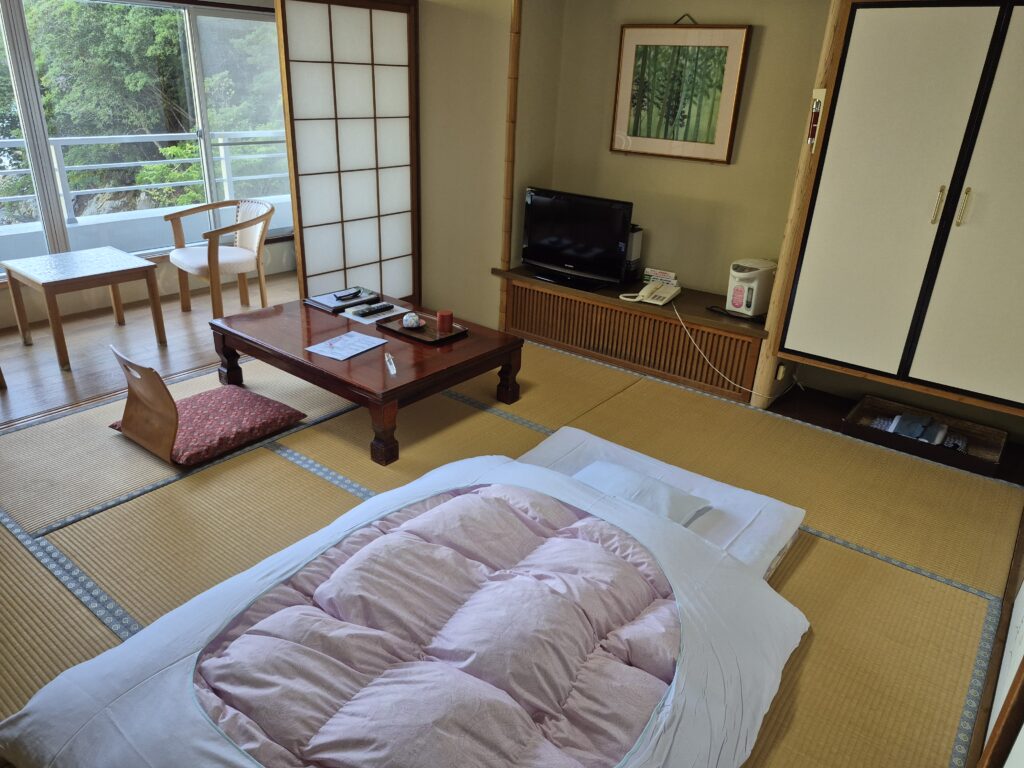
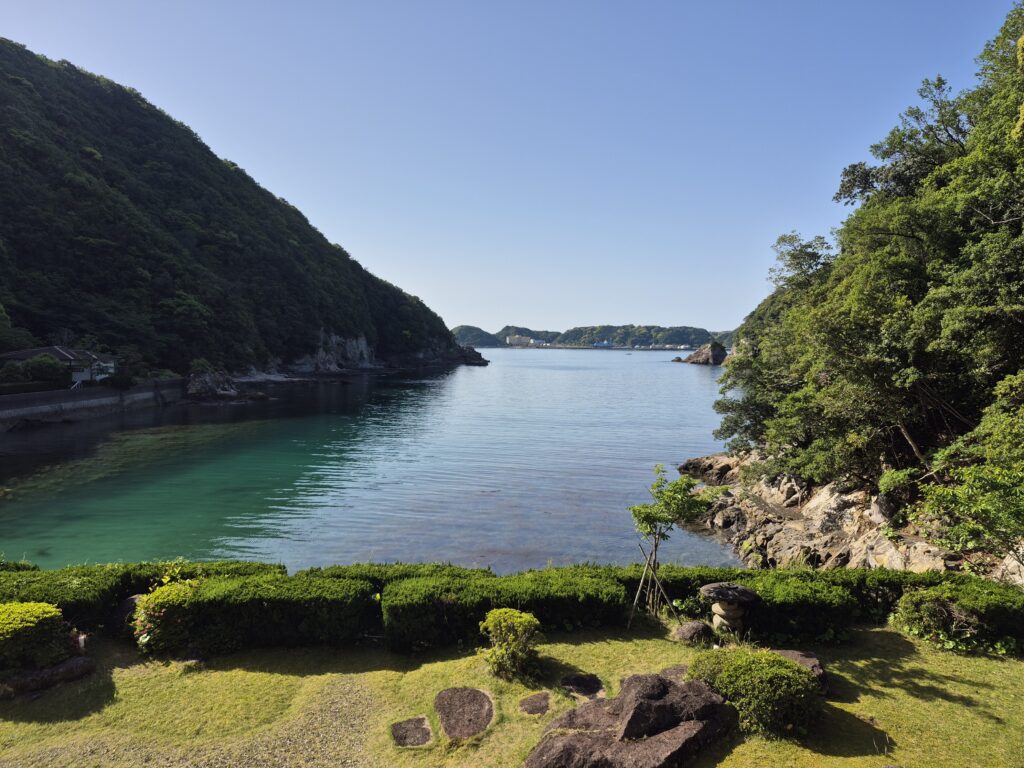
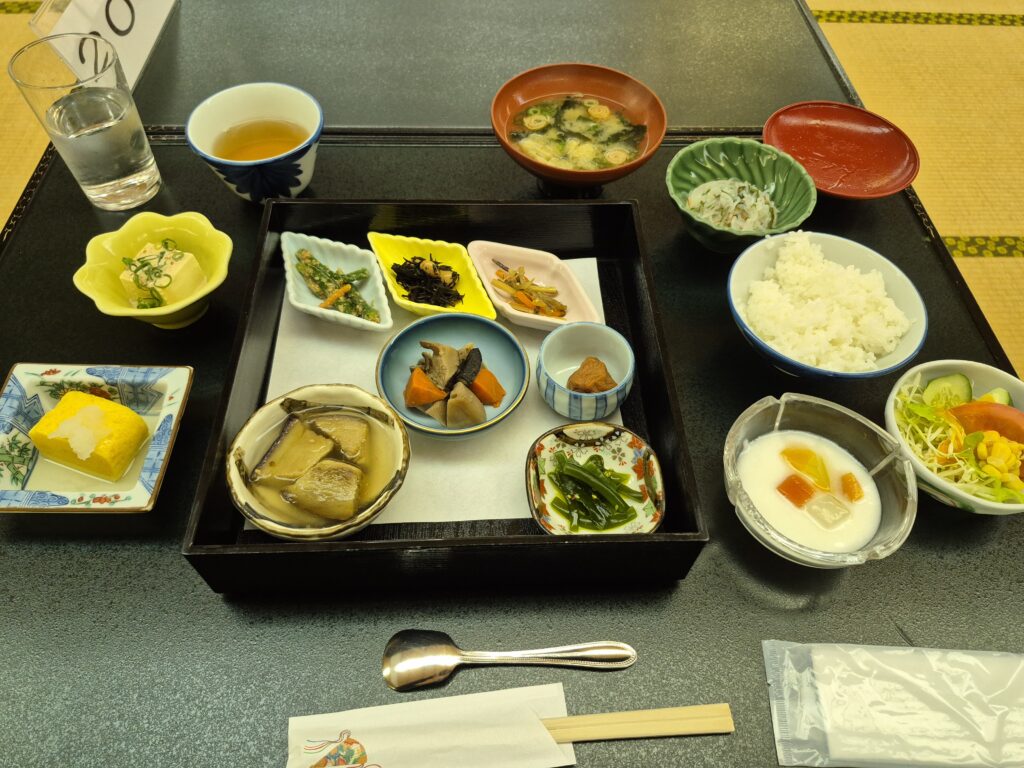
Another bonus is that the hotel offers a free shuttle bus from/to Kii-Katsuura Station, as it takes quite a while to walk and there are no public buses going to Hotel Nagisaya. Local taxi service is available as well.
Where to Eat & Drink in Kii-Katsuura
Kii-Katsuura is not just the gateway to Nachi Falls, but also has a thriving fishing port. So it’s a paradise for seafood lovers and the town is famous for having the highest catch of tuna in Japan.
If you’re into that, there are tons of chances to try this kind of food at local restaurants here.
Fortunately, there are restaurants with vegetarian options in Kii-Katsuura as well. For example, Wine Kumano has a Pizza Margarita, which was super yummy! This cozy Spanish-style bar is only minutes from Kii-Katsuura Station.

The menu features many Western-style dishes, like Fish’N’Chips, burgers, Spaghetti Carbonara, and even poutine! Wine Kumano is also known for serving natural wine, craft beer, and specialty coffee. An English menu is available as well.
How Many Days Should I Spend in the Nachi Falls area?
If you’re just in the area to see Nachi Falls and its surroundings, staying in Kii-Katsuura for one night is perfect. You’ll get a good impression of this pretty and welcoming Japanese town that not as many tourists go to.
I spent a half day in the Nachi Falls area. This gave me lots of time to walk the Daimonzaka Trail, visit Kumano Nachi Taisha Grand Shrine, Seiganto-ji Temple and the Three-Storied Pagoda, and finally, buying some ice-cream and awesome souvenirs! 😀
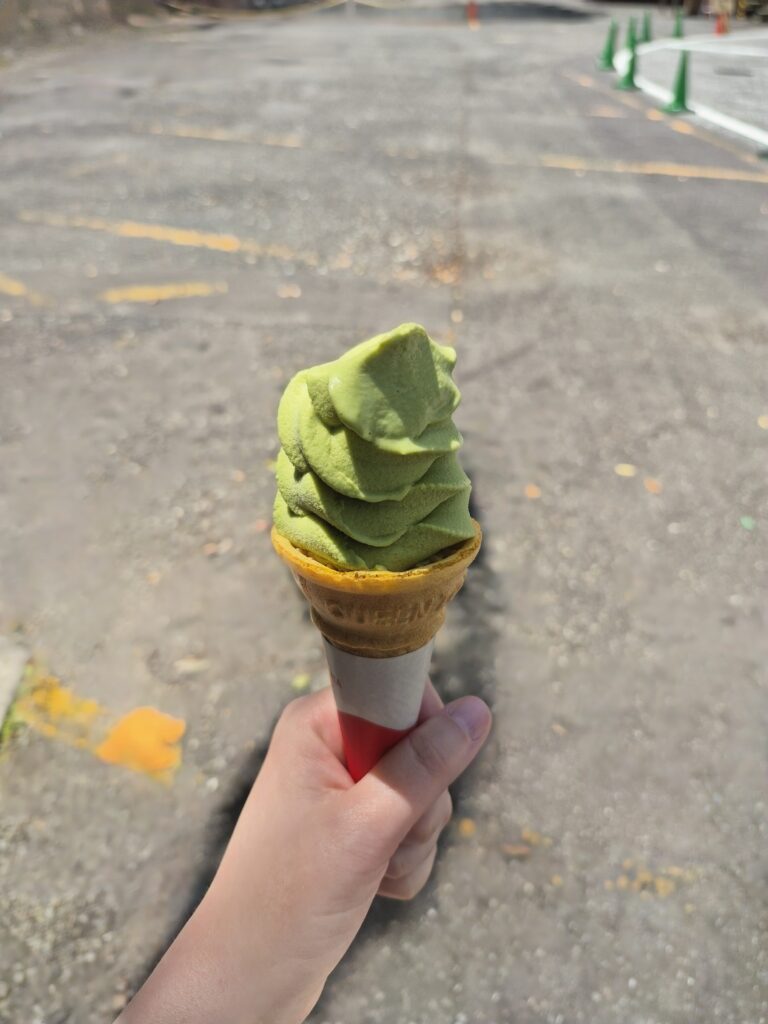
While it’s possible to visit Nachi Falls on a daytrip from Osaka or Kyoto, I wouldn’t recommend it. It’s such a long train ride (8-10 hours return) and you’d be quite in a rush to see the many attractions around Nachi Falls.
The Best Time to Visit Nachi Falls
The Nachi Falls area is a beautiful place to visit year-round. In spring, the green of the trees adds an amazing background. In the summer, this spot is great for a break from the heat and humidity.
In the fall, the tree leaves turn red and yellow, which creates a beautiful contrast with the white water of the falls. In winter, the combination of snow and the waterfall is a picture-perfect opportunity as well.
If you’re visiting Nachi Falls at sunrise or sunset, there’s a chance that the sun light and mist rising from the waterfall create a rainbow!
Finally, visiting Nachi Falls during cloudy or rainy weather is awesome as well, as it contributes to an even more mystical atmosphere.
Conclusion: Is Nachi Falls Worth Visiting in 2026?
Yes, Nachi Falls is Worth Visiting in 2026! While it’s a bit far from larger cities like Osaka or Hiroshima, spending time at Nachi Falls, which has been a culturally and spiritually important spot for over 1,000 years, is a very special experience.
Aside from admiring Nachi Falls and the Three-Storied Pagoda, it amazed me that two different faiths are in such great harmony that their sacred buildings are only a few minutes away from each other.
Besides, walking a part of the Kumano Kodo had been on my bucket list for a while, so I’m very grateful for this experience. Finally, the kindness of local people (the tourist information staff by Kii-Katsuura Station, hotel clerks, and restaurant staff) contributed to an amazing time here as well.
So if you’re thinking about visiting Nachi Falls on your Japan trip in 2026, I’d say “yatsu te mi te” (Go for it!) 😀
Traveling around Japan for a While? Then check out these posts:
What is Kanazawa, Japan Famous for?
How to Spend Four Days in Tokyo, Japan

Writing and traveling have been my passions for 25+ years, so I launched this travel blog in May 2020. I love writing travel guides about amazing destinations and I'm passionate about music tourism and animal-friendly and sustainable travel.
So far, I've been to 20 countries on five continents, and Japan and Iceland were my favourites!
- IS WROCLAW, POLAND WORTH A VISIT IN 2026? - September 6, 2026
- A FIRST-TIME VISITOR’S GUIDE TO VICTORIA, BC: THE 18 BEST THINGS TO DO - May 31, 2026
- THE 6 BEST THINGS TO DO IN BEPPU IN ONE DAY - April 29, 2026


Leave a Reply