
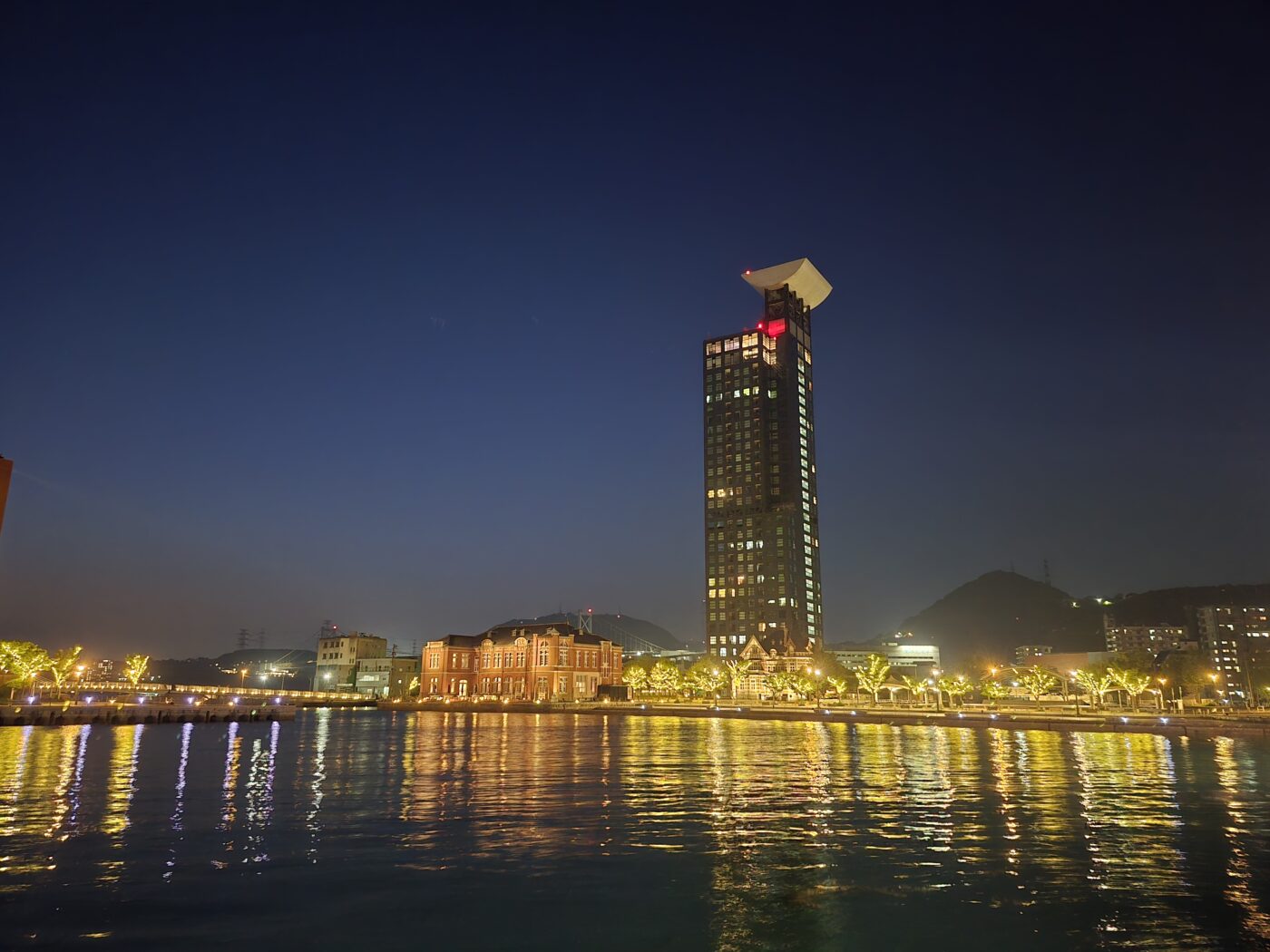
Moji is a district of Kitakyushu City and sits at the very northern tip of Kyushu, Japan’s third largest main island. This charming town is known as the closest spot between Kyushu and Honshu island.
Moji was an important international trading port in the late 19th and 20th century, especially for the Asian mainland. That’s why it’s still called Mojiko (Moji Port) today. Moji was a gateway not just for freight, but also for western ideas, art, and design.
While the port declined as other transportation options became available with time, Moji is still known for its well preserved historic buildings from the Meiji and Taisho eras that are a mix of European and Japanese elements.
Besides, Moji has some great shopping and restaurants, as well as stunning Meraki Shrine and Kanmon Bridge.
I stopped for a Day in Moji on my Japan trip in May 2025 and I’m so glad I did! So to find out why Moji, Japan should be on your Japan itinerary, keep on reading! 😉
Disclosure: I only recommend products that I’ve used in the past, and all opinions expressed in this post are my own. This post contains affiliate links. If you use one of the links throughout the page to buy something, I may earn a small commission at no extra cost to you. Thank you!
The Best Things to See and Do in Moji
Mojiko Station
Address: 1 Chome-5-31 Nishikaigan, Moji Ward, Kitakyushu, Fukuoka 801-0841, Japan
Moji’s first attraction is right in front of you after getting off the train: Mojiko Station. This Neo-Renaissance train station dates back to 1891 and was last updated in 1914. It’s one of Japan’s oldest and most atmospheric railway stations.
Mojiko Station has a tourist information, Family Mart, restaurants, as well as a Starbucks. Surprisingly, when the train station first opened, the latter was a waiting area for third class passengers. Back then, Japanese train cars were separated between first, second, and third class.
Mojiko Station sits on a central square with a fountain in Moji’s town centre.
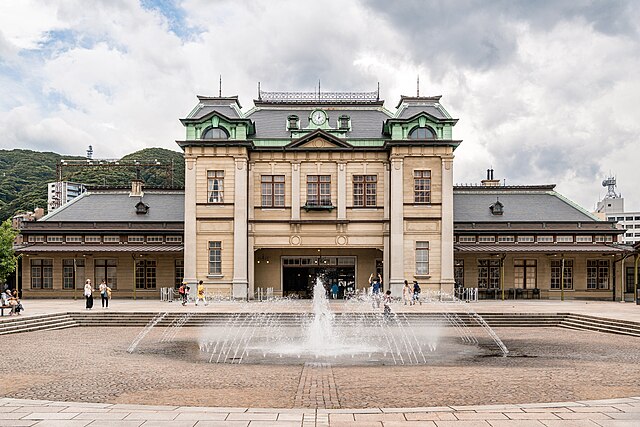
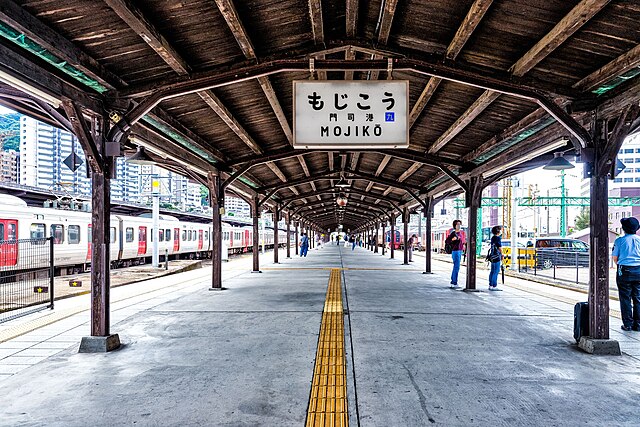
Mojiko Station and fountain and train platform. Photo credit: Jranar and jason199567 on Wikimedia Commons.
Mojiko Retro Observation Deck
Address: 1-32 Higashikocho, Moji Ward, Kitakyushu, Fukuoka 801-0853, Japan
Visitors who’d like to see Moji and its surrounding area from a bird’s eye perspective should check out Mojiko Retro Observation Deck. The deck is on the 31st floor of Retro High Mart, a high-rise skyscraper, which is 103 meters (337 ft) tall! It’s the highest building of the region.
After taking the elevator to the top, you can enjoy a 270-degree view of Moji Port, ships passing through Kanmon Strait, Kanmon Bridge, Mt. Hinoyama, as well as Shimonoseki City on Honshu island through the glass windows.
While the view from Mojiko Retro Observation Deck is amazing all day, it’s best to admire the area once it’s dark out. In fact, this spot is certified as a Japanese Night View Heritage Site! There’s also a café (that also sells local beer) at the observation deck.
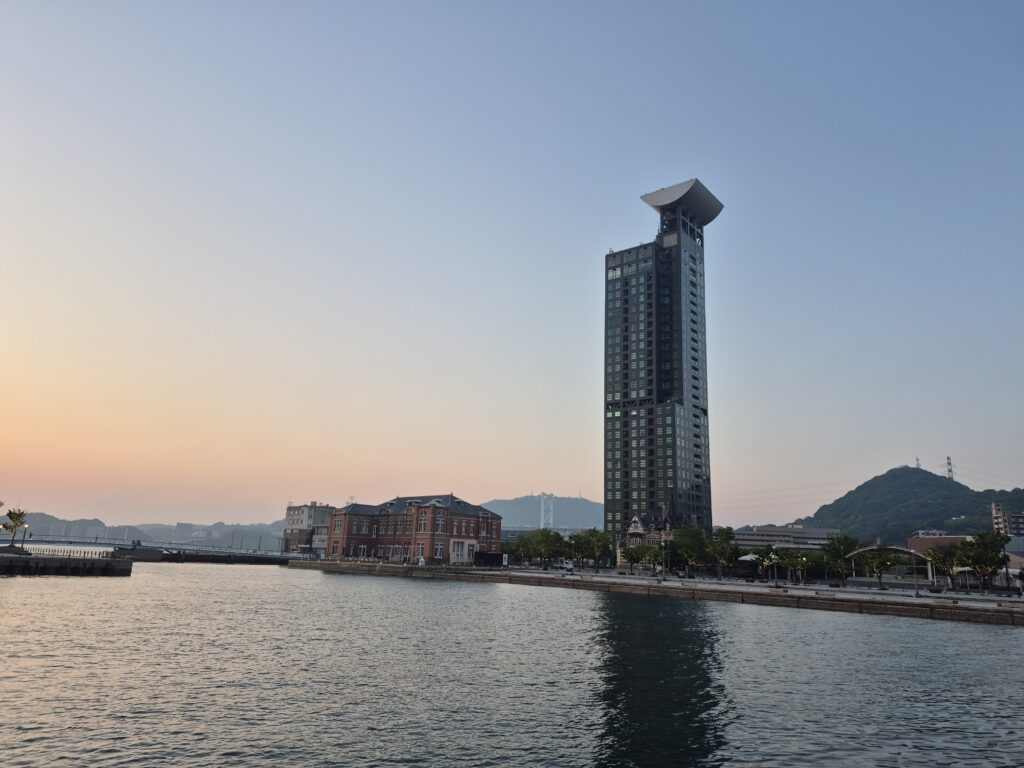
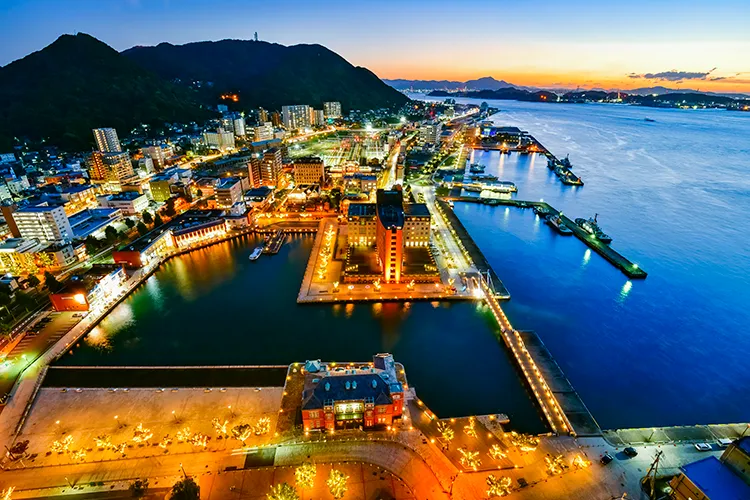
Photo #1: Mojiko Retro Observation Tower and nighttime view from the deck. Photo #2 credit: ©mojiko co-creation project team consortium.
Mojiko Retro Observation Deck is open daily (except on four irregular holidays per year) from 10 am to 10 pm (last entry at 9:30 pm) and admission is 300¥.
Former Moji Mitsui Club
Address: 7-1 Minatomachi, Moji Ward, Kitakyushu, Fukuoka 801-0852, Japan
Just a few steps away is Former Moji Mitsui Club, which dates back to 1921. Initially, it was built for staff and guests of Mitsui & Co. Ltd, one of the main trading companies in Moji. It’s is the perfect example of a building with European and Japanese elements.
The outside facade is in European style and the black timbers, slated roof, and textured mortar walls are inspired by German design. But the annex on its northside with a tiled roof and plaster walls is unmistakably Japanese.
The inside of Former Moji Mitsui Club features an elegant sitting room with chandelier, ornate mantelpiece, marble fireplace, and a parlor with a grand piano for events. Many of these elements are in Art Deco style.
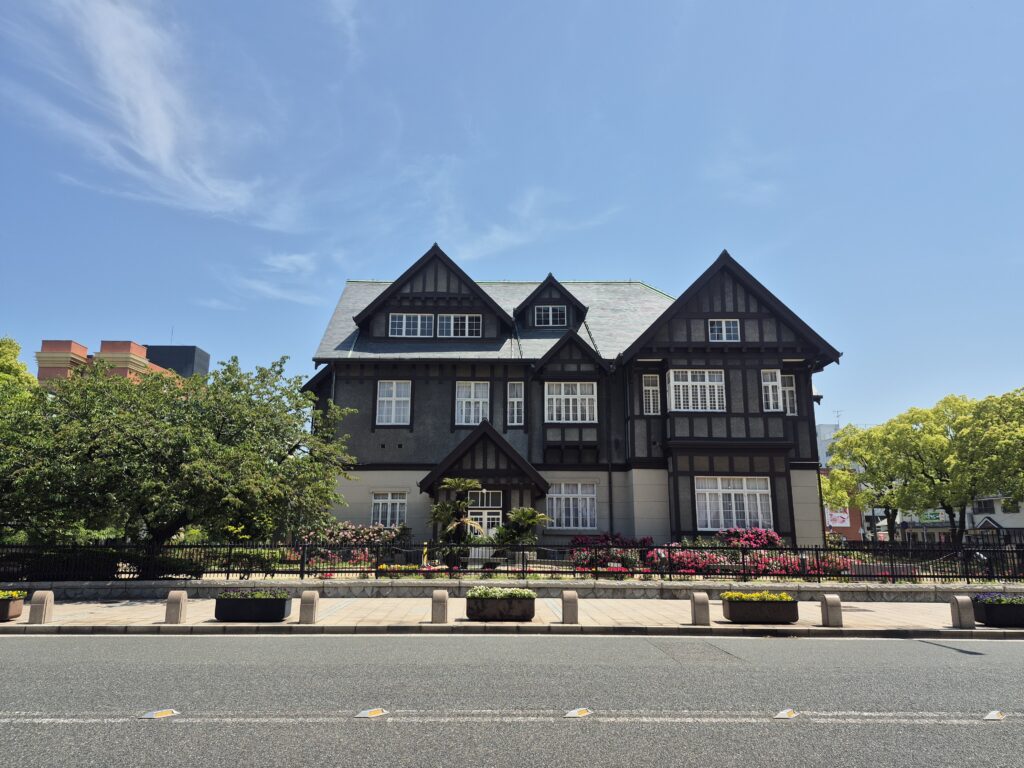
During the first 27 years of its existence, Former Moji Mitsui Club was also a guesthouse. The most famous guests who stayed here are Albert Einstein and his wife Elsa on their Japan trip in 1922!
Today visitors can check out the Einstein Memorial Room suite, which was set up the way it looked when the couple stayed here. Besides, there’s a restaurant serving Western and local Japanese dishes, including puffer fish sashimi!
Former Moji Mitsui Club is open daily from 9 am to 5 pm, but the restaurant hours are irregular at this time. Admission to see the Einstein Memorial Room suite on the second floor is 150¥.
Blue Wing Moji Bridge
Address: 4-1 Minatomachi, Moji Ward, Kitakyushu, Fukuoka 801-0852, Japan
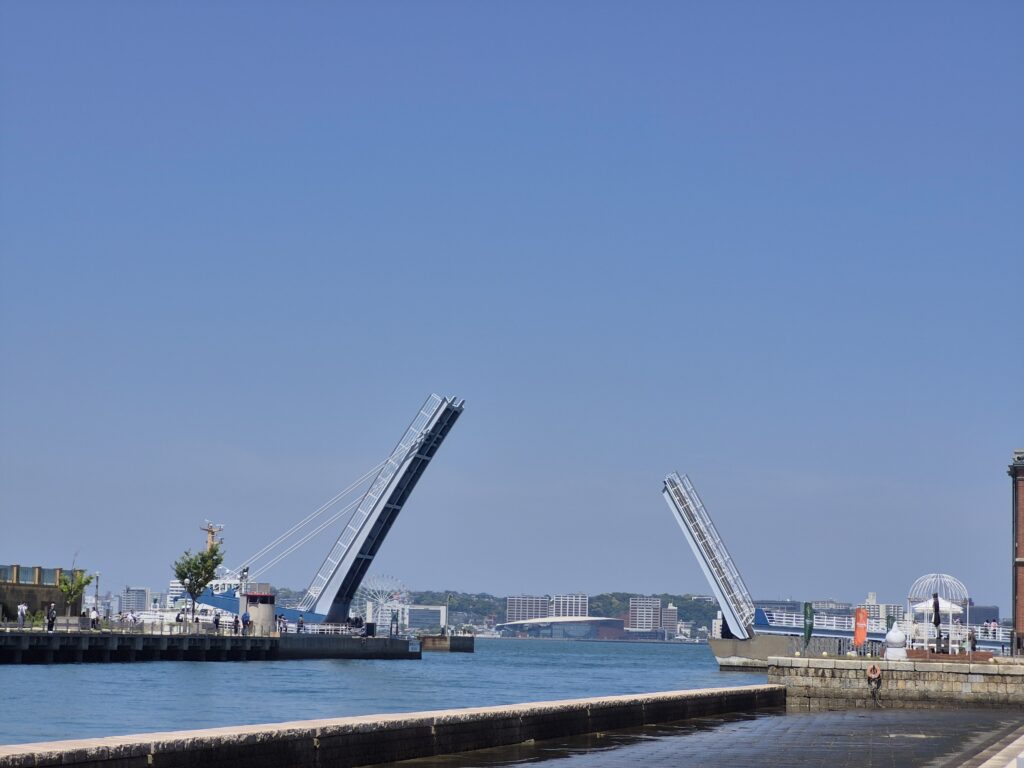
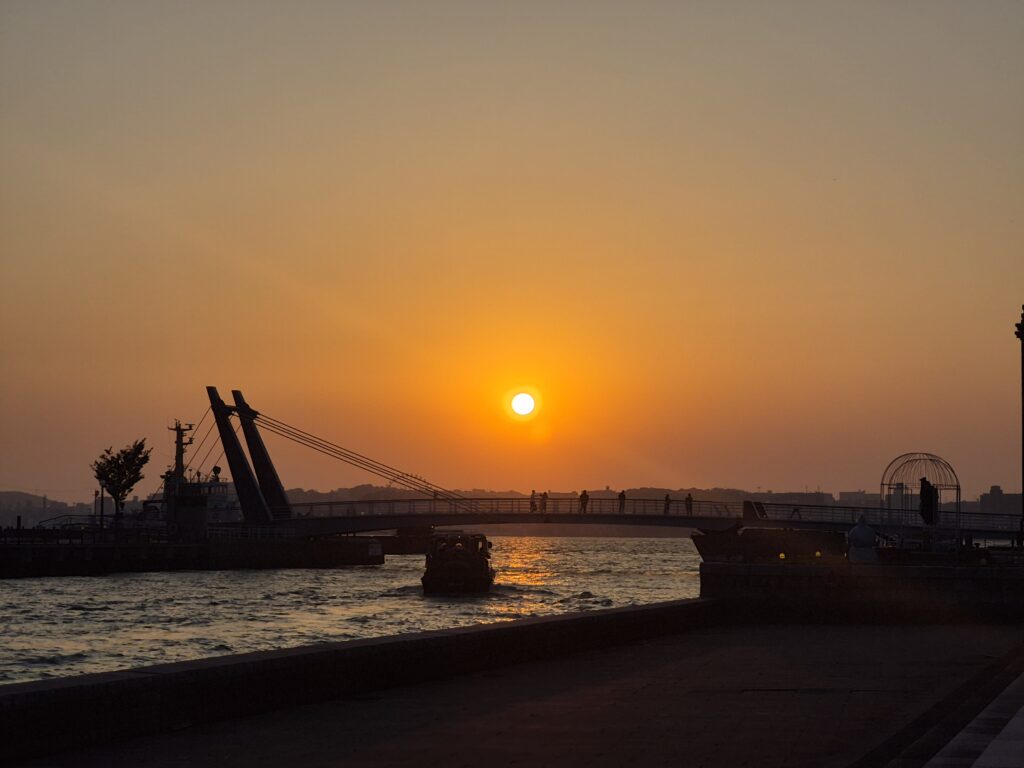
Blue Wing Moji Bridge is Japan’s only blue pedestrian drawbridge. It overlooks the Kanmon Strait and is 108 meters (354 ft) long. The bridge is right inside Mojiko Retro Harbour and was completed in 1993.
The bridge opens for about 20 minutes every hour, six times a day from 10 am to 4 pm so that ships can pass through. Besides, it’s popular to visit for couples, as couples who cross the bridge holding hands are supposed to stay together for the rest of their lives!
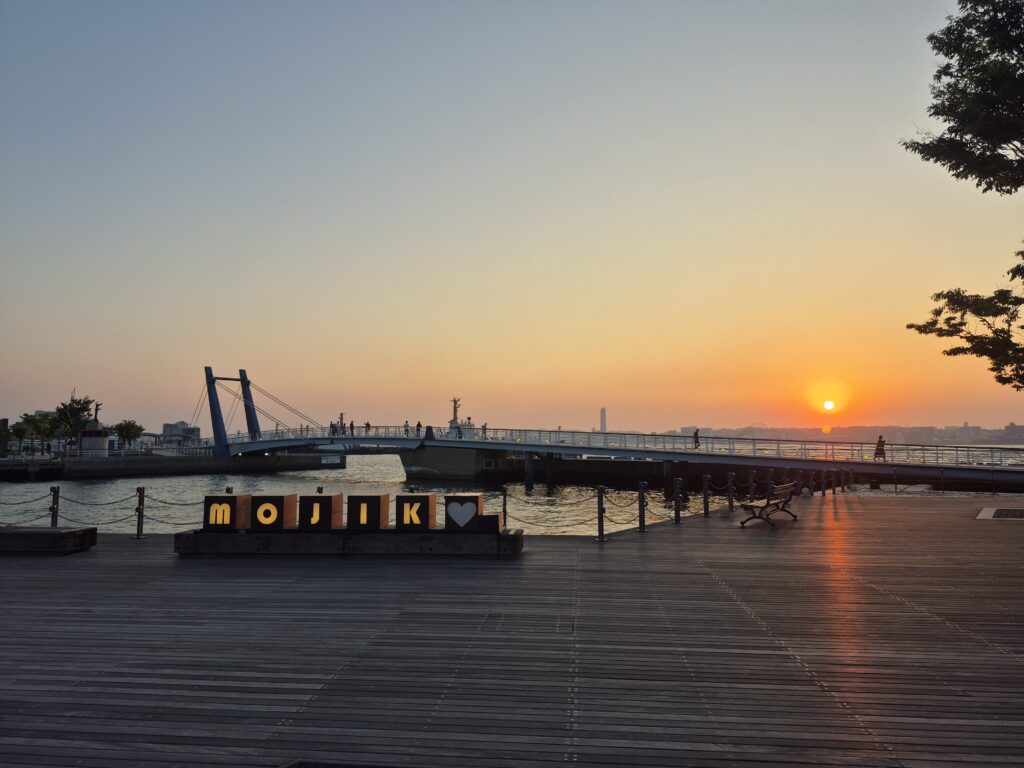
While it was awesome to cross Blue Wing Moji Bridge and enjoying the view during the day, it’s also great to visit at sunset! There’s no fee to cross the bridge.
Former Moji Customs Office
Address: 1-24 Higashiminatomachi, Moji Ward, Kitakyushu, Fukuoka, 801-0853, Japan
While strolling around Mojiko Retro (the historic district) you cannot miss the Former Moji Customs Office. This impressive restored red brick building dates back to 1912 (the original burnt down two years earlier). It’s the oldest of Moji’s historic buildings.
As Moji became an important trading port, it was necessary to build a branch of the Nagasaki customs office, which was completed in 1889. Surprisingly, Moji soon got more ship traffic than Nagasaki, so it was turned into an independent full customs office in 1909. It served as a customs office until 1927.
Sadly, the Moji air raid in 1945 ruined the Former Moji Customs Office’s roof and then the building stood empty for many years. In 1991, authorities started to restore the building to its original look and it reopened in 1995.
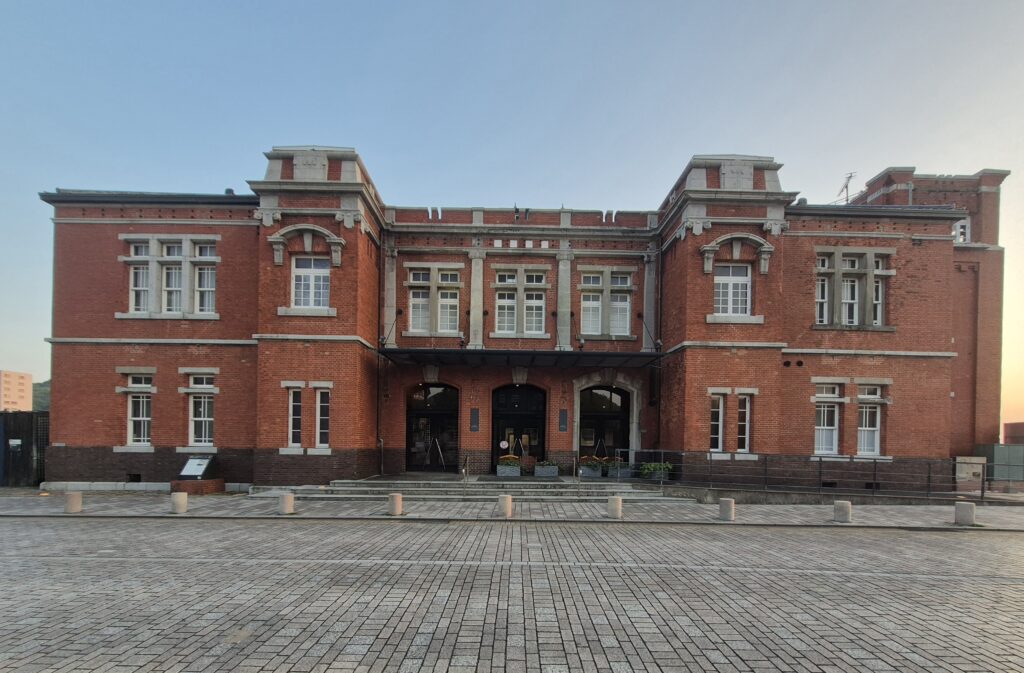
Today the Former Moji Customs Office is known for its fruit-themed café and observation area with great views of Kanmon Strait. Besides, check out their exhibit about how customs tried to stop smugglers from bringing illegal drugs or animal-derived products into Japan.
The Former Moji Customs Office is open daily from 9 am to 5 pm and it’s free to enter the building.
Dalian Friendship Memorial Building
Address: 1-12 Higashiminato-machi, Moji Ward, Kitakyushu City, Fukuoka, 801-0853, Japan
Across the street sits another impressive building of the historic Mojiko Retro district: The Dalian Friendship Memorial Building. This brick, stone, and wood building is a close replica of the administrative office for the Toshin Railway and Shipping Co. completed in 1902.
In the early 20th century, one of Moji Port’s trading partners was the port city of Dalian, China. Japan also ruled Dalian for a short time after the First Sino-Japanese War ended in 1895.
But Russia was also interested in Dalian, so soon after, it took control of this city to prevent Japan from expanding too far into China.
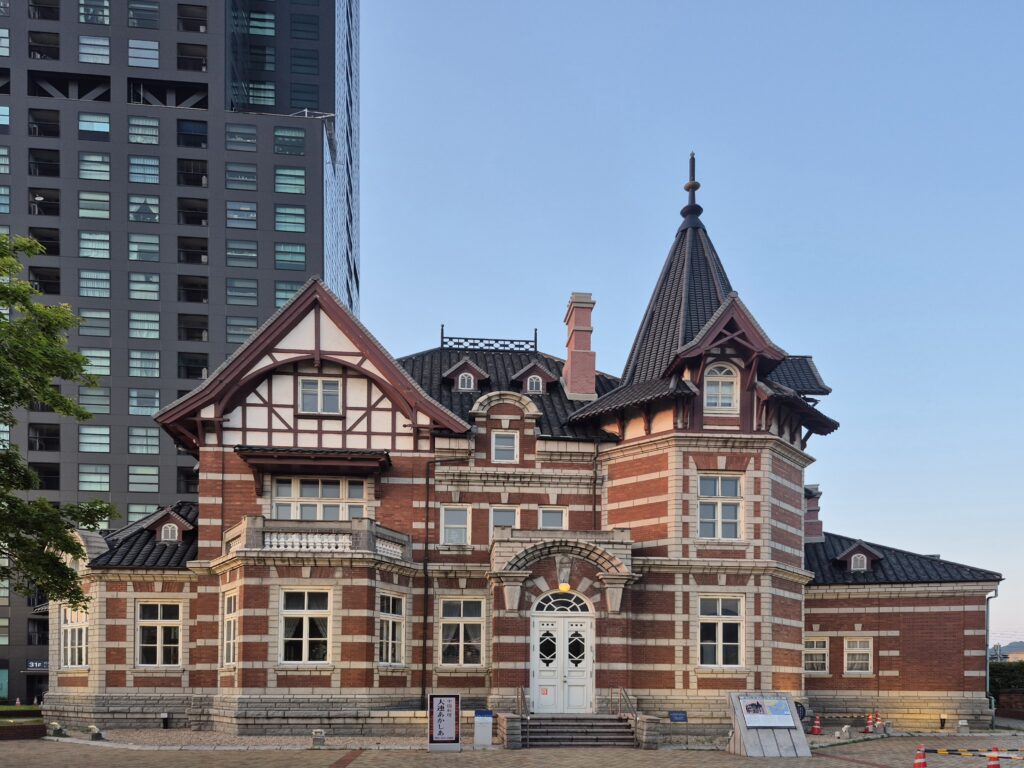
The original building was designed by German architects hired by Russian administrators of the city. After the Russo-Japanese War (1904-05), Japan regained control of Dalian, until the Soviet Union took it back after World War II. Finally, in 1950, Dalian was returned to China.
The replica was built in 1994 to commemorate the 15th anniversary of the friendship agreement between Dalian and Kitakyushu. This agreement marked a positive change of the complicated relationship between the two cities. The stone and brick of the outer walls were brought from Dalian.
Today the Dalian Friendship Memorial Building features a Chinese restaurant, as well as art displays and materials about Dalian. This includes an introductory video in Mandarin and Japanese. The building is open daily from 9 am to 5 pm and there’s no admission fee.
Mojiko Promenade by the Sea
Address: 9 Minatomachi, Moji Ward, Kitakyushu, Fukuoka 801-0852, Japan
If you need a break from sightseeing, it’s a great idea to spend some time along Mojiko Promenade by the Sea. It’s the perfect spot to sit outside and watch the ships going around the water. There are a few nice restaurants and cafés along the shore as well.
Besides, check out the local stores next to and inside Kaikyo Plaza and you’ll surely find a unique souvenir! For example, you can buy lots of banana products here, as Mojiko traditionally took care of imported bananas from Southeast Asia.
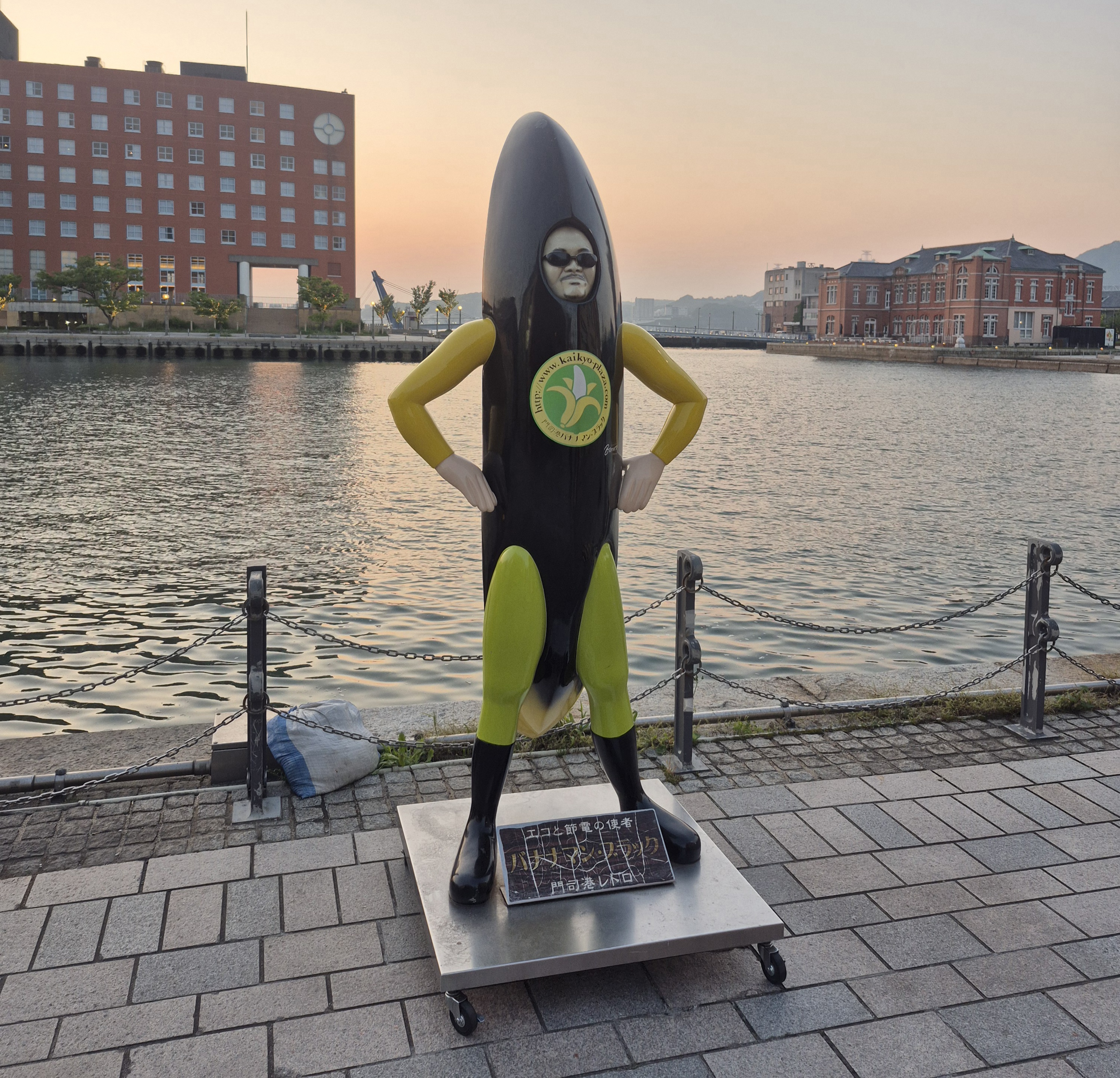
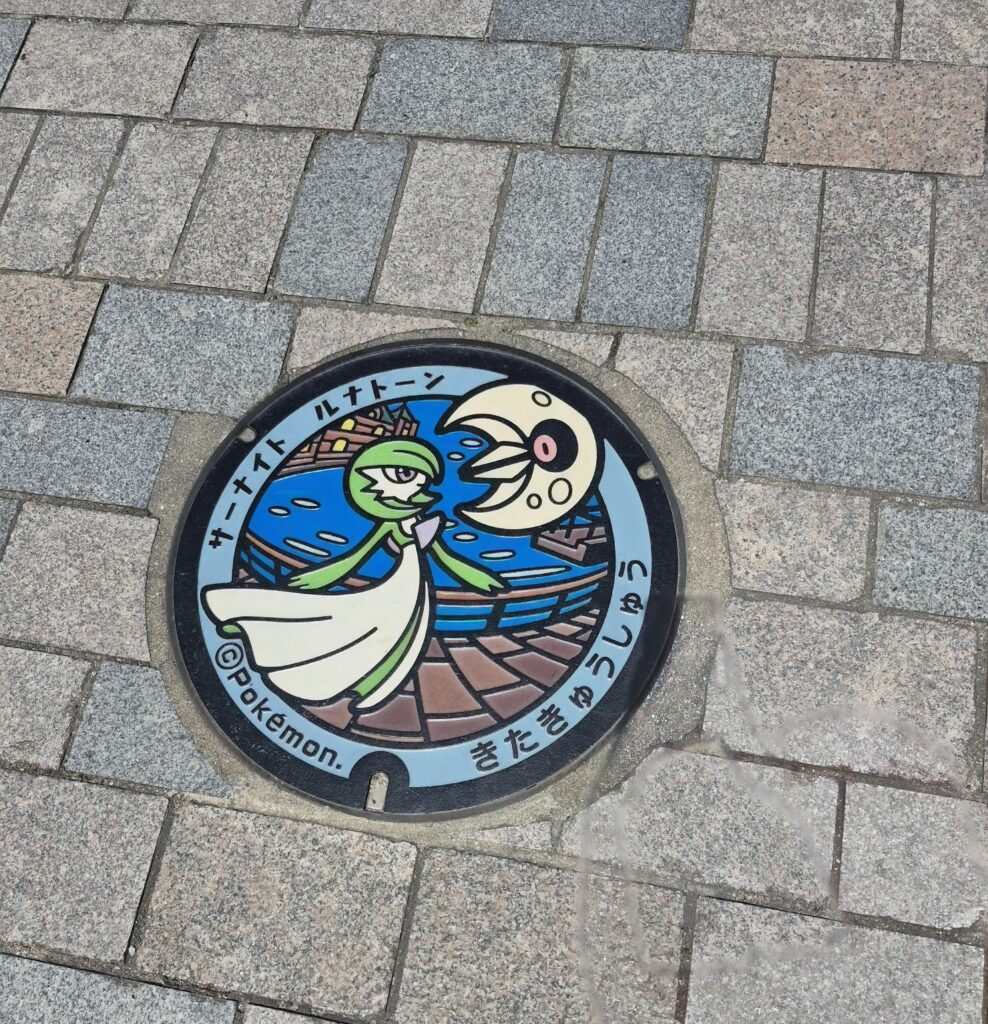
I found some banana-flavoured black tea at one of the stores and it’s impossible to miss one of the Bananaman Statues next to the waterfront! Finally, I also stumbled upon one of the famous Poké Lids (which are scattered all over Japan, including Kyoto)!
Cruise around Moji via e-bike
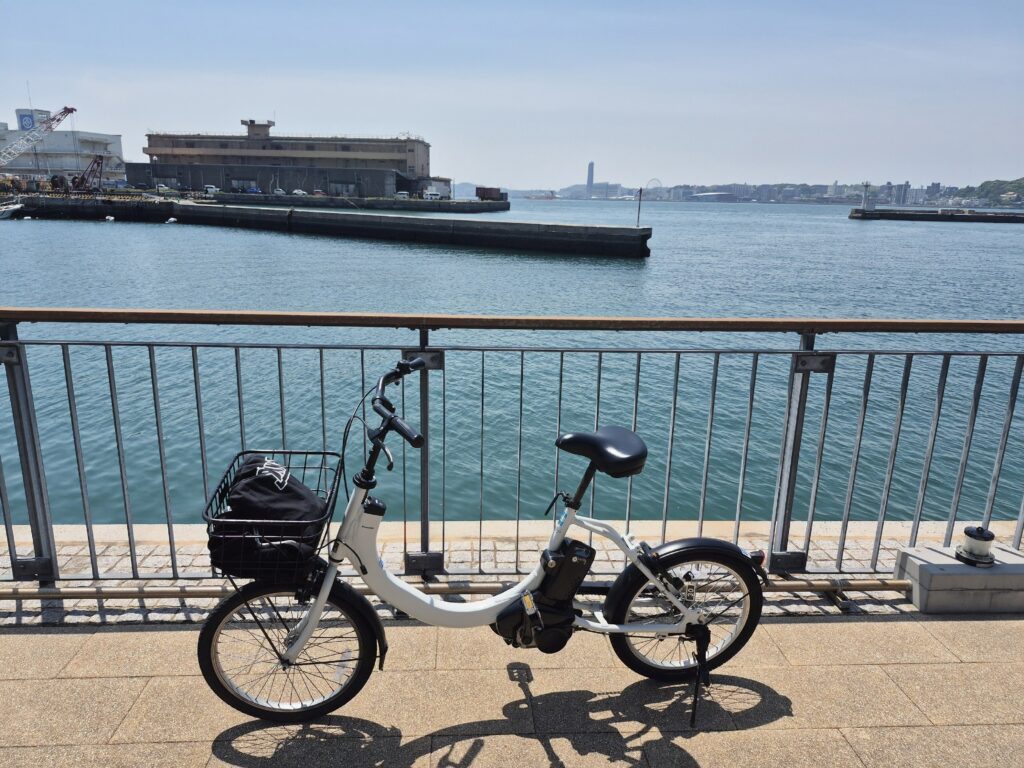
While it’s best to explore Moji’s historic Retro district on foot, I recommend renting a bike to get to attractions further away from this area. So I got an e-bike from JOYiNT, a local bike rental shop near the Mojiko Retro district.
The staff spoke a bit of English and was happy to make recommendations on where to go. They also gave me an English-speaking map, which was very helpful. Bike renters must bring a piece of ID (I showed a digital copy of my passport and it worked) as well.
When I rented a bike from JOYiNT in May 2025, the rental cost was only 1,000¥ for the whole day! The rental shop is open daily from 10 am to 6 pm.
Mekari Shrine
Address: 3492 Moji, Moji Ward, Kitakyushu, Fukuoka 801-0855, Japan
If you keep riding along the scenic coast for a while, you’ll end up in front of Mekari Shrine. This peaceful Shinto shrine has existed since the 3rd century. It was built to honour a god associated with purification, as well as the moon and the ebb and flow of tides.
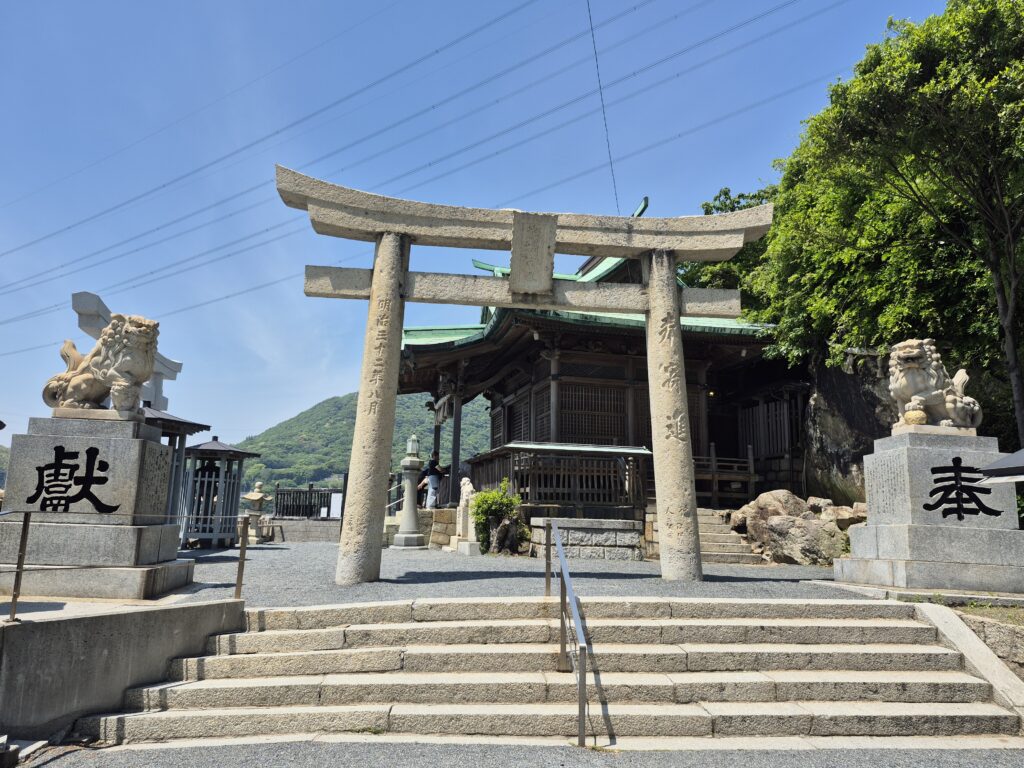
Mekari translates to “cutting seaweed” in Japanese. Every lunar New Year’s Day, the Mekari Ceremony takes place, when three priests (each holding either a torch, a pail, or a gardening blade) go into the ocean water to cut seaweed and gift it to the shrine.
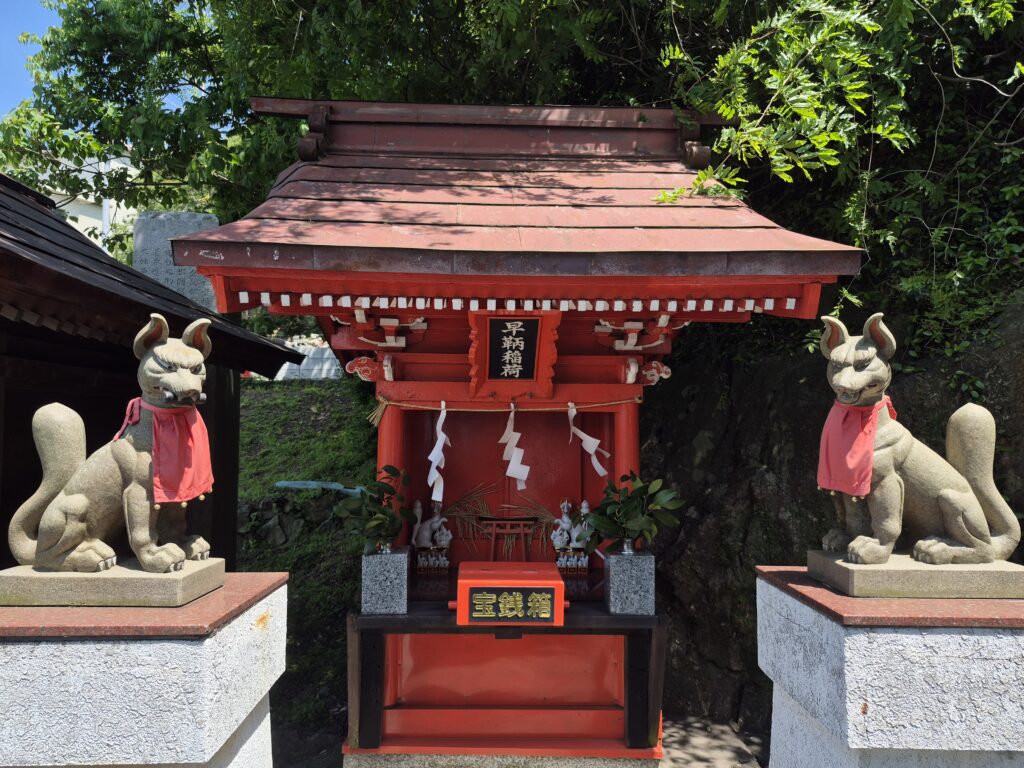
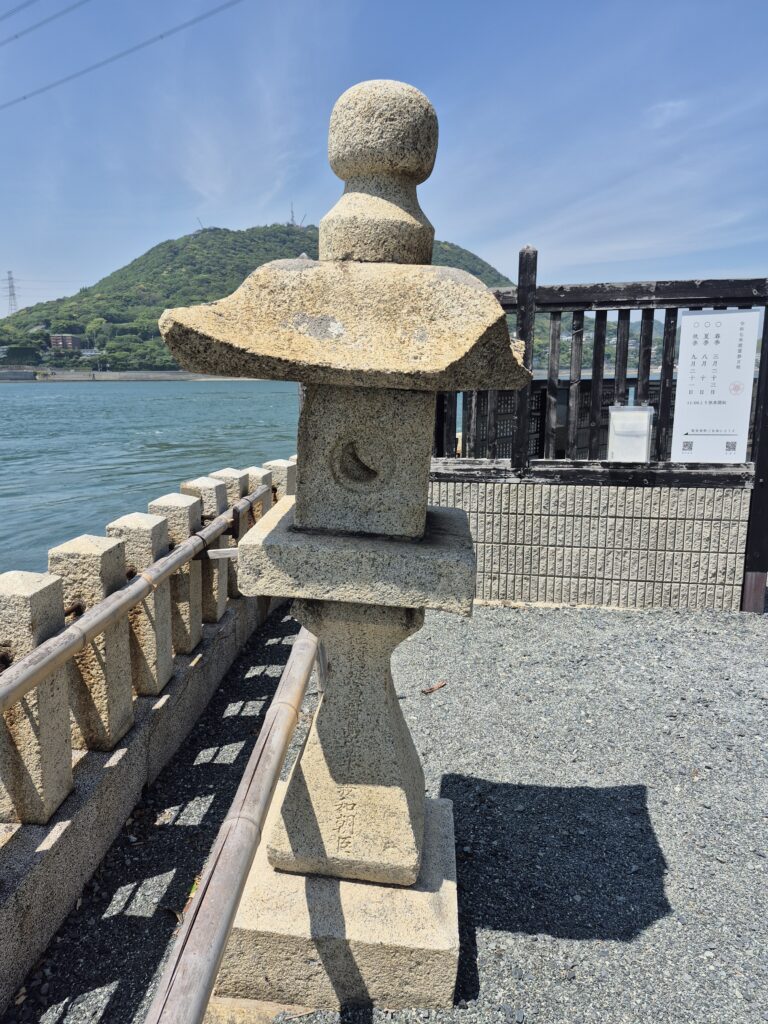
What struck me most within Mekari Shrine complex was two fox guardian statues in front of one the prayer halls and two komainu (lion guardians) sitting next to the main entrance gate. Besides, I spotted a beautiful stone lantern with a crescent moon carved into it!
Mekari Shrine is open daily from 9:30 am to 5 pm and there’s no admission fee.
Kanmon Bridge
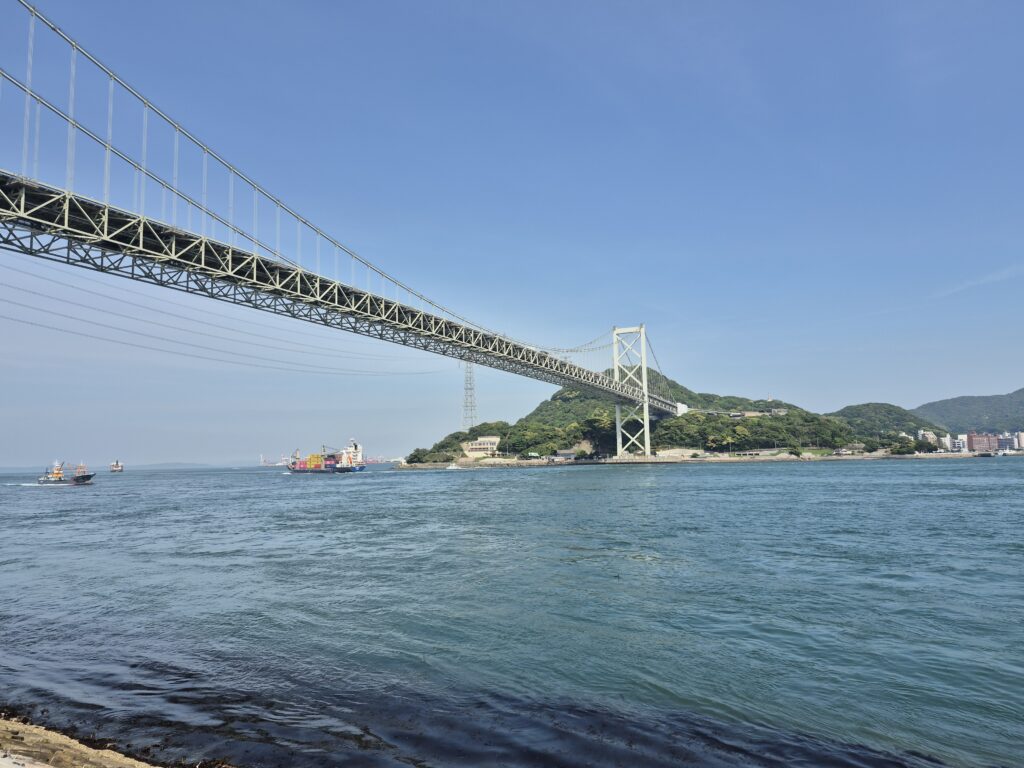
Towering above Mekari Shrine is Kanmon Bridge, which connects Moji and Shimonoseki City on Honshu island. It’s 1,068 meters (3,503 ft) long and when it first opened in 1973, it was the longest rope bridge in Asia.
Today it’s still in the Top 50 of the longest suspension bridges in the world. Kanmon Bridge is illuminated at nighttime, which makes it look even more beautiful!
Kanmon Tunnel Footpath
While Kanmon Bridge is only accessible to cars and other large motorized vehicles, pedestrians, bicyclists, and motorcyclists are able to cross from Moji to Shimonoseki City as well!
This is possible thanks to the Kanmon Tunnel Footpath beneath the sea, which opened in 1958.
The tunnel is 780 meters (2,559 ft) long and it takes 15 to 20 minutes to get to the opposite side. After taking an elevator to the lower level at 55-60 meters (180-196 ft) underneath the sea, just go for a casual stroll on this unique pathway!
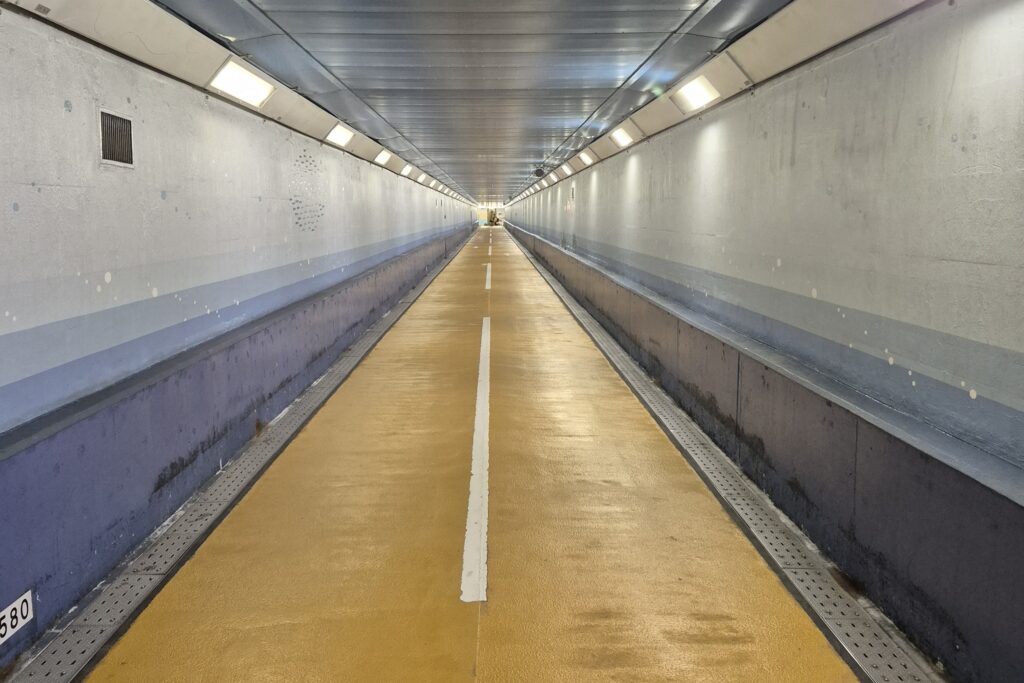
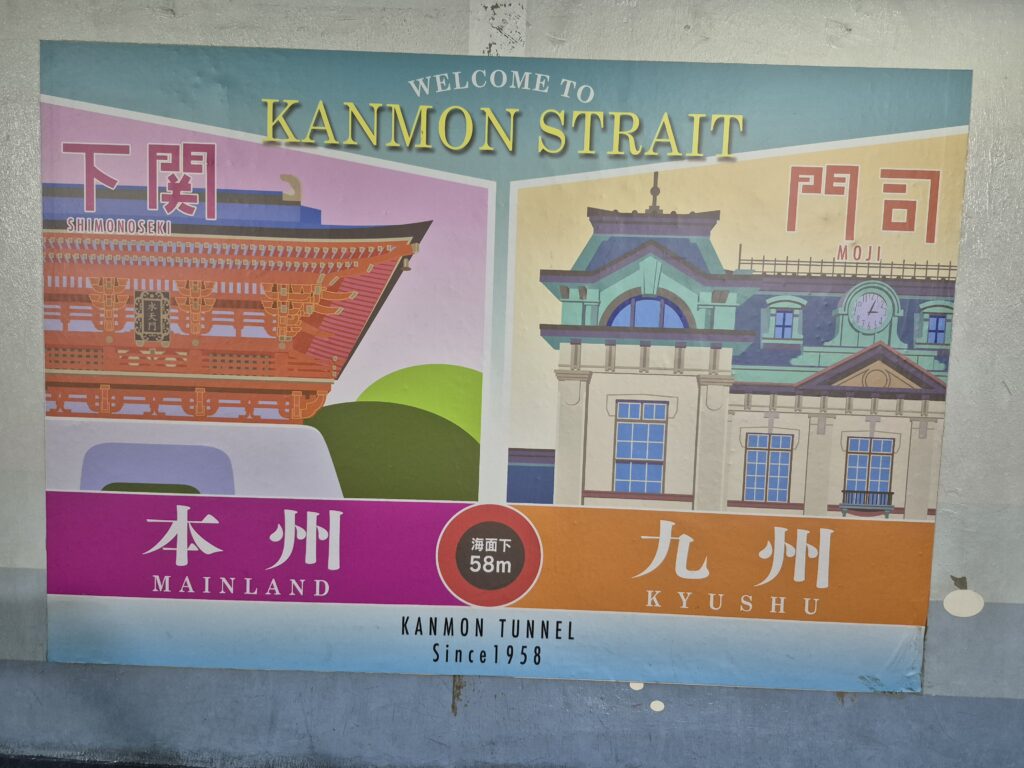
Walking this pathway was so much fun! I loved that there are signs telling you how much further you have to go and you can see and stand between the Kyushu-Honshu island border on the ground!
Walking the Kanmon Tunnel is free for pedestrians, but there’s a toll fee of 20¥ at the entrance for bicyclists and motorcyclists. You must walk your bike or motorbike while walking the Kanmon Tunnel path.
Where to Stay in Moji
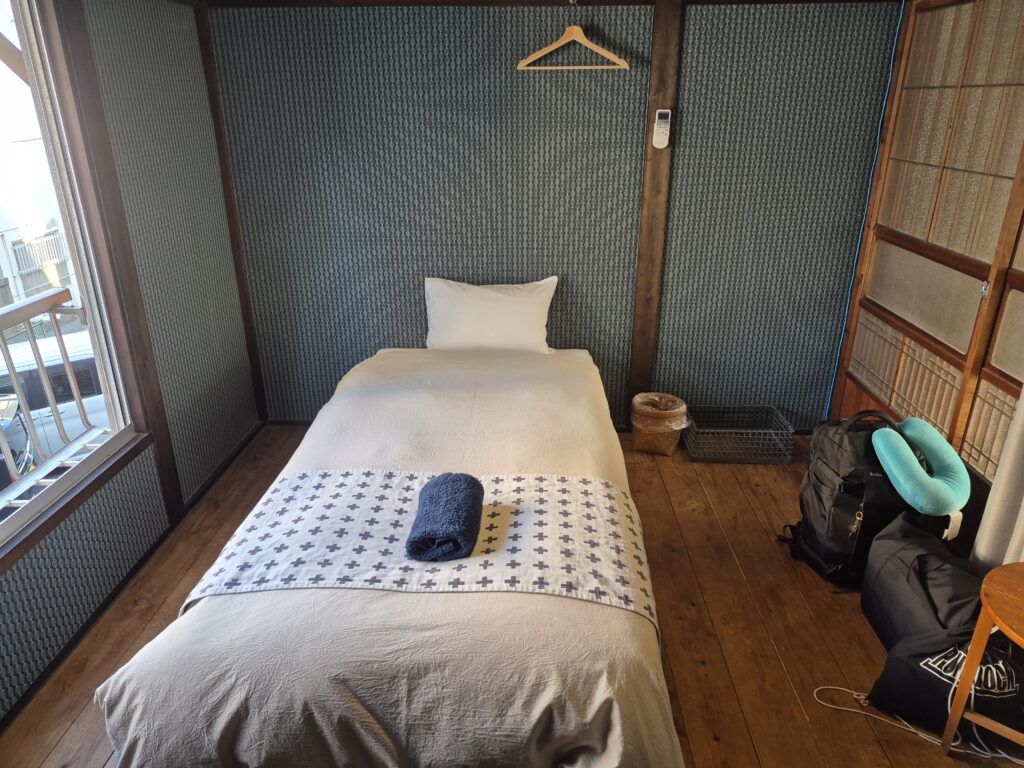
If you feel like spending the night in Moji after this action-packed day, I recommend staying at Mojiko Guesthouse PORTO. This small, but very cozy and clean guesthouse is a in quiet area of Moji and only a 13-minute walk to the Retro district.
They offer bright, stylish rooms with Western and Japanese elements. Bathrooms are shared and there’s a beautiful garden as well. Unfortunately, there’s no breakfast, but everything else (including the staff) was perfect! 😀
Where to Eat & Drink in Moji
While Moji is a smaller town, it has a great selection of restaurants to choose from.
If you’d like to try a local specialty, Moji is famous for its Yaki Karee (baked curry). Unlike other Japanese curries, it’s cooked in an oven versus on a stove. Curry Honpo Mojiko Retro is one of the many restaurants where you can eat this dish.
I had dinner at Mojikoi, a Japanese curry restaurant in the Mojiko Retro district. I had their Veggie Grilled Curry with vegan cutlet, which was very tasty and the lady host was very kind and welcoming. She even treated me to a vegan ice-cream for dessert!
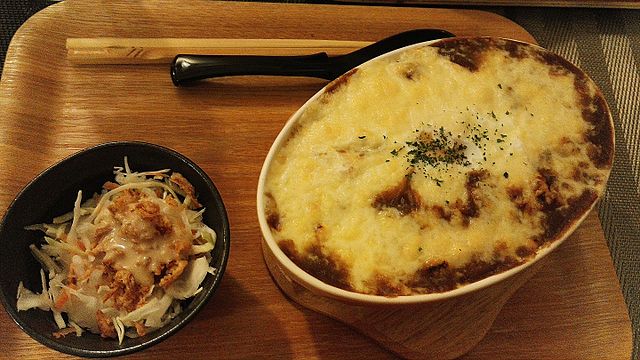
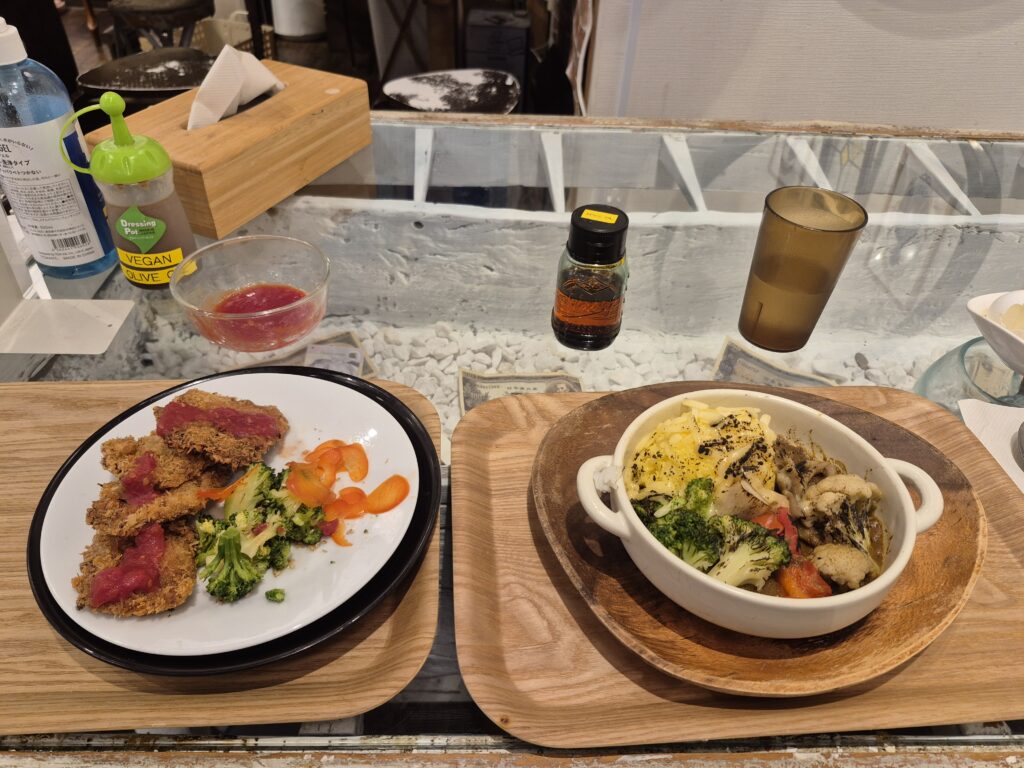
Baked Japanese curry (credit: Teemeah on Wikimedia Commons) and my Veggie Grilled Curry 😛
How to Get to and around Moji with Public Transit
It’s very easy to get to Moji with public transit.
From the Honshu island (e.g. Hiroshima or Osaka), take the Sanyo Shinkansen to Kokura Station, then transfer to the Kagoshima Line and get off at Mojiko Station. It’s about 3 hours from Osaka and 1 hour 15 minutes from Hiroshima.
From Fukuoka’s Hakata Station, take the Sanyo Shinkansen to Kokura, then Kagoshima Line. With the Shinkansen going up to 320 km/h (199 mph), this trip only takes about 35 minutes!
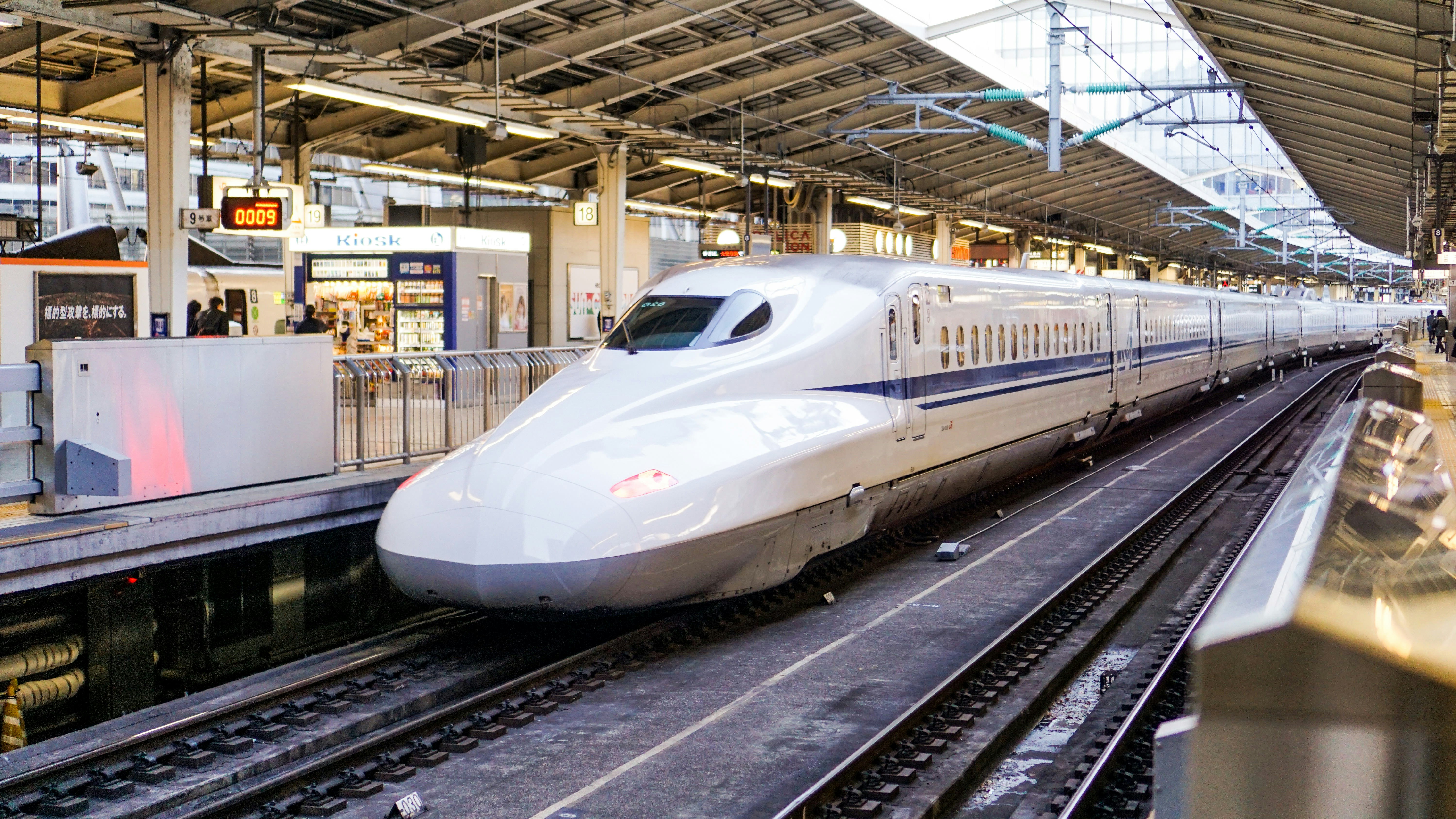
The closest airport to Moji is Fukuoka Airport. You can just hop on the Airport Line to Hakata Station, then transfer to the Kagoshima Line to Mojiko Station (1 hour and 45 minutes).
It’s super convenient to get around Moji on foot and with a bike. But there are also local buses going around town, which makes it a lot easier to carry your luggage to your accommodation (if you’re staying in Moji overnight). 😀
Wrap Up: How to Spend a Day in Moji, Japan
Moji is a unique place to stop for a day on your Japan trip. I loved the early 20th century vibe that you could still feel while walking around town, especially in the Mojiko Retro district. It was also great to learn about Moji’s importance as an international trading port.
Visiting serene Mekari Shrine and walking my e-bike on the undersea Kanmon Tunnel Footpath were very special experiences that I will never forget as well!
While not as many international tourists come to Moji (and Kyushu in general) I highly recommend adding this underrated town to your Japan itinerary.
I got inspired to visit many of Moji’s attractions by Japan Guide’s post and YouTube video about Kyushu’s Four Largest Cities.
Traveling around Japan for a while? Then check out these posts:
How to Spend Four Days in Tokyo, Japan
Is Nachi Falls Worth Visiting in 2026?

Writing and traveling have been my passions for 25+ years, so I launched this travel blog in May 2020. I love writing travel guides about amazing destinations and I'm passionate about music tourism and animal-friendly and sustainable travel.
So far, I've been to 20 countries on five continents, and Japan and Iceland were my favourites!
- THE TOP 5 THINGS TO DO IN KAMAKURA: THE PERFECT SIDE TRIP FROM TOKYO - March 1, 2026
- ONE DAY IN NAPIER: THE 10 BEST THINGS TO DO INTHE ART DECO CAPITAL OF NEW ZEALAND - February 8, 2026
- A DAY TRIP TO MILFORD SOUND: NEW ZEALAND’S TOP NATURAL ATTRACTION - December 27, 2025
Leave a Reply