
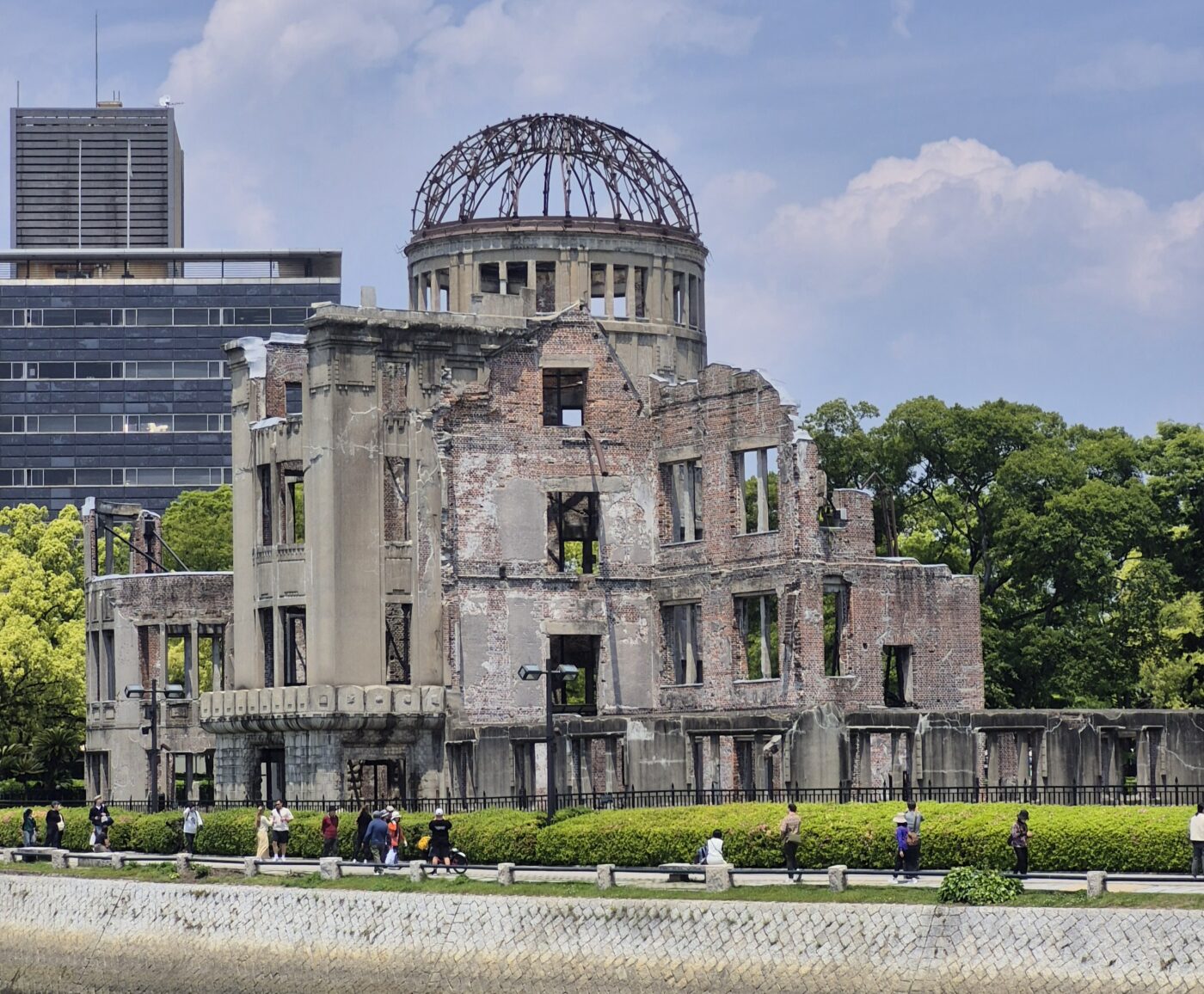
Hiroshima is the capital of the Hiroshima Prefecture in Western Japan. The city was founded as a castle town in 1589. After the Meiji restoration in 1868, Hiroshima’s population grew quickly, so it became an important urban centre and industrial hub.
Soon after, Hiroshima was turned into a major military centre. In fact, it played an important role during the First Sino-Japanese War, the Russo-Japanese War, and the two World Wars.
On August 6, 1945, the United States Army Air Forces dropped “Little Boy”, an atomic bomb, on Hiroshima. The explosion left the city in ruins and tens of thousands of people were killed in seconds. By the end of the year, around 140,000 people had died as a result of the attack.
After World War II, a big effort was put in to rebuild Hiroshima. Important monuments of the city, like Hiroshima Castle, were reconstructed and Hiroshima Peace Memorial Park was established to honour the victims of this catastrophic incident.
After learning about Hiroshima’s history, I knew that I had to spend One Day in Hiroshima during my Japan trip in May 2025. I’ll also tell you about stunning Miyajima Island and a local food specialty you should try on your first-time trip to Hiroshima. So stay tuned 😉
Disclosure: I only recommend products that I’ve used in the past, and all opinions expressed in this post are my own. This post contains affiliate links. If you use one of the links throughout the page to buy something, I may earn a small commission at no extra cost to you. Thank you!
Hiroshima Peace Memorial Park
Address: Nakajimacho, Naka Ward, Hiroshima, 730-0811, Japan
Hiroshima Peace Memorial Park is the city’s most prominent location. Before the nuclear bomb was dropped on August 6, 1945, this area was the political and commercial centre of Hiroshima. That’s why it was chosen as the target.
Hiroshima Peace Memorial Park was completed in 1954 to show respect to the victims of the atomic bomb attack and its aftermath. Besides, it’s a symbol for hope and it reminds humans to not take peace for granted. The park area covers 120,000 square meters.
Below are the most visited monuments inside Hiroshima Peace Memorial Park.
The Cenotaph for the Atomic Bomb Victims & Peace Flame
The Cenotaph is an arched tomb that was built to honour the victims who died from the bomb explosion and were exposed to the radiation. There’s a stone chest underneath the cenotaph with the name register of more than 220,000 victims.
The arched tomb is also supposed to be a shelter for the souls of the victims.
Every year on August 6, the Peace Memorial Ceremony is held. There’s an one-minute silence at 8:15 a.m. (the time the bomb hit the city) to mourn the victims. People also make speeches, pray for peace, and leave wreaths in front of the Cenotaph.
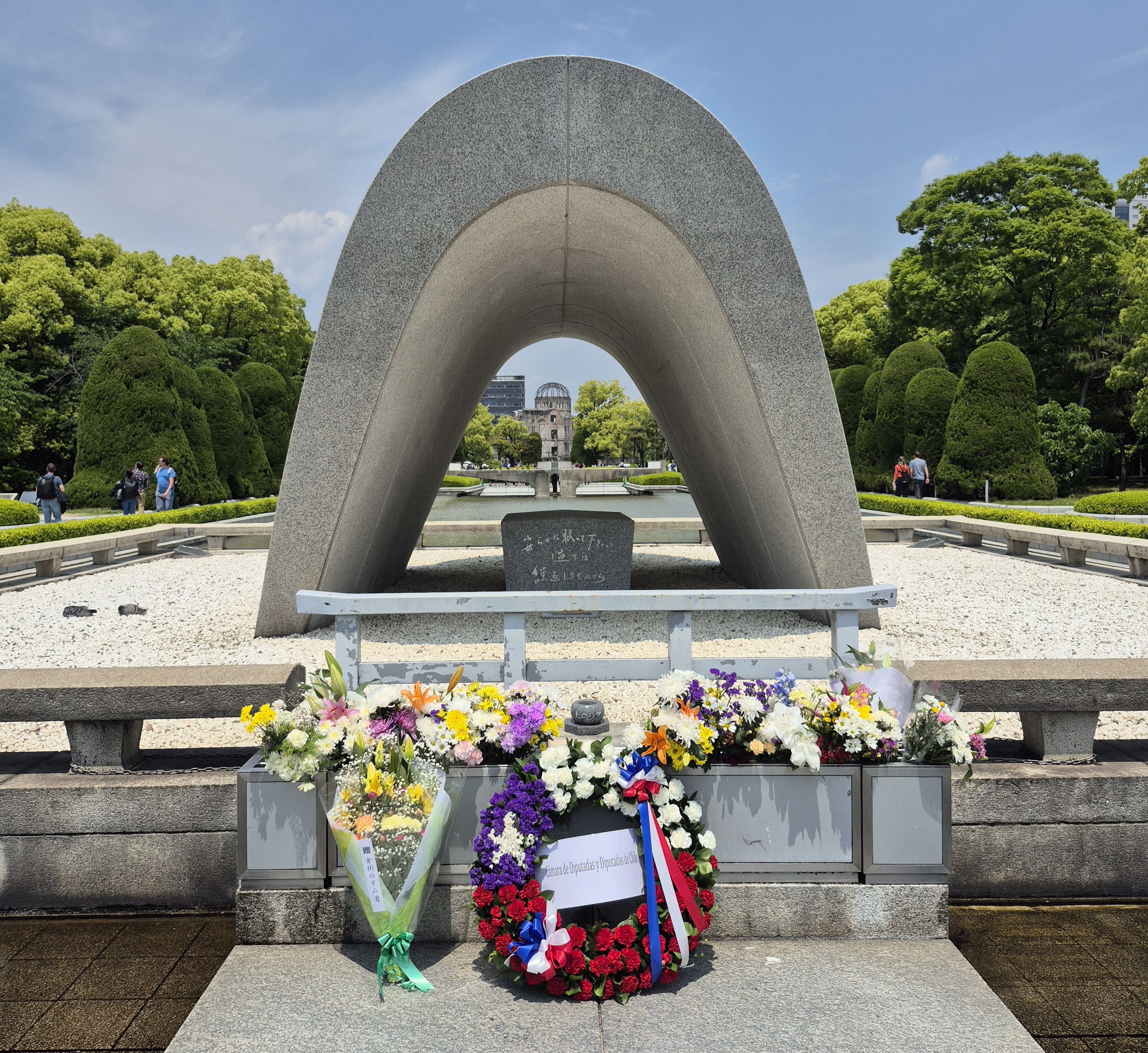
If you look through the Cenotaph, you’ll see the Peace Flame, which was first lit in 1964 and has burnt ever since. The flame is going to keep burning until all nuclear bombs in the world are destroyed and there’s no more threat from atomic weapons.
Children’s Peace Memorial
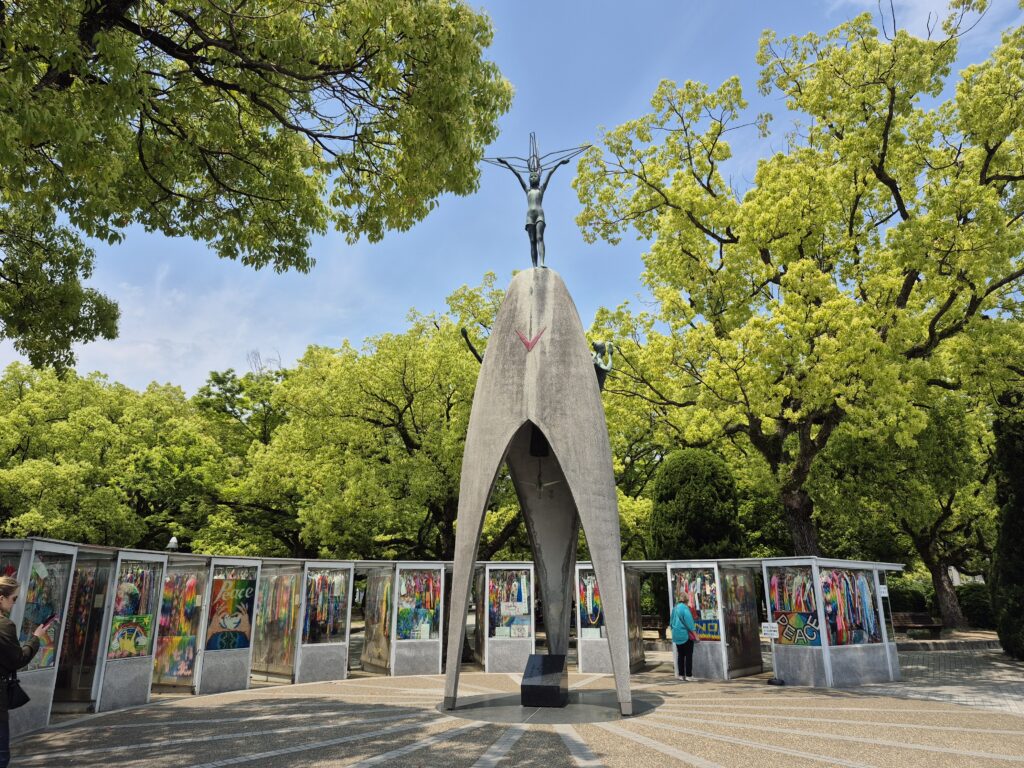
The Children’s Peace Memorial is a monument statue to remember thousands of children who died from the nuclear bombing and its aftermath.
At the top is the statue of a girl with outstretched arms and a folded paper crane above her. It’s based on the true story of Sadako Sasaki, who died from leukemia caused by the radiation in 1955. In Japanese culture, the crane is a symbol for a long life.
Sadako folded more than 1,000 paper cranes before her passing. Until the present day, children from around the world fold paper cranes and send them to Hiroshima to be put next to the memorial. As a result, there’s a huge collection of paper cranes behind glass by the Children’s Peace Memorial.
The Atomic Bomb Dome (Hiroshima Peace Memorial)
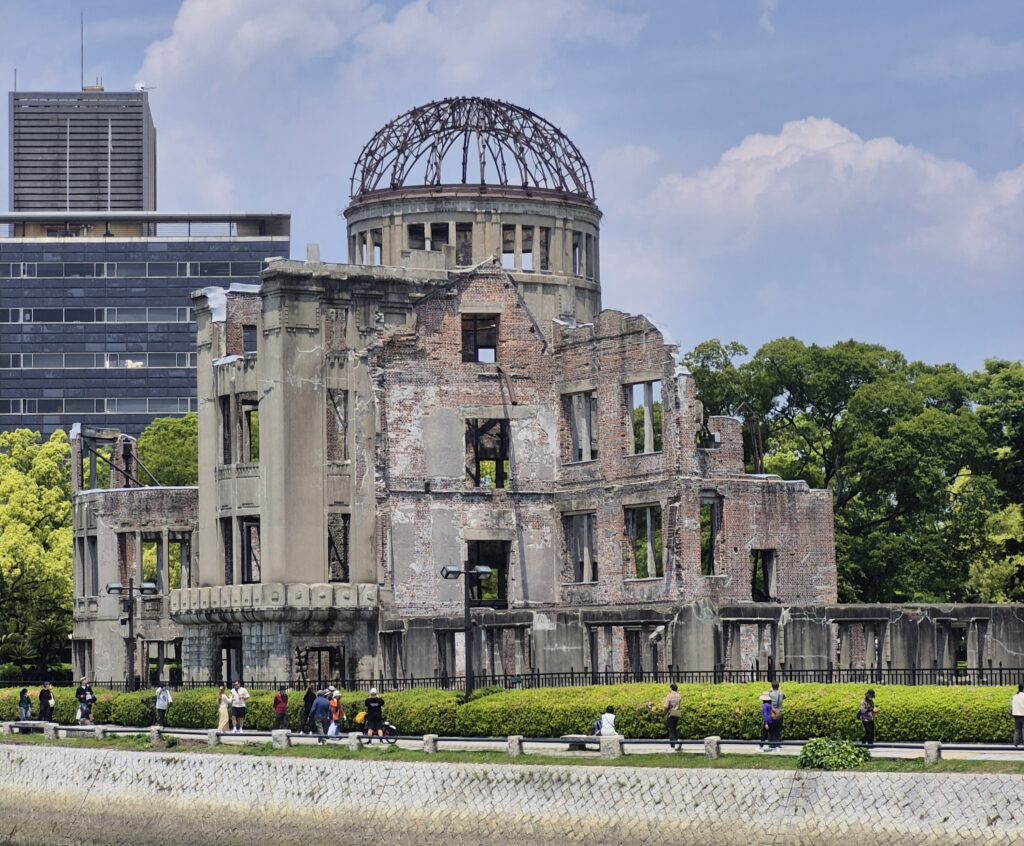
The Atomic Bomb Dome is one of the few buildings that weren’t completely destroyed by the nuclear bomb. Sadly, everyone inside was killed and it burnt down from the ceiling to the bottom immediately after the blast. But the domed steel frame survived and still stands until the present day.
The original building was completed in 1915 as the Prefectural Industrial Promotion Hall of Hiroshima. The Atomic Bomb Dome became a UNESCO World Heritage Site in 1996. Today it is a symbol for the importance of abolition of nuclear weapons and lasting world peace.
Hiroshima Peace Memorial Museum
Address: 1-2 Nakajimacho, Naka Ward, Hiroshima, 730-0811, Japan
Only a few steps further, there’s Hiroshima Peace Memorial Museum, another must-do on a trip to Hiroshima. While it talks about the history of Hiroshima before and after the nuclear bombing, its main focus is on the day when things changed forever: August 6, 1945.
The exhibit shows the devastation and suffering of the people during and after the explosion, which made me feel sad and upset at the same time. For example, visitors can look at belongings of victims, watch personal story videos of survivors, and learn how they dealt with this tragic event’s aftermath.
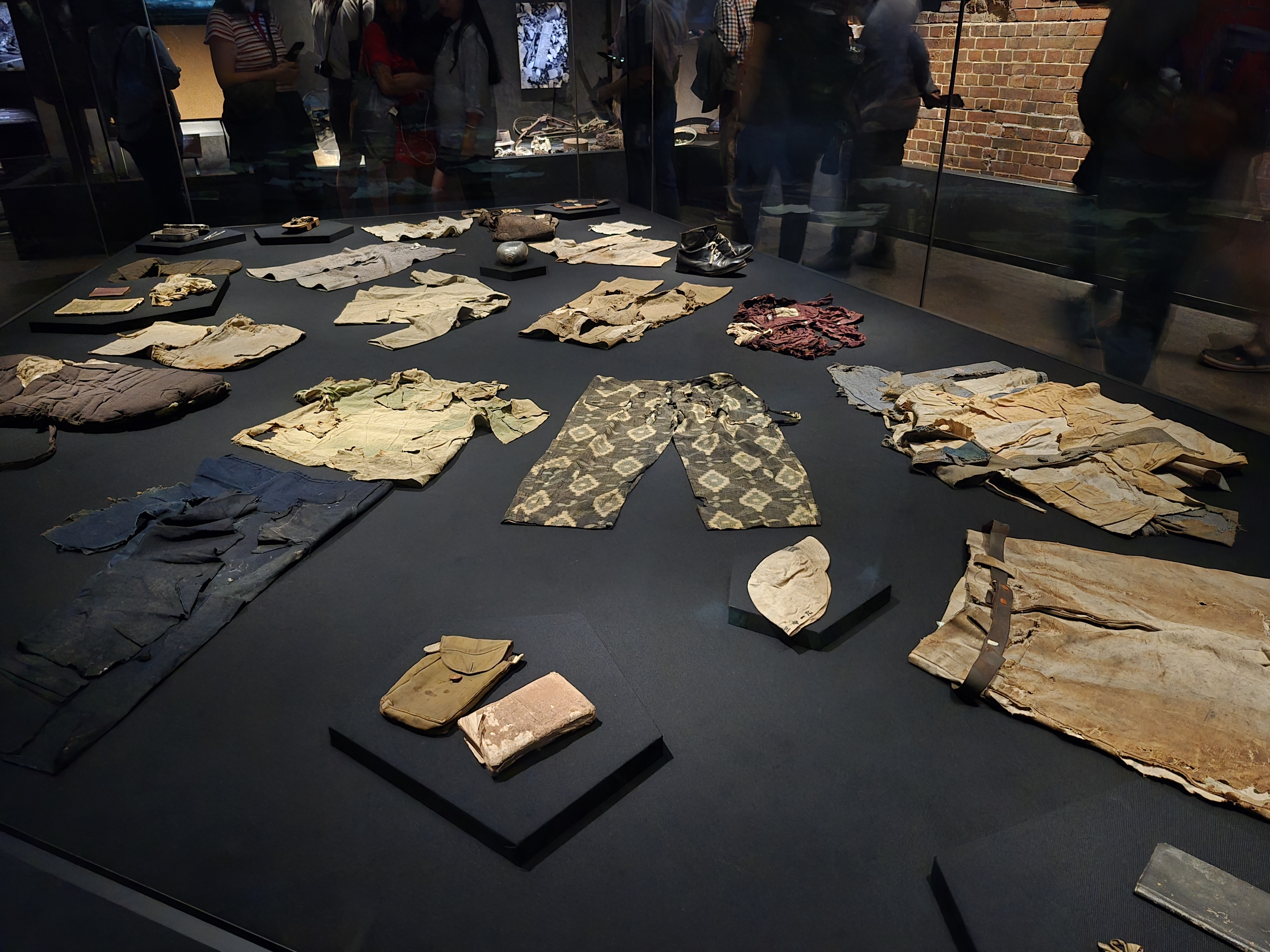
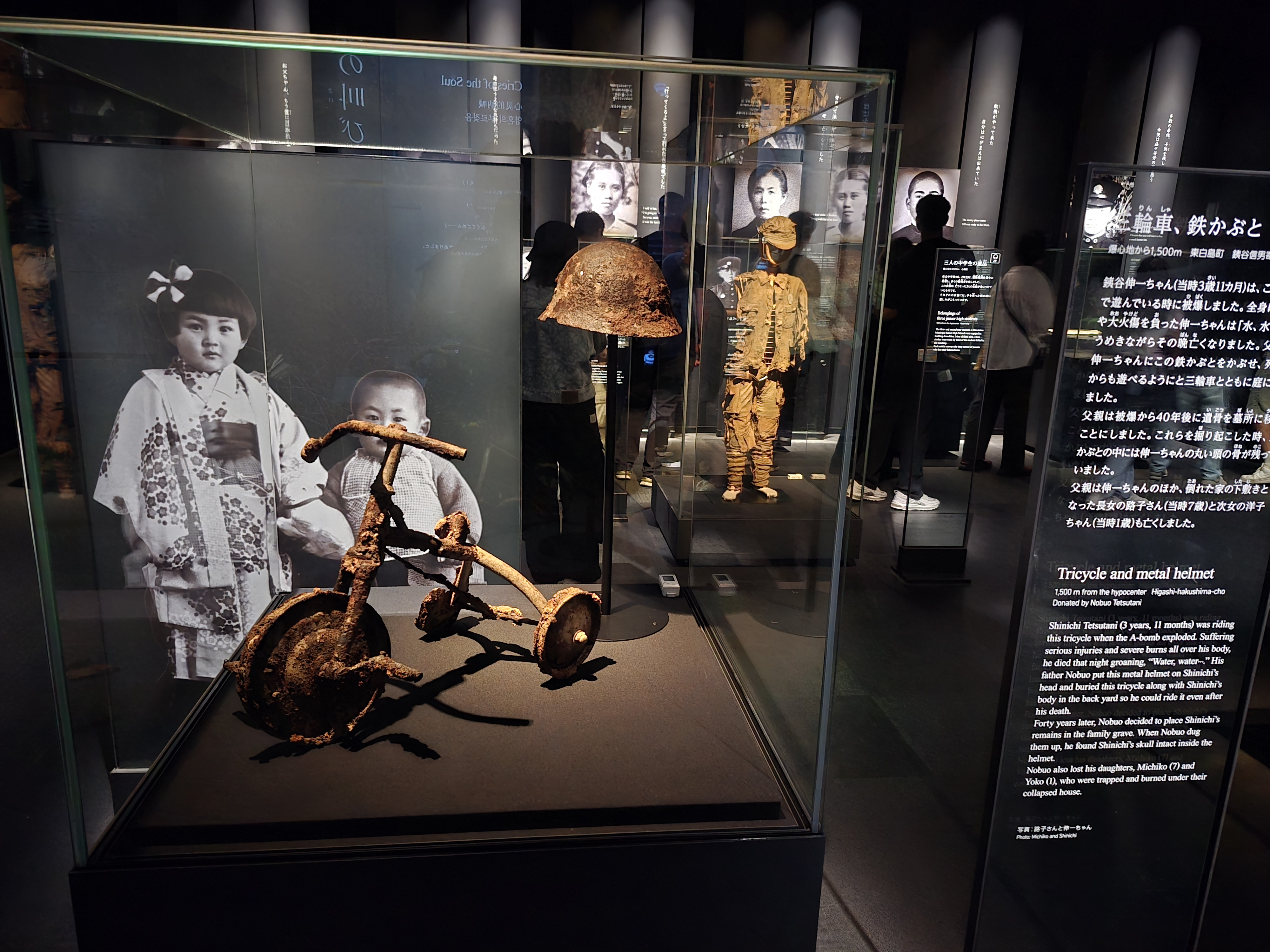
Seeing pictures of survivors and their scarred and/or partially burnt bodies was very upsetting as well. Lastly, looking at photos of Hiroshima before and after the attack was heartbreaking, especially since most of the city was destroyed within seconds.
But I was amazed that Hiroshima had risen like a phoenix from the ashes after this tragic incident. Visiting Hiroshima Peace Memorial Museum is a great reminder how devastating atomic weapons are and that we should never take peace for granted.
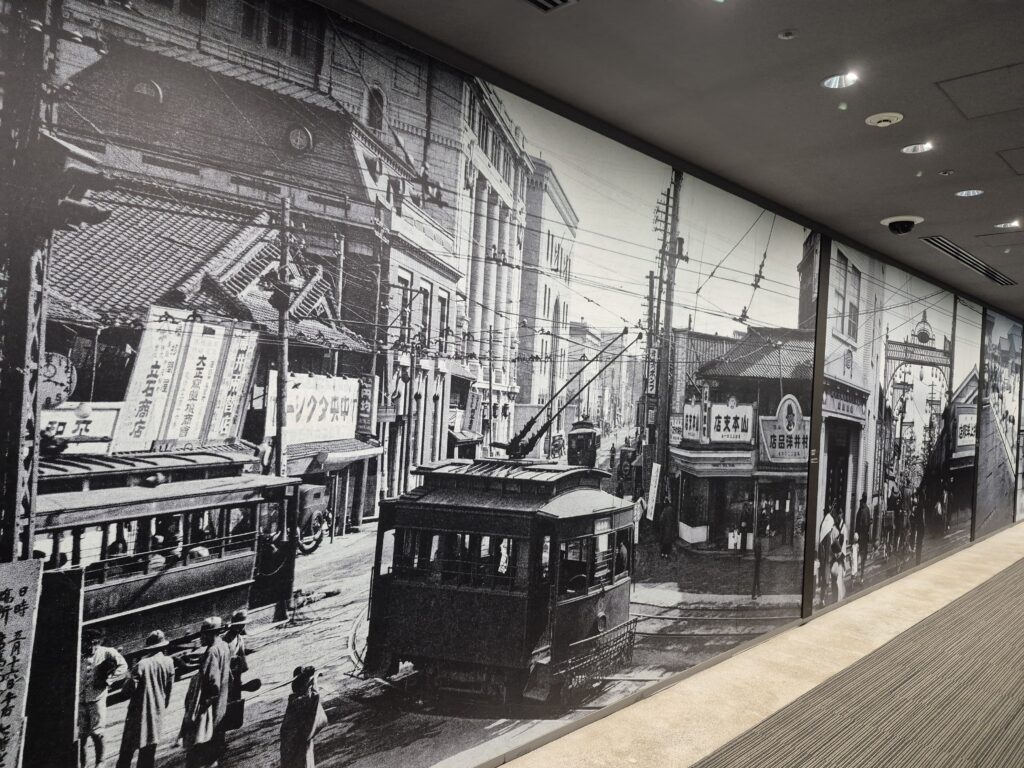
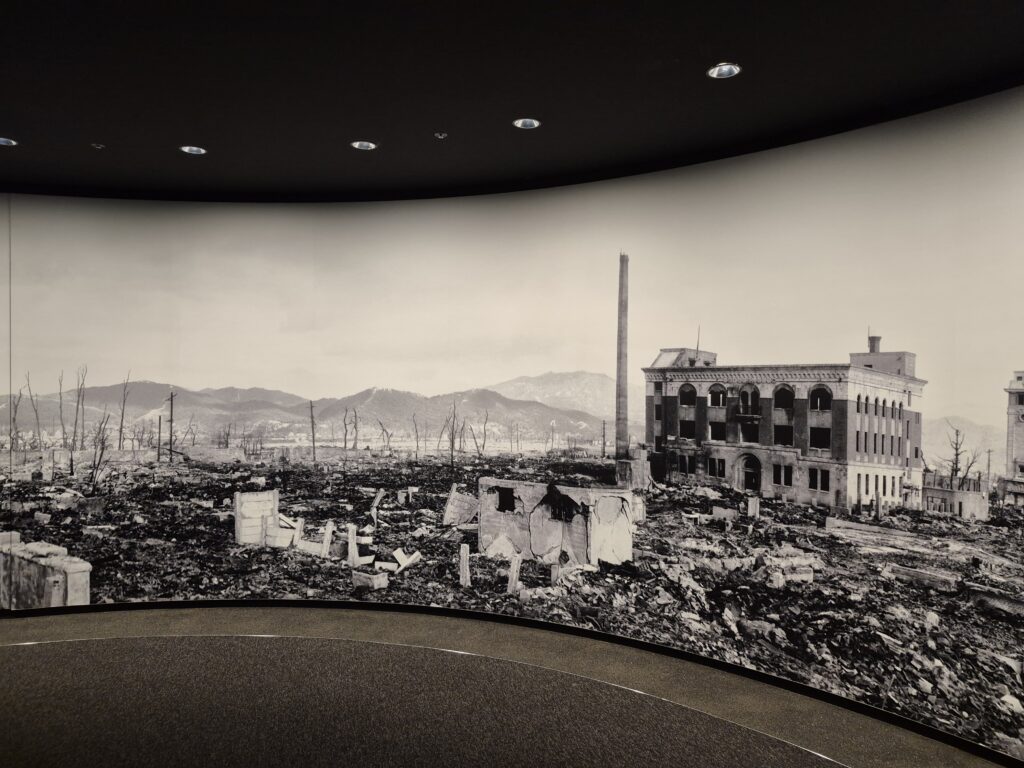
Hiroshima before and after the nuclear bomb attack.
Hiroshima Peace Memorial Museum is open seven days a week (except December 30 and 31 and three consecutive days in mid-February). Admission is 200 ¥ and I wouldn’t recommend visiting this museum with smaller children because of its severity.
Visit Miyajima
Address: Miyajimacho, Hatsukaichi, Hiroshima 739-0588, Japan
Hiroshima not just offers fascinating history, but also areas of outstanding natural beauty. One example is Miyajima, an island less than an hour outside of Hiroshima (via train and ferry or direct boat). Miyajima is a great spot to spend at least a half day during your visit to Hiroshima.
While Itsukushima is the formal name of the island, it is more popularly known as Miyajima. This translates to “shrine island” in Japanese.
Here are a few attractions on Miyajima you shouldn’t miss:
Red Torii Gate & Itsukushima Shrine
Address: 1-1 Miyajimacho, Hatsukaichi, Hiroshima 739-0588, Japan
Miyajima is most famous for its red torii gate which stands in the Seto Inland Sea. During high tide, it looks like the gate is floating in the water! This view of the torii in the water is one of the Three Best Views in Japan. During low tide, you can walk right up to the gate, which is pretty cool as well!
Behind the torii gate is stunning Itsukushima Shrine. This Shinto shrine dates back to the 12th century and it also looks like the complex is floating above the water during high tide!
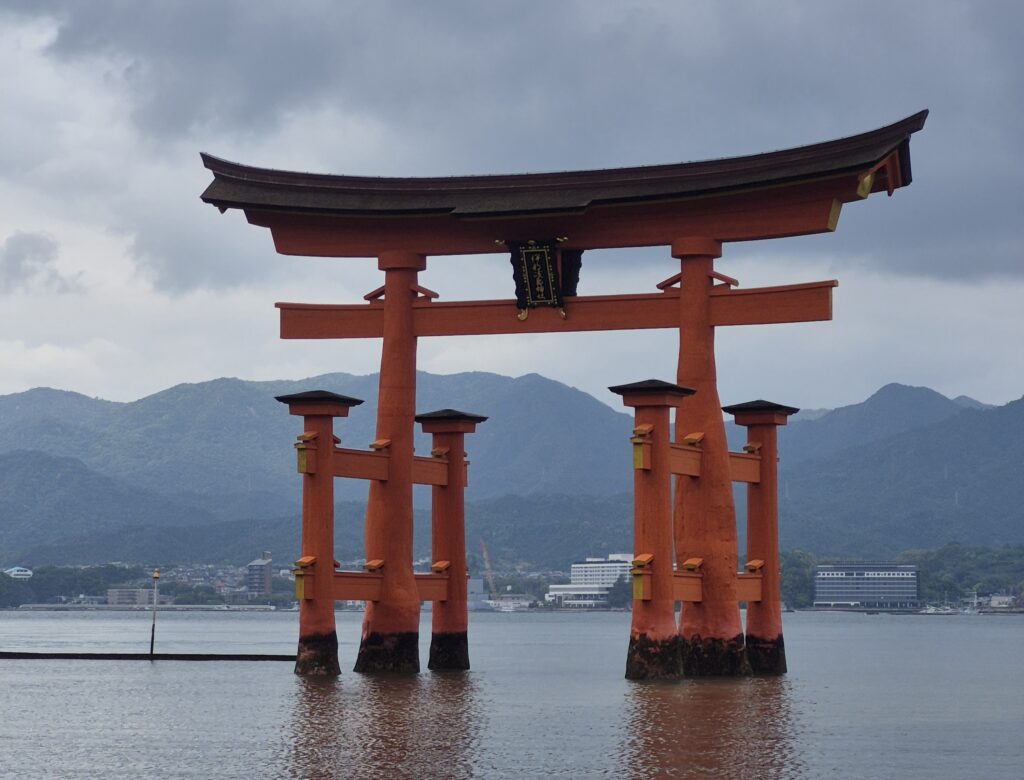
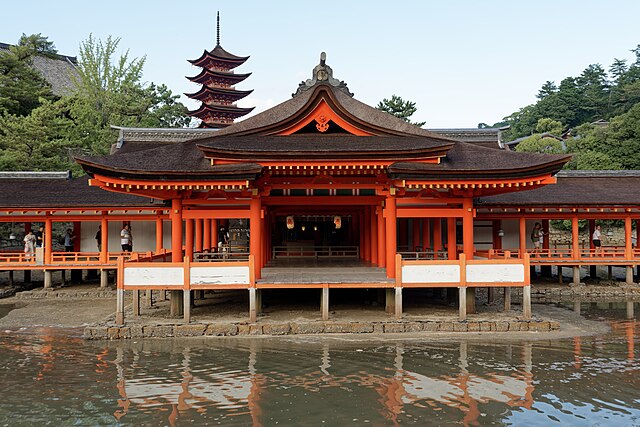
The red torii and Itsukushima Shrine. The right photo is credit of Jakub Halun on Wikimedia Commons.
Itsukushima Shrine has several buildings, like a prayer hall, treasure hall, main hall, and Noh Theater stage. They are linked by boardwalks and supported by pillars above the sea.
The red torii and Itsukushima Shrine are illuminated every night until 11 pm, which is a special sight if you decide to spend the night on Miyajima! Itsukushima Shrine is open daily and admission is 300 ¥ (500 ¥ for combined entry with the treasure hall).
Please note that the two pagodas left and right of the shrine complex are currently under renovation and covered up. Work on the right pagoda is supposed to finish in September 2025 and work on the left pagoda is planned to end in December 2026.
Go Up to Mount Misen
If you’re a nature lover, going up to Mount Misen is an awesome idea! At 500 meters (1,640 ft), it’s the highest peak on the island of Miyajima. At the summit, you can enjoy a great view of the Seto Inland Sea and Hiroshima City on clear days.
Visitors can take a ropeway from Momijidani Station (10 minutes from Itsukushima Shrine), which takes about 20 minutes. Once you get to the upper station at Shishi-iwa Observatory, it takes about 30 minutes to walk up to the summit. The trail is rather steep, so be sure to wear sturdy shoes.
The cost for the ropeway is 1,100 ¥ (one-way) or 2,000 ¥ (roundtrip) and it runs from 9 am to 4 pm daily.
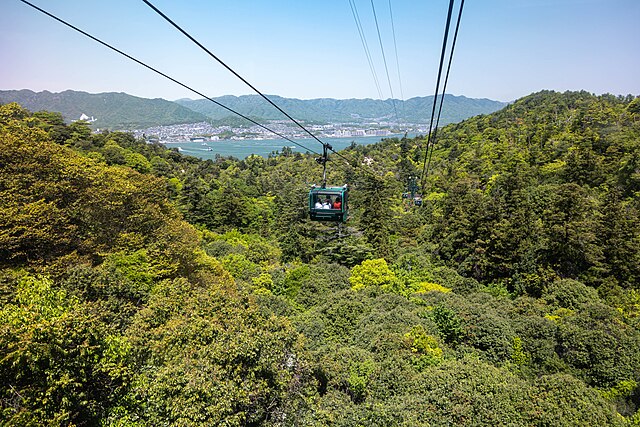
Or you can walk up one of the three hiking trails leading to Mount Misen: Momijidani Course, Daisho-in Course, or Omoto Course. The Daisho-in Course has the prettiest views and is the least steepest, while the Momijidani Course is the shortest, but also the steepest trail. It takes 1.5 to 2 hours to get to the top.
It is said that Kobo Daishi, the founder of the Shingon sect, first practiced Buddhism at Mount Misen. He’s one of the holiest figures in Japanese Buddhism. There are several buildings that belong to Daisho-in Temple at the base of the mountain.
Two examples are Misen Hondo (Misen Main Hall) and the Reikado (Hall of the Spiritual Flame). Apparently, Kobo Daishi lit the flame at Reikado when he first practiced Buddhism and it has burnt ever since. It was also used to lit the Peace Flame at Hiroshima Peace Memorial Park.
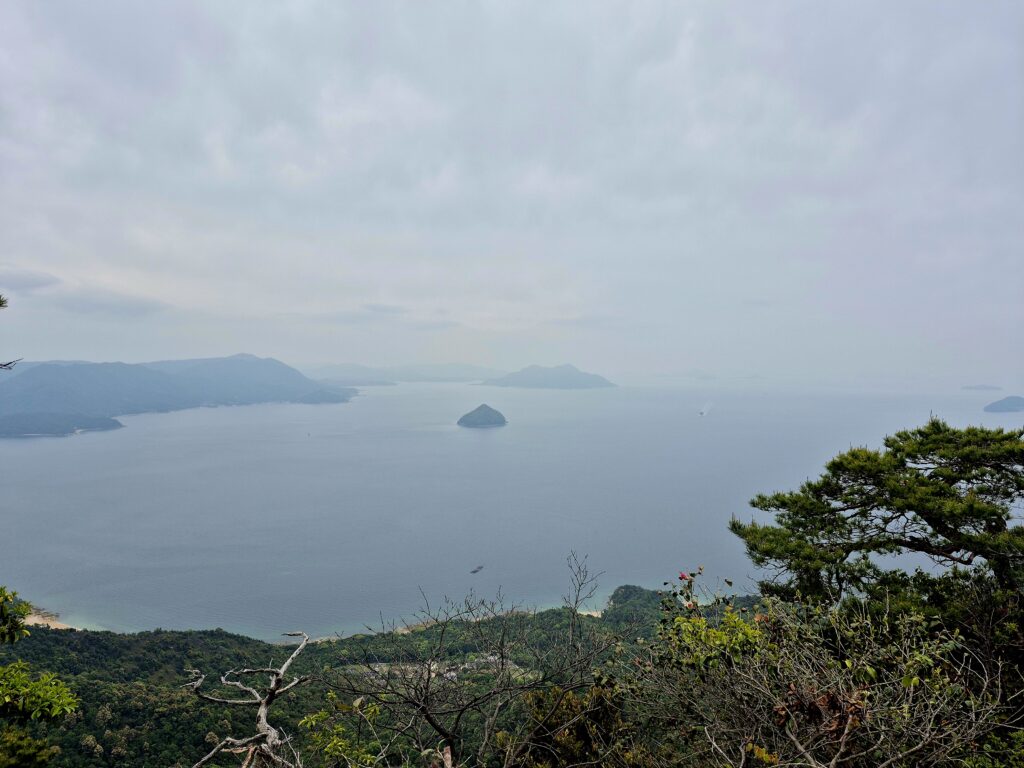
Watch out for Wild Deer
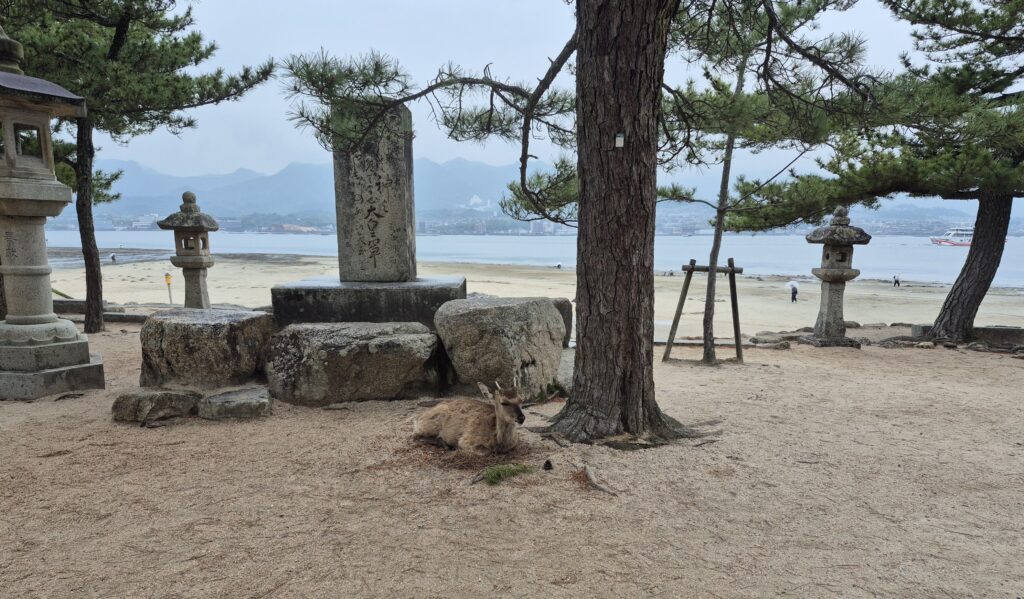
Finally, Miyajima is a great place to see local wildlife. About 500 wild deer live on Miyajima and often like to hang out near the touristy sights and along the walking paths. They are quite used to people, but they shouldn’t be petted and it’s forbidden to feed them.
Try Okonomiyaki (aka Hiroshima’s Soul Food)
Looking to try Hiroshima’s specialty food? Then go for Okonomiyaki! Hiroshima-style Okonomiyaki is a savory pancake that consists of a thin layer of batter with tons of cabbage on top of yakisoba noodles.
Popular toppings are oysters, squid, pork belly, or cheese. In the end, the chef puts bonito flakes, green laver, and Okonomiyaki sauce on top of the Okonomiyaki. The customer usually gets a small plate and spatula to cut the Okonomiyaki into small pieces.
I tried this iconic Japanese dish at Okonomiyaki Yakeppachi, a local Okonomiyaki restaurant near my hostel.
As soon as I entered the restaurant, I was warmly welcomed by the staff. Besides, while Okonomiyaki is usually not vegetarian, the chef was more than happy to prepare a yummy veggie one right in front of my eyes!
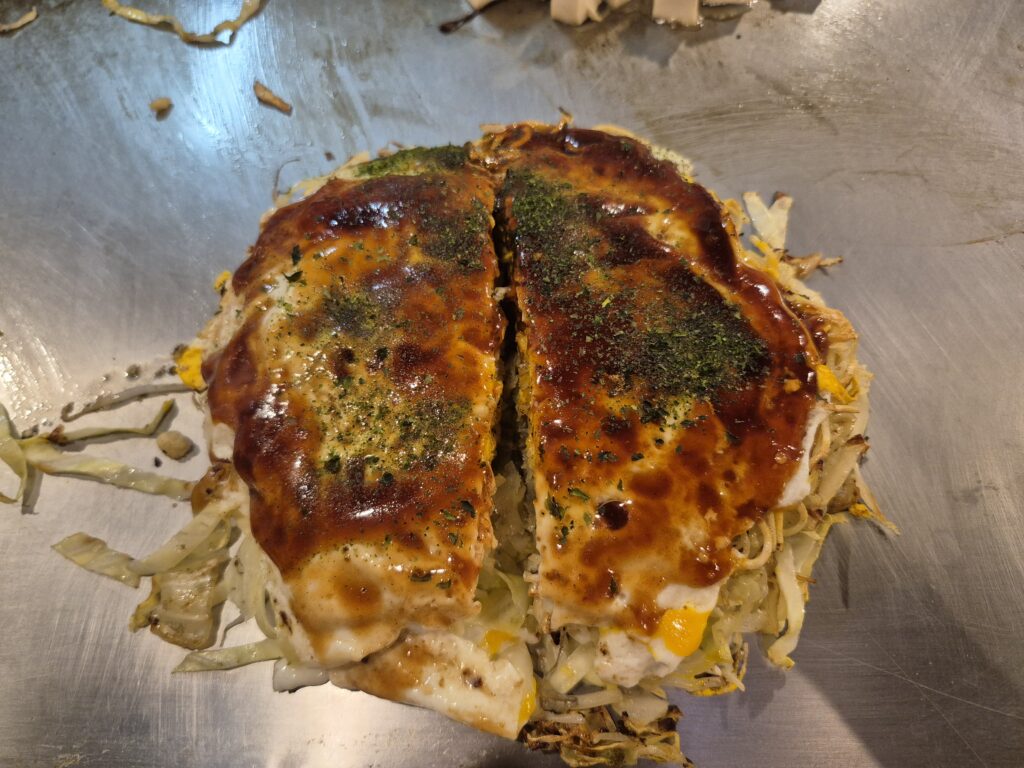
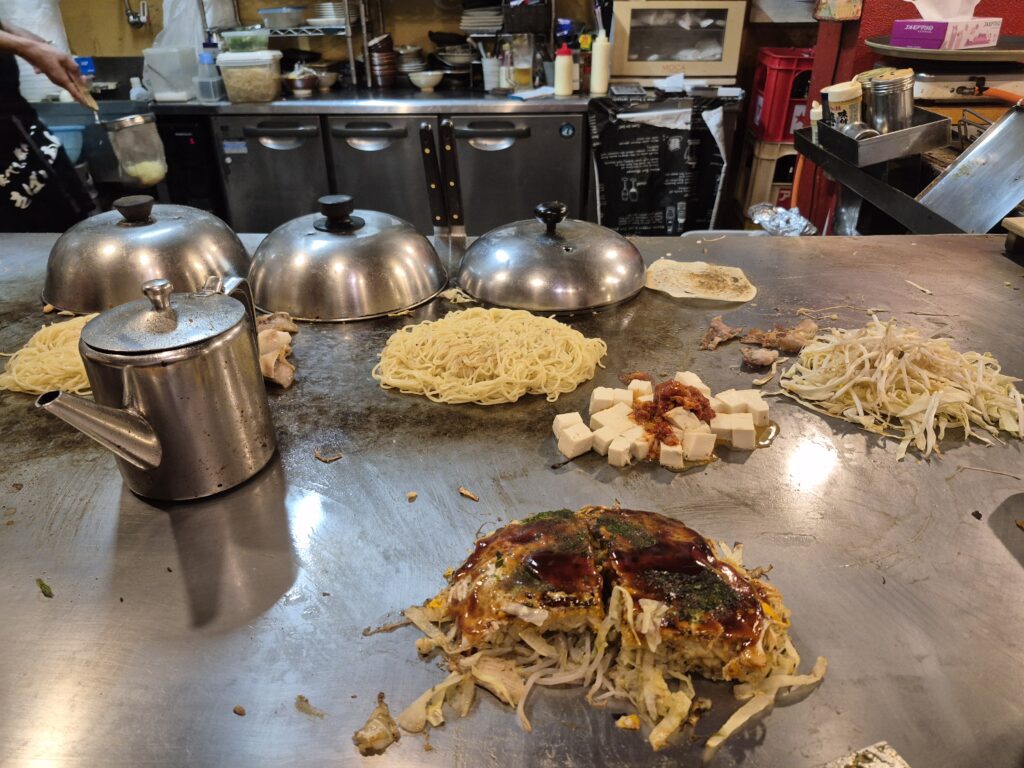
My veggie Okonomiyaki and the chef already cooking more Okonomiyaki. Itadakimasu!
The cozy vibe added to a great experience as well. Only a small number of customers could fit in the restaurant, which made me feel like a part of a group. It was awesome to chat with fellow travelers and local Japanese people who sat near me!
Visit Hiroshima Castle
Address: 21-1 Motomachi, Naka Ward, Hiroshima, 730-0011, Japan
Visiting Hiroshima Castle is a great way to finish One Day in Hiroshima. Also known as the Carp Castle, it was built in the 1590’s by the powerful feudal lord Mori Terumoto. Since Hiroshima was built as a castle town, Hiroshima Castle was the physical and economical heart of the city.
Sadly, Hiroshima Castle was ruined by the atomic bombing in 1945. But a replica of the main keep was completed in 1958 and today, it’s a museum about Hiroshima and the castle’s history before the attack. The main keep has five floors and its grounds are surrounded by moat.
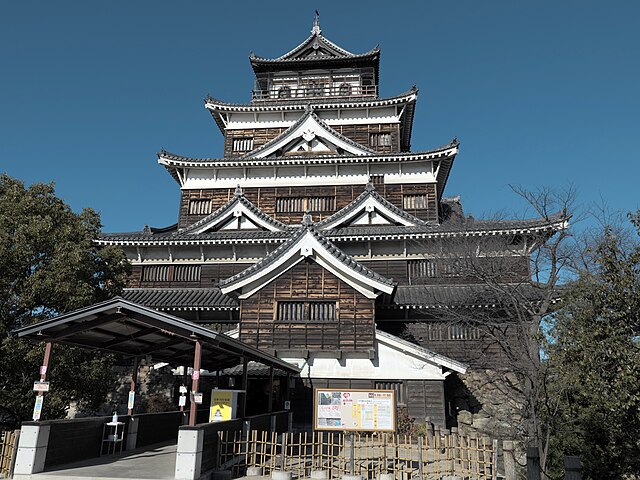
More buildings were reconstructed after the main keep replica. Today visitors can look at a shrine, some ruins and a few reconstructed dwellings of the Ninomaru (second circle of defense) inside the castle complex. Finally, visitors can enjoy a beautiful view of the city from the top of the main keep.
It’s possible to go inside the main keep and Ninomaru all year (except December 29-31 and December 29-January 2). Admission to the main keep is 370 ¥ and Ninomaru and the rest of the castle grounds are free to visit.
Where to Stay in Hiroshima
If you’d like to take your time, I recommend spending the night in Hiroshima.
I stayed at Roku Hostel (6-18 Hakushimakukencho, Naka Ward, Hiroshima, 730-0003, Japan), which is very close to public transit, restaurants, and Hiroshima’s tourist attractions.
Roku Hostel was one of my favourite accommodations in Japan. The female dorm room was spacious and the bed was super comfy, with privacy curtains all around it. Besides, I loved chatting with Mako, the owner, and other travelers in the bar area. They even had a Nintendo 64 with Mario Kart! 😀
Mako also made me a yummy vegetarian breakfast (at a small cost) and the hostel gave out family vibes ever since I entered through the door!
How to Get to and around Hiroshima with Public transit
Many people visit Hiroshima every year, so it’s easy to reach via the famous Shinkansen from Tokyo, Kyoto, Osaka, or Fukuoka (on Kyushu island).
There are express trains going from/to Hiroshima as well. Many JR train lines are covered by the Japan Rail Pass or regional JR Rail Passes. The ferry from/to Miyajima is also included in these train passes.
Some people take (overnight) highway buses from Tokyo to Hiroshima via Willer Express, which is cheaper than the train if you don’t have a pass. Others fly from Tokyo Haneda or Tokyo Narita Airport to Hiroshima Airport.
Hiroshima has Japan’s biggest tram network. There are eight tram lines linking Hiroshima Station with most tourist attractions, like the Miyajima Ferry and Hiroshima Peace Memorial Park. I recommend buying an IC Card (like Suica or Pasmo) to pay for local transit, as JR Passes are not included in this.
Lastly, there are Hiroshima Sightseeing Loop Buses taking visitors to Hiroshima’s most popular tourist attractions. Tickets are also covered by the Japan Rail Pass and regional Japan Rail passes.
The Best Time to Visit Hiroshima
Hiroshima is known for its temperate climate, so you can visit the city anytime of the year.
The best time to visit Hiroshima is the spring (March to May) and fall (September to November). The weather is often sunny and warm, but not hot or humid. Cherry blossom season usually goes from late March to mid-April, so be sure to expect crowds then.
Golden Week (the first week of May) can be busy, too. The beautiful fall foliage in October/November is a reason why many people visit Hiroshima in the fall.
Like many other parts of Japan, summer season (June-August) is usually very hot and humid, and it’s rainy season in June/July as well. There are less crowds though.
Winters are rather cool, but not super cold, and if it snows, it usually doesn’t stick to the ground. This is the quietest time of the year in Hiroshima and many businesses are closed from December 29 to January 3.
Wrap Up: One Day in Hiroshima
Spending One Day in Hiroshima is the perfect way to get a first impression of the city. Whether you’re into history, nature, or good food, Hiroshima won’t disappoint you.
Visiting Hiroshima Peace Memorial Park and Museum was very moving and an important reminder that this terrible event should never be forgotten. Besides, I loved spending time in nature and watching out for deer on Miyajima.
Finally, I can’t wait to eat more Okonomiyaki when I’m back in Japan someday! 😛
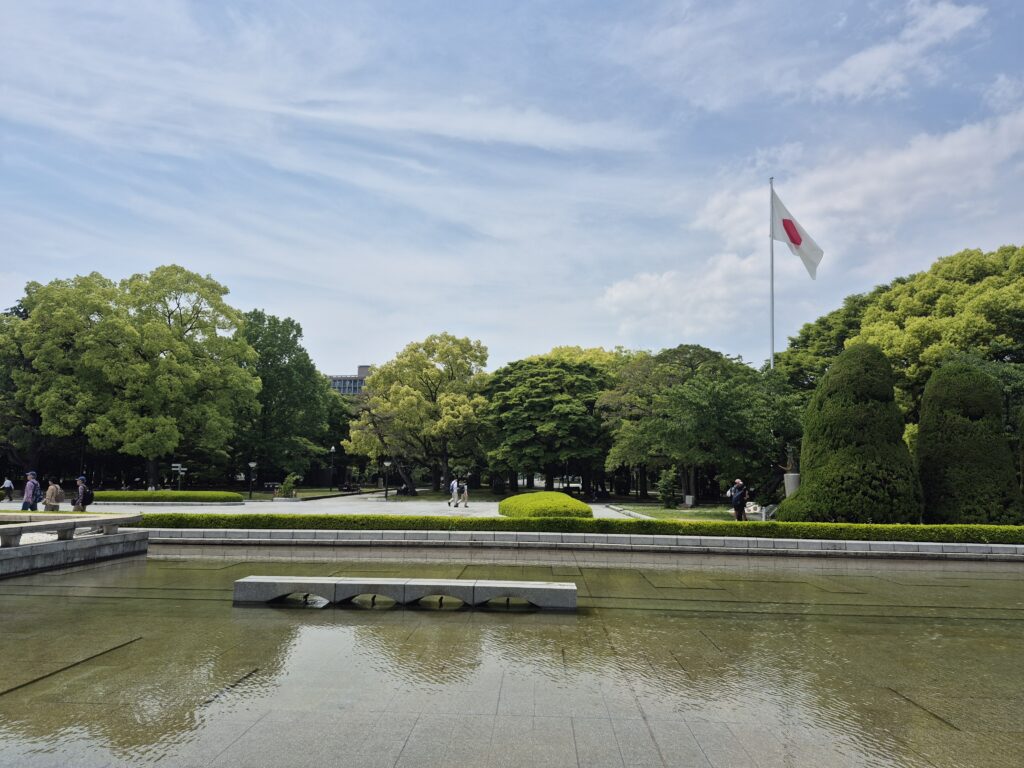
Traveling around Japan for a while? Then check out these posts:
Is Nikko, Japan Worth Visiting?
What is Kanazawa, Japan Famous for?

Writing and traveling have been my passions for 25+ years, so I launched this travel blog in May 2020. I love writing travel guides about amazing destinations and I'm passionate about music tourism and animal-friendly and sustainable travel.
So far, I've been to 20 countries on five continents, and Japan and Iceland were my favourites!
- THE TOP 5 THINGS TO DO IN KAMAKURA: THE PERFECT SIDE TRIP FROM TOKYO - March 1, 2026
- ONE DAY IN NAPIER: THE 10 BEST THINGS TO DO INTHE ART DECO CAPITAL OF NEW ZEALAND - February 8, 2026
- A DAY TRIP TO MILFORD SOUND: NEW ZEALAND’S TOP NATURAL ATTRACTION - December 27, 2025
Leave a Reply