
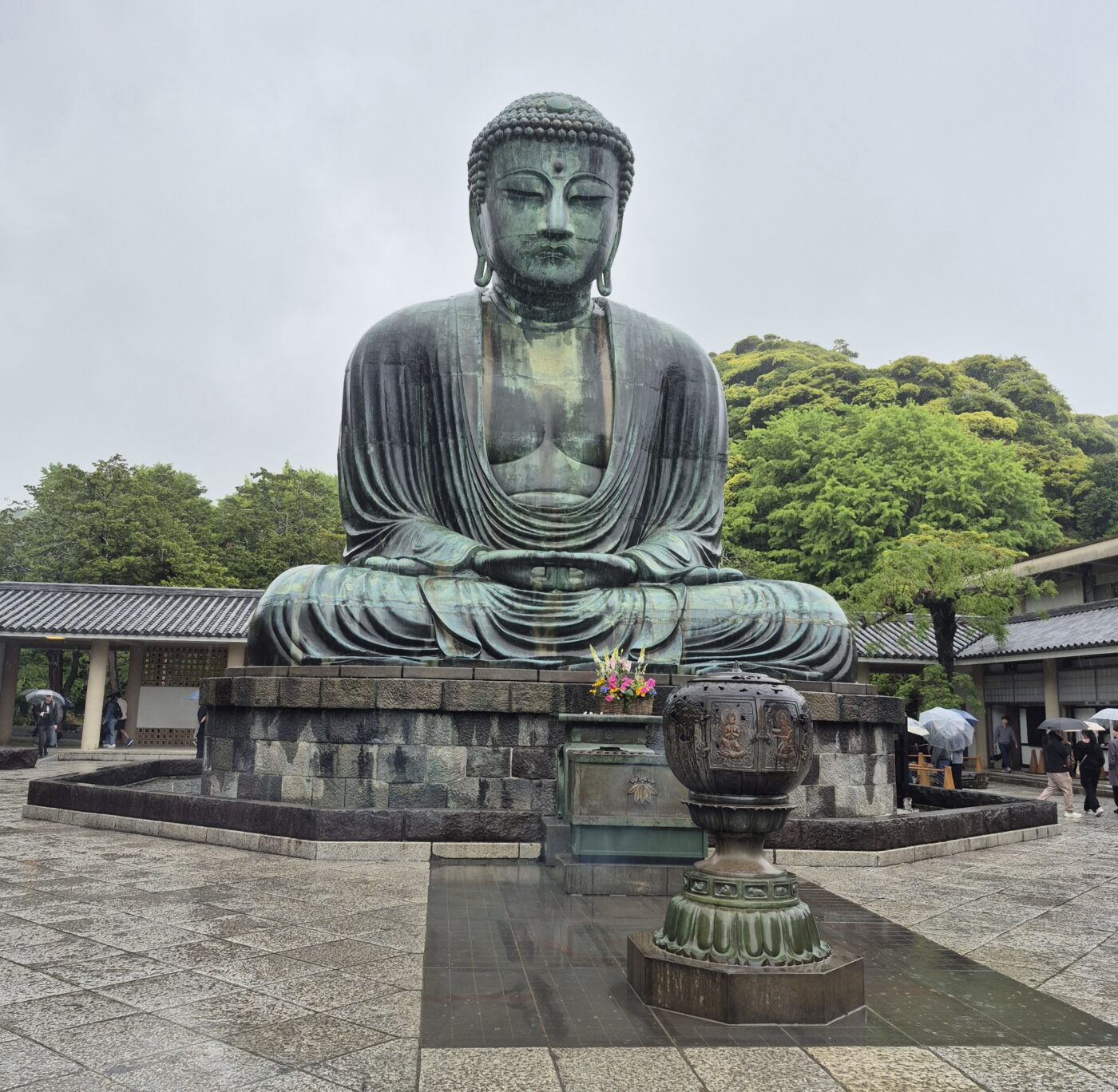
Kamakura is a vibrant coastal town in the Kanagawa prefecture about an hour south of Tokyo. Kamakura has many attractions to choose from, including shrines and temples, the Great Buddha, sandy beaches, trendy restaurants, and beautiful Enoshima island is just a short train ride away.
Kamakura became the political centre of Japan in the late 12th century, when Minamoto Yoritomo, the shogun (ruler) decided that the Kamakura Bakufu (military government) should reside here. It was the beginning of the Kamakura Period that lasted until 1333 and this era marked the birth of samurai society as well.
Then the Muromachi government in Kyoto took over and soon Kamakura’s political status had declined immensely. But in the Edo period, Kamakura started to be known as a travel destination with people from Edo (the former name of Tokyo).
Often called “the Kyoto of Eastern Japan” and thanks to its many cool attractions, Kamakura has been a popular side trip from Tokyo with domestic and international tourists alike until this day.
I love checking out smaller cities and towns in Japan, so I had to spend a Day in Kamakura on my Japan trip in May 2025. In this post, I’m going to share the Top 5 Things to Do in Kamakura with you!
Disclosure: I only recommend products that I’ve used in the past, and all opinions expressed in this post are my own. This post contains affiliate links. If you use one of the links throughout the page to buy something, I may earn a small commission at no extra cost to you. Thank you!
The Top 5 Things to Do in Kamakura
The Great Buddha of Kamakura
Address: 4 Chome-2-28 Hase, Kamakura, Kanagawa 248-0016, Japan
The Great Buddha of Kamakura (Daibutsu) is Kamakura’s most iconic landmark. This bronze statue of Amida Buddha (an important character in Mahayana Buddhism) dates back to 1252 and sits proudly within the grounds of Kotokuin Temple.
At 11.4 meters (37 ft), it’s one of the tallest Buddha statues in Japan. The Great Buddha of Kamakura, the peaceful Kotokuin Temple grounds, and the many trees around it create a very peaceful atmosphere (and the perfect photo motif!).
Originally, the statue was inside a big temple hall. Unlike the temple buildings that were ruined by typhoons and a tsunami in the 14th and 15th century, the Great Buddha statue has braved any bad weather until the present day. Since the late 15th century, it has been sitting in the open air.
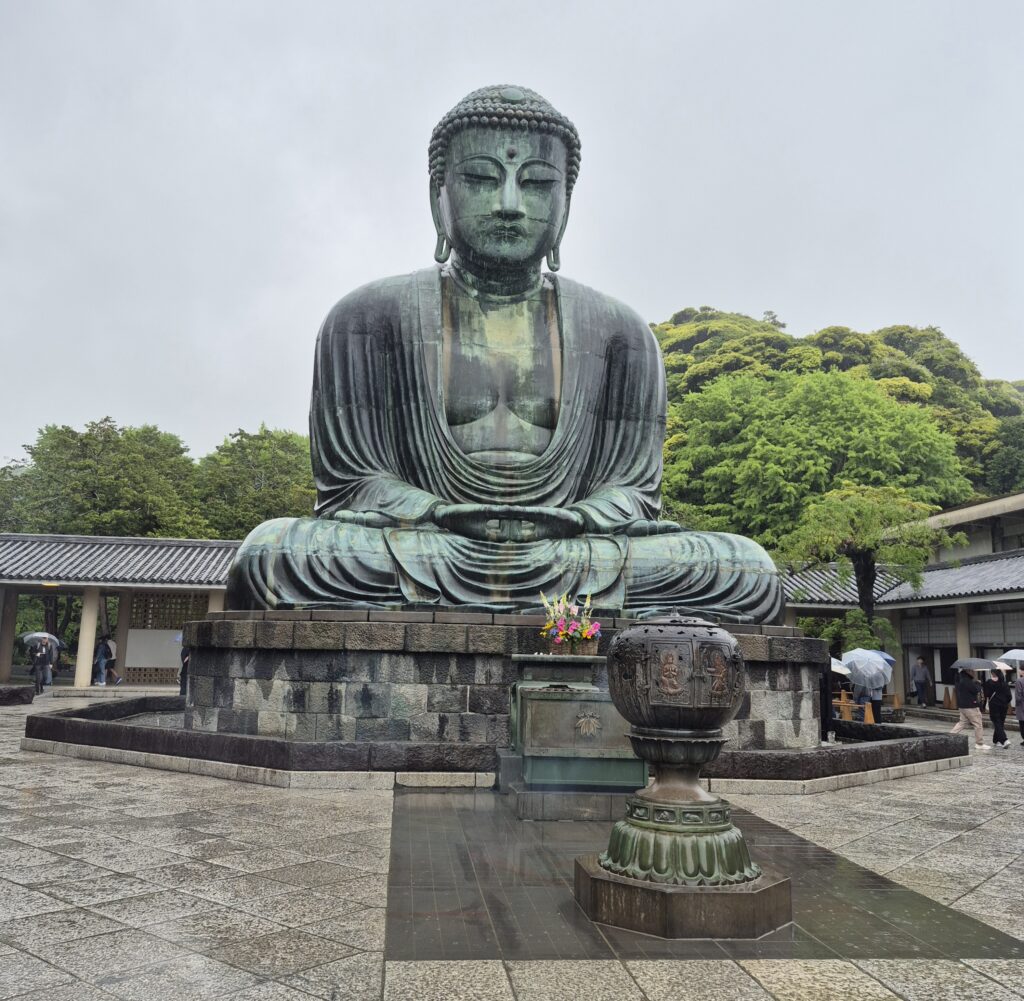
The Great Buddha of Kamakura is open daily from 8 am to 5:30 pm (until 5 pm from October-March). Admission is 300 ¥ (50 ¥ extra if you’d like to go inside the Buddha statue). It’s best to visit this stunning attraction in the early morning to avoid the crowds.
Hasedera Temple
Address: 3 Chome-11-2 Hase, Kamakura, Kanagawa 248-0016, Japan
Just a short walk from the Great Buddha is Hasedera Temple. It’s a temple of the Jodo sect in Buddhism and was established in the 8th century. The temple grounds sit on a slope of a wooded hill in Kamakura.
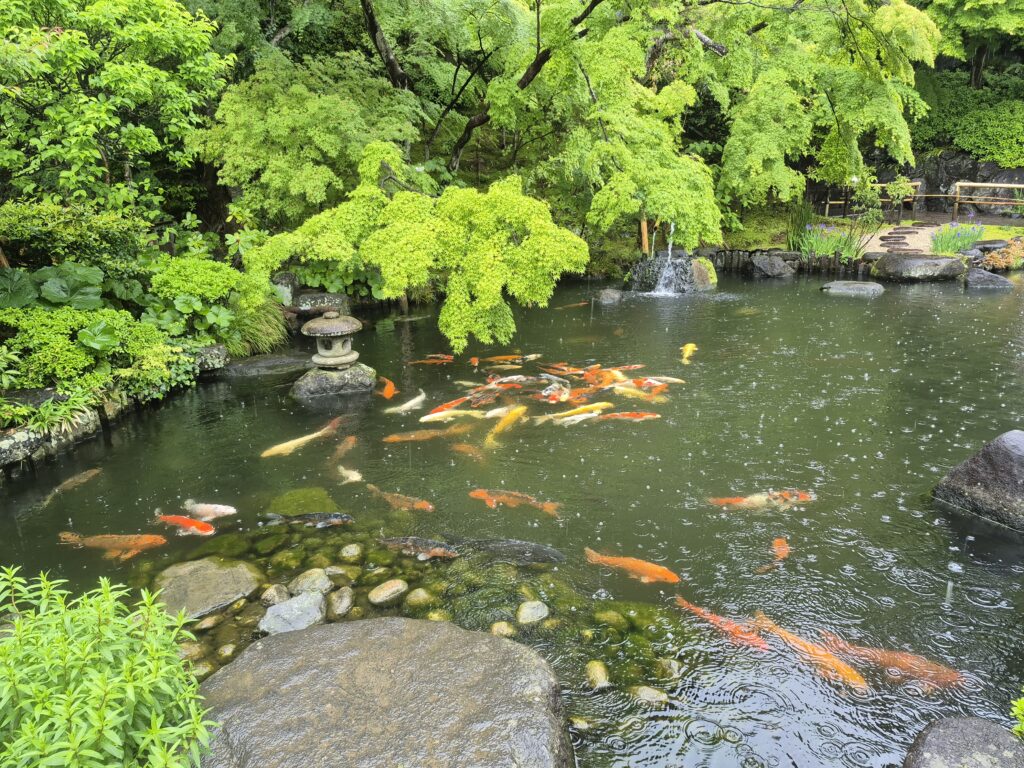
After entering the temple complex, it felt so calming to walk around the serene gardens with plenty of trees and green plants, ponds (with koi fish swimming in them), colourful flowers, little streams, stone lanterns, and more!
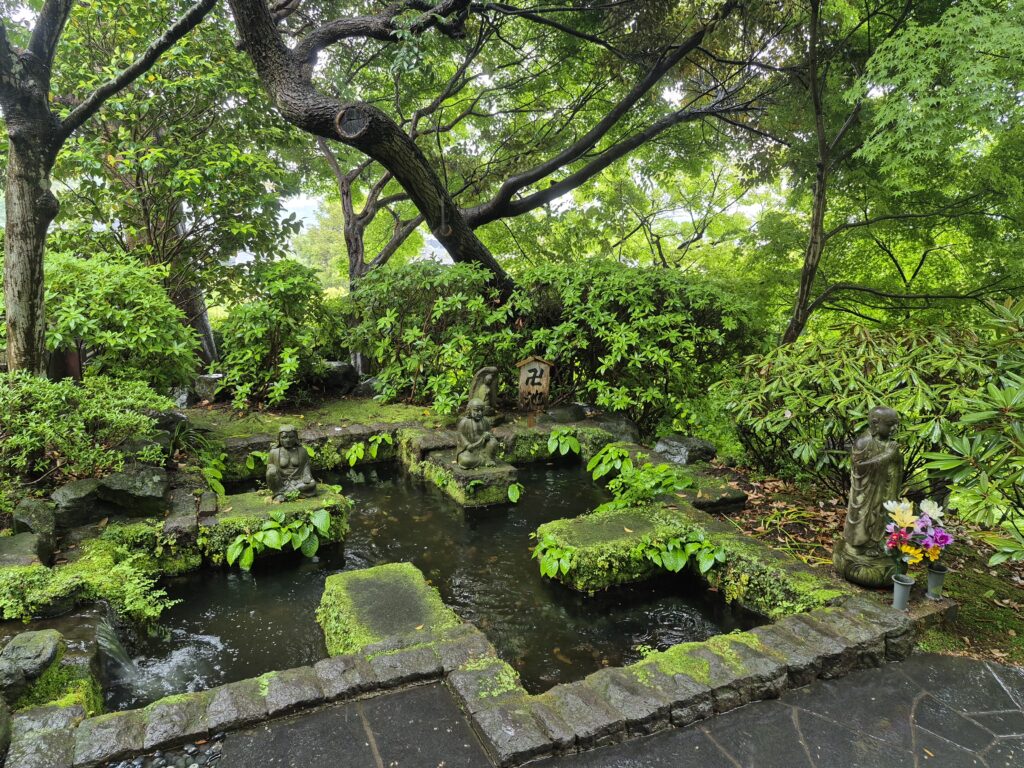
Other reasons why you shouldn’t miss Hasedera Temple include the golden Amida Buddha statue, the hundreds of Jizo figurines next to Jizo-do Hall (who help the souls of deceased children go to paradise), and other Buddhist deity statues.
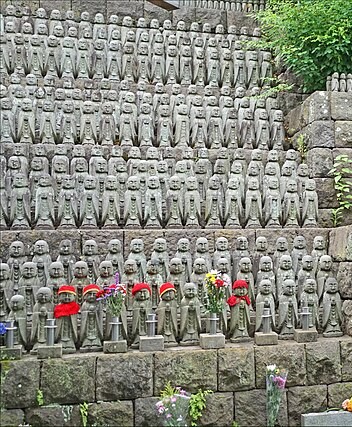
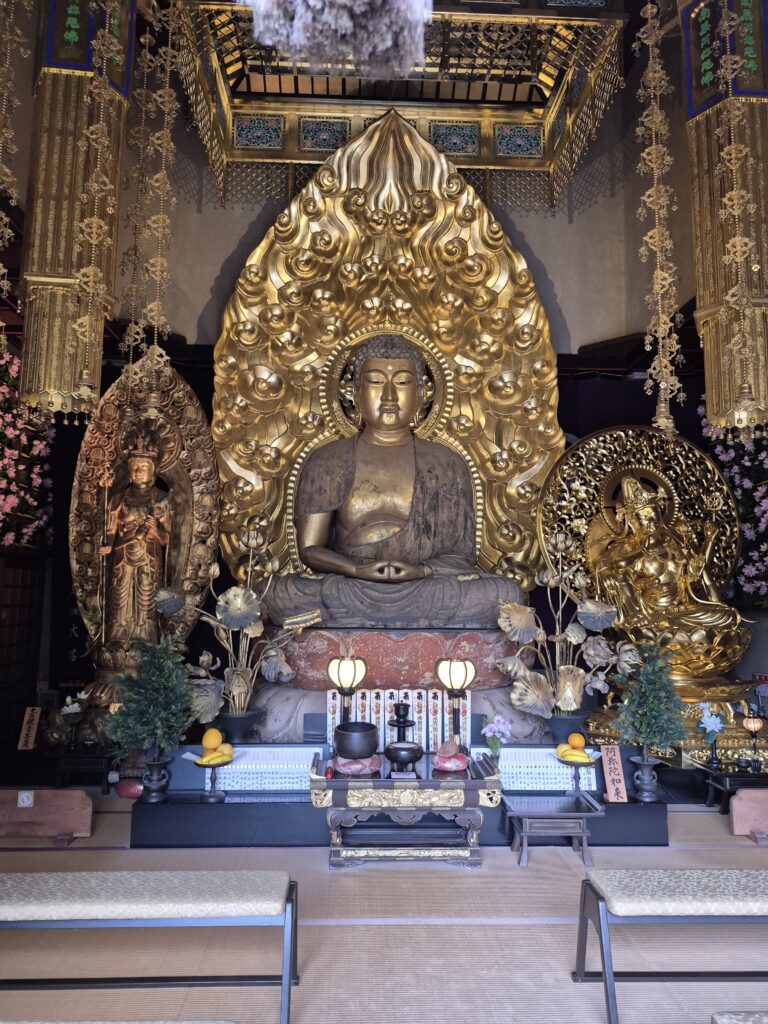
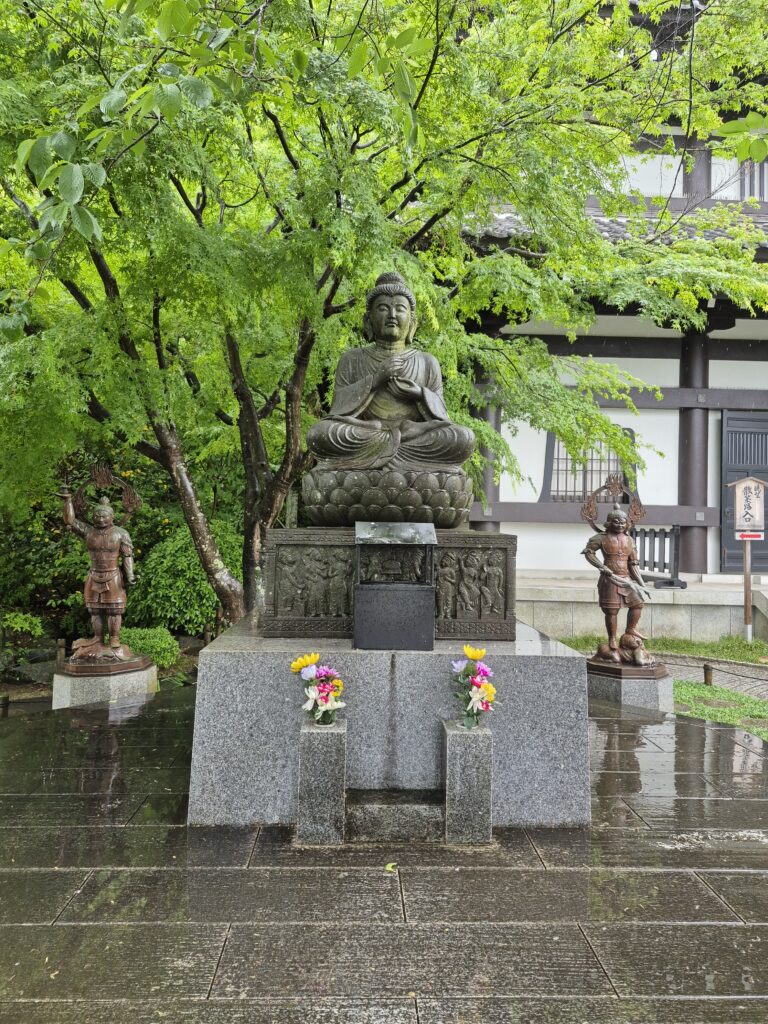
Jizo figurines (Photo credit: Jean-Pierre Dalbéra on Wikimedia Commons), Amida Buddha statue, and a Buddhist deity statue.
But Hasedera Temple’s most famous attraction is a wooden statue of Kannon, the Goddess of Compassion with eleven heads. It’s one of the tallest wooden sculptures in Japan. The Kannon statue is 9.18 meters (30.1 ft) high and visitors can admire it at Kannon-do Hall (taking photos and videos is not allowed).
Besides, feel free to check out the beautiful view of Kamakura from the Observation Platform and wander around the small bamboo grove. Visitors can also have a meal or matcha tea at Kaikoan Restaurant.
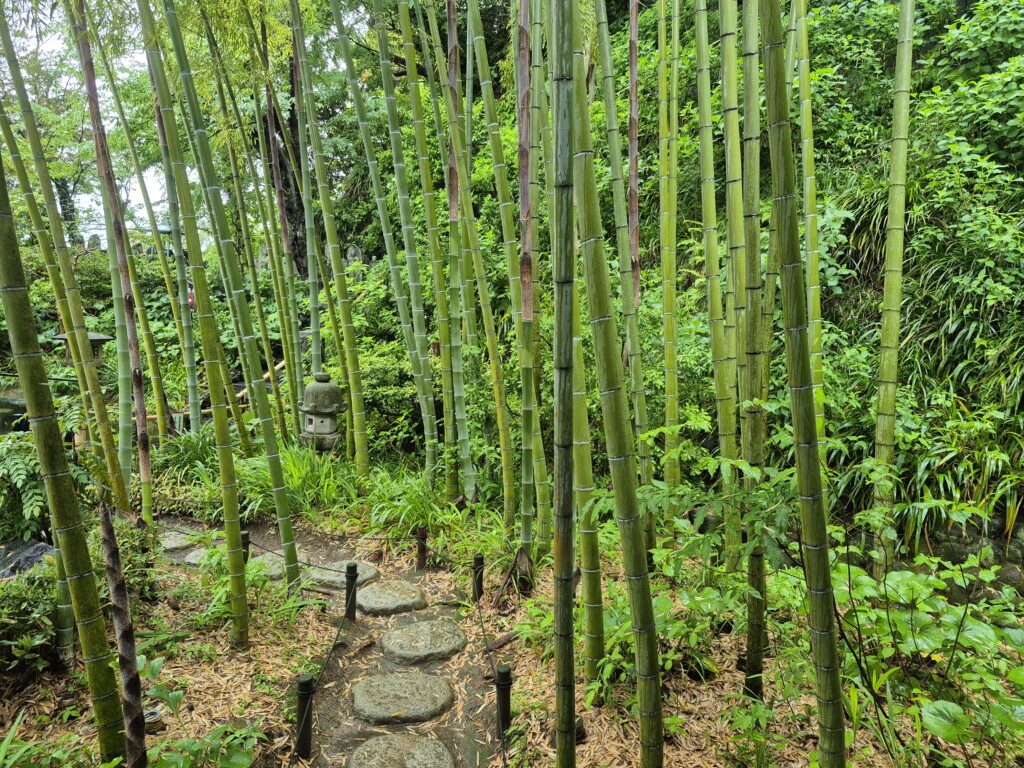
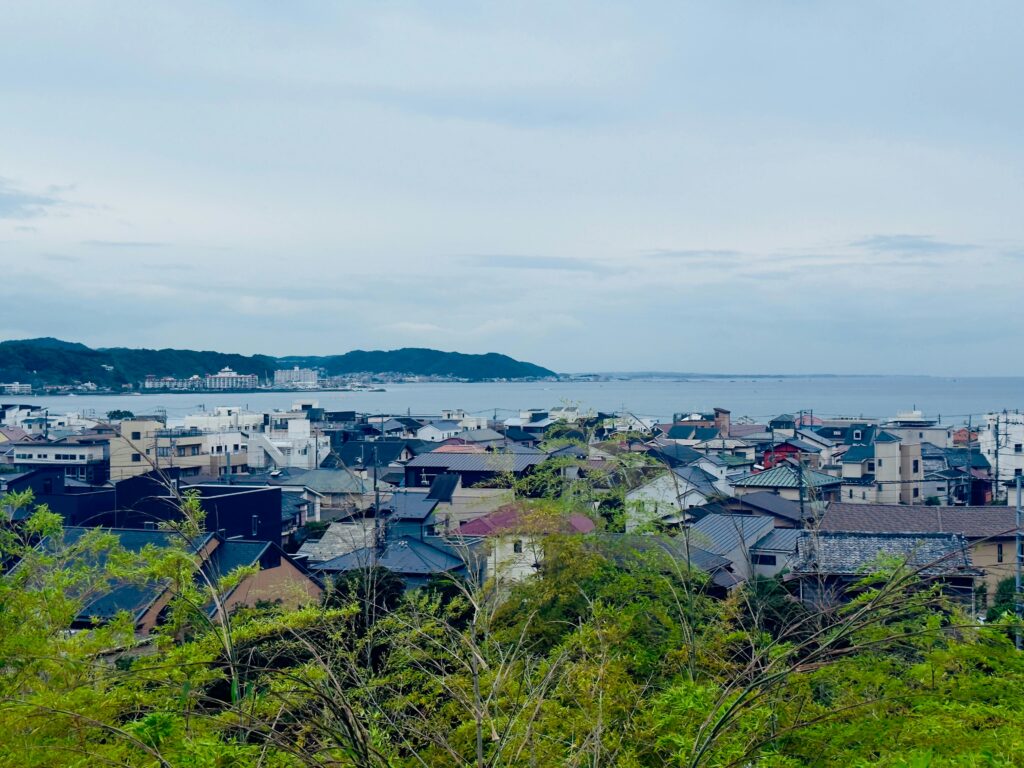
The bamboo grove and Kamakura view from the platform (Photo by Kevin Shi on Unsplash).
Hasedera Temple is always worth a visit, whether rain or shine! In my opinion, rainy days add a mystic (or even magical) atmosphere in these spiritual places in Japan.
Hasedera Temple is open daily from 8 am to 5 pm (July to March) and 8 am to 5:30 pm from April to June. Admission is 400 ¥.
Tsurugaoka Hachimangu Shrine
Address: 2 Chome-1-31 Yukinoshita, Kamakura, Kanagawa 248-8588, Japan
Tsurugaoka Hachimangu is the most important Shinto shrine in Kamakura. It dates back to 1063 and was moved to its current location in 1180 by Minamoto Yoritomo, the founder of the Kamakura government. The shrine was built to honour Hachiman, the guardian deity of the Minamoto clan and the samurai in general.
You can reach Tsurugaoka Hachimangu shrine by following a wide path that goes from Kamakura’s waterfront through the city centre, with multiple torii gates guiding you along the way. The Main Hall (hongu or jogu) sits on a terrace at the top of a wide stairway.
There used to be a gingko tree next to the stairway that was older than the shrine itself. It was a hideout spot once when the shogun was attacked in an ambush. Sadly, the tree was ruined during a winter storm in 2010, but a new tree was planted in this spot since then.
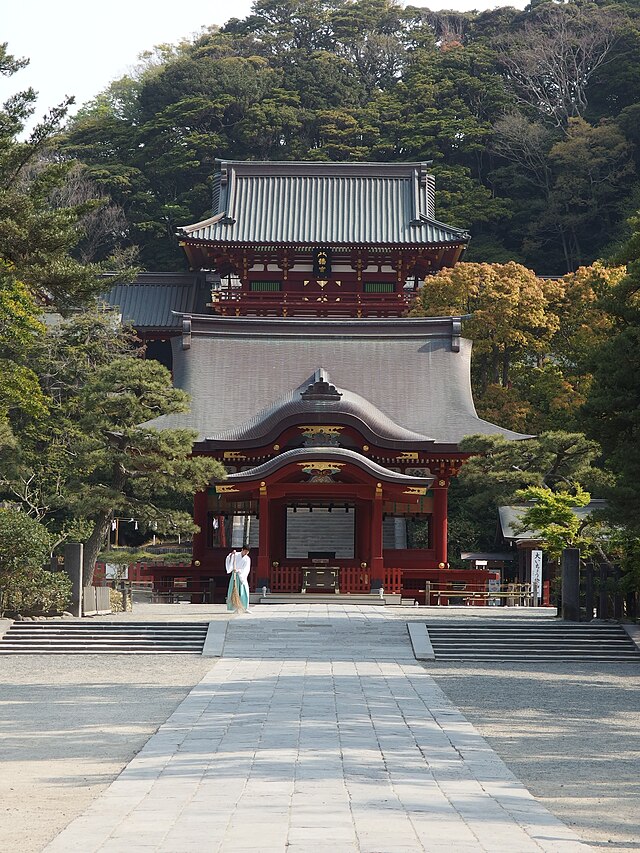
You cannot miss the Maiden, which is a stage for music and dance performances. Besides, there are two large ponds at Tsurugaoka Hachimangu Shrine. One stands for the Minamoto clan, while the other represents the Taira clan, which was the Minomoto clan’s biggest rival.
Maruyama Inari Shrine is worth seeing on your visit as well. It’s the oldest building inside the shrine grounds and is an Important Cultural Property of Japan. People come here to pray for success in business and a good harvest and there are many red torii gates, too.
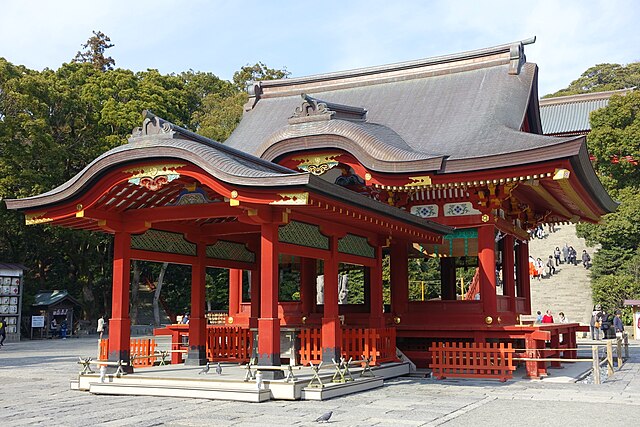
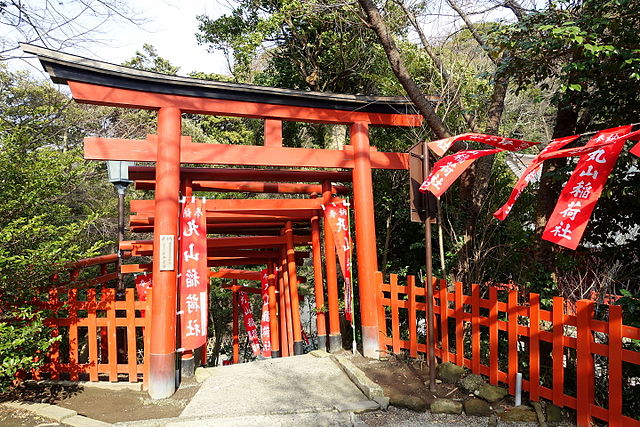
The Maiden and the torii gates by Maruyama Inari Shrine.
Finally, Tsurugaoka Hachimangu Shrine is famous for its many festivals. For example, more than 2 million visitors come here during the New Year’s holidays for hatsumode (the first shrine visit in a new year) and there are horseback archery performances in mid April and mid September.
Tsurugaoka Hachimangu Shrine is open all year from 6 am to 8 pm and the shrine grounds are free to enter.
Explore Enoshima island
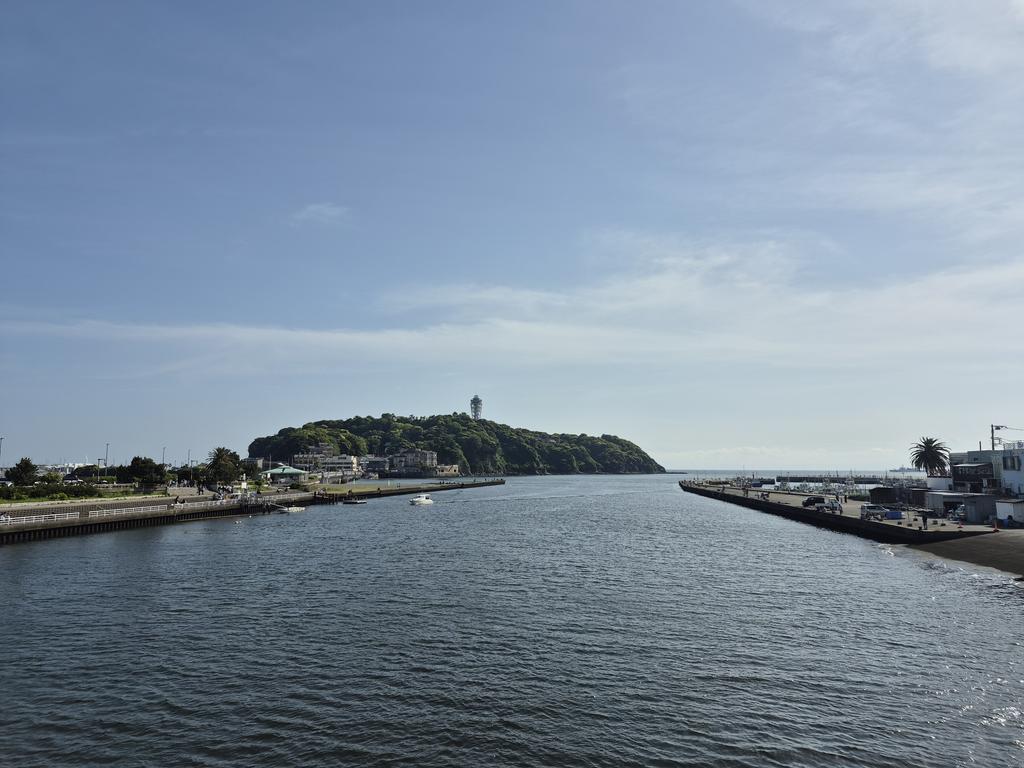
Enoshima is another must visit spot in the Kamakura area. It’s just a 25-minute train ride on the Enoden line from Kamakura Station to Enoshima Station.
When you keep walking straight from the station, you’ll land on Enoshima Benten Bridge, which connects the small island with the mainland.
Enoshima Shrine
Address: 2 Chome-3-8 Enoshima, Fujisawa, Kanagawa 251-0036, Japan
One of Enoshima’s top attractions is Enoshima Shrine. It consists of three separate shrine complexes that are scattered around the island. The shrine dates back to 552 AD and sits on a mountaintop. The main shrine complex includes an octagonal building which is home to a statue of Benten.
Benten (or Benzaiten) is the goddess of wealth, music, and knowledge in Japanese Shintoism. Besides, people believe that she created Enoshima before subduing a five headed dragon that was threatening the area by stealing people’s children.
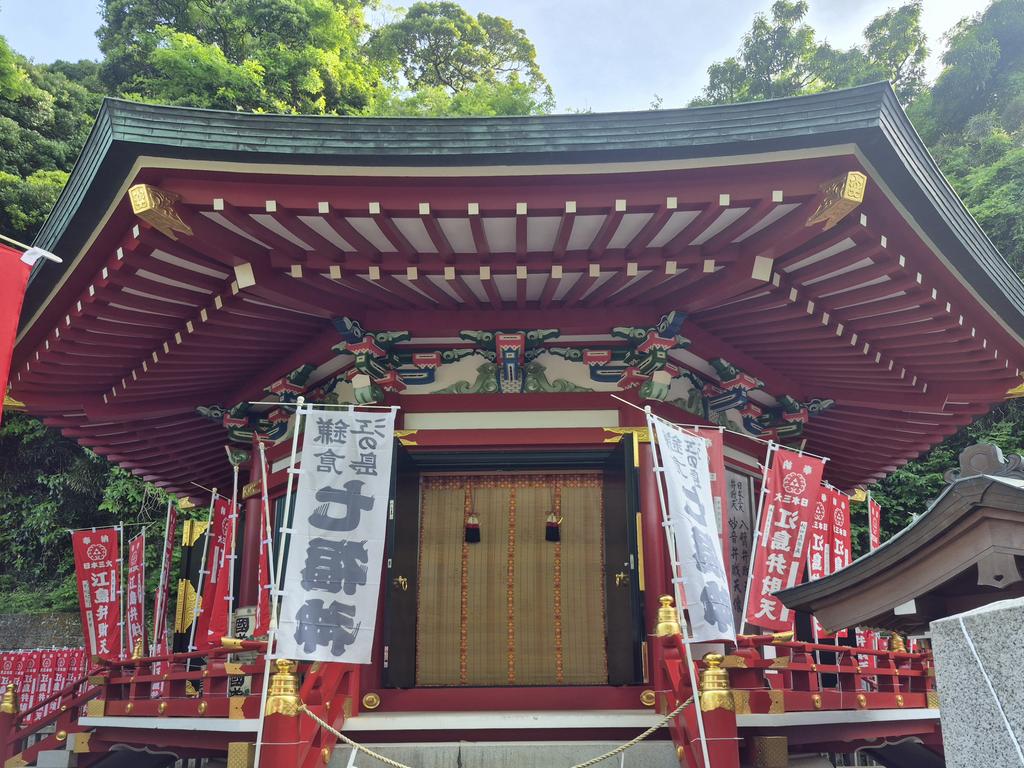
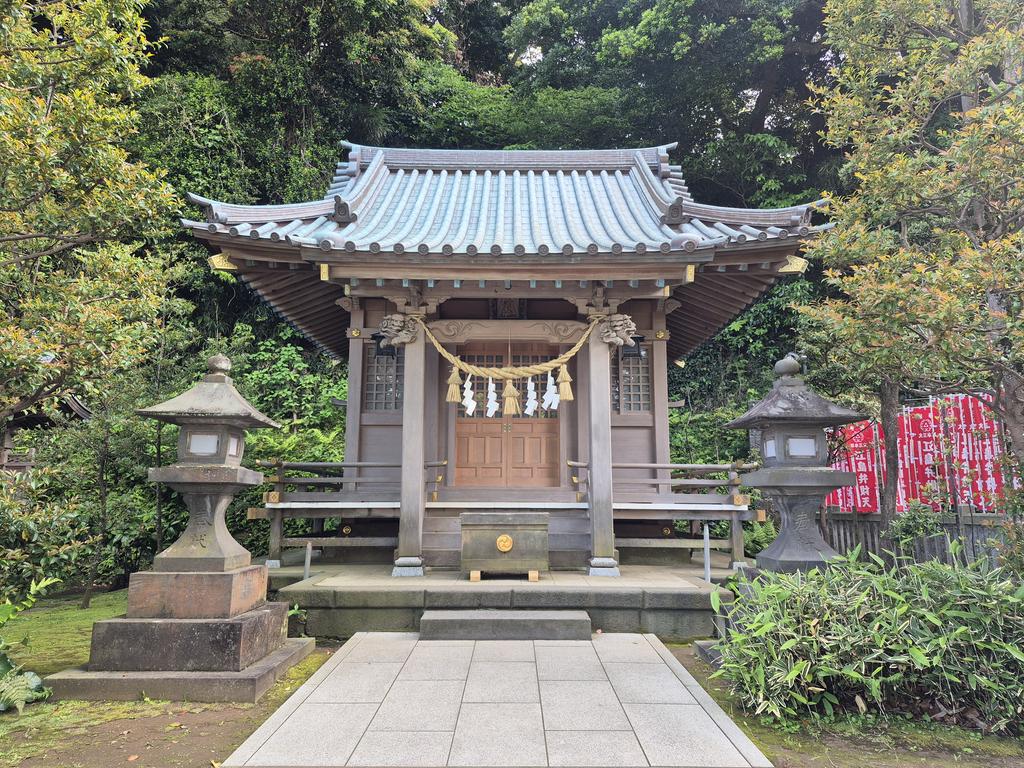
The octagonal building that houses the Benten statue (photos were not allowed when I visited in May 2025) and one of the shrine buildings.
Enoshima Shrine is open daily from 8:30 am to 4:30 pm. While walking around the shrine grounds is free, there’s an admission fee of 200 ¥ to look at the Benten statue.
Enoshima Sea Candle
Address: 2 Chome-3-28 Enoshima, Fujisawa, Kanagawa 251-0036, Japan
Enoshima Sea Candle is a modernistic observation tower that was completed in 2003. It’s 60 meters (196 ft) high and also serves as a lighthouse. From here, you’ll get scenic views of the island and Sagami Bay.
The Sea Candle is within the beautiful Samuel Cocking Garden and admission is 500 ¥. It’s open daily from 9 am to 8 pm.
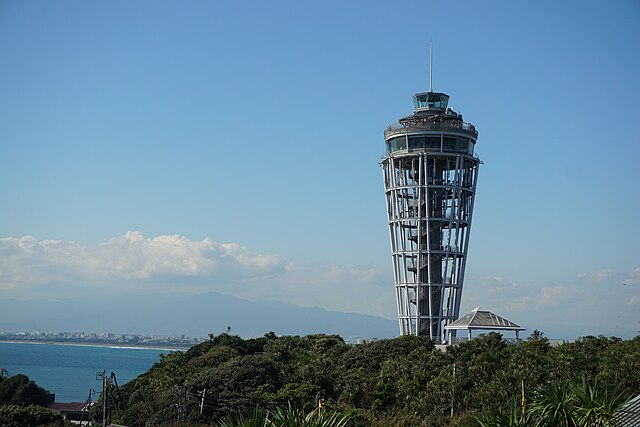
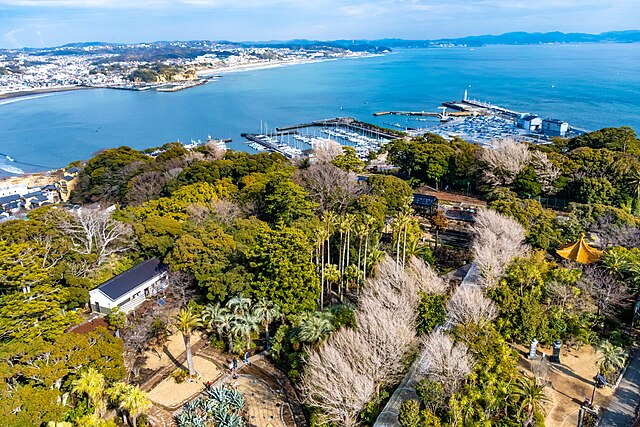
Enoshima Sea Candle and the view from the platform. Photo #1 is credit of Maksym Grinenko on Wikimedia Commons.
Ryuren Bell of Love
Address: 2 Chome-5 Enoshima, Fujisawa, Kanagawa 251-0036, Japan
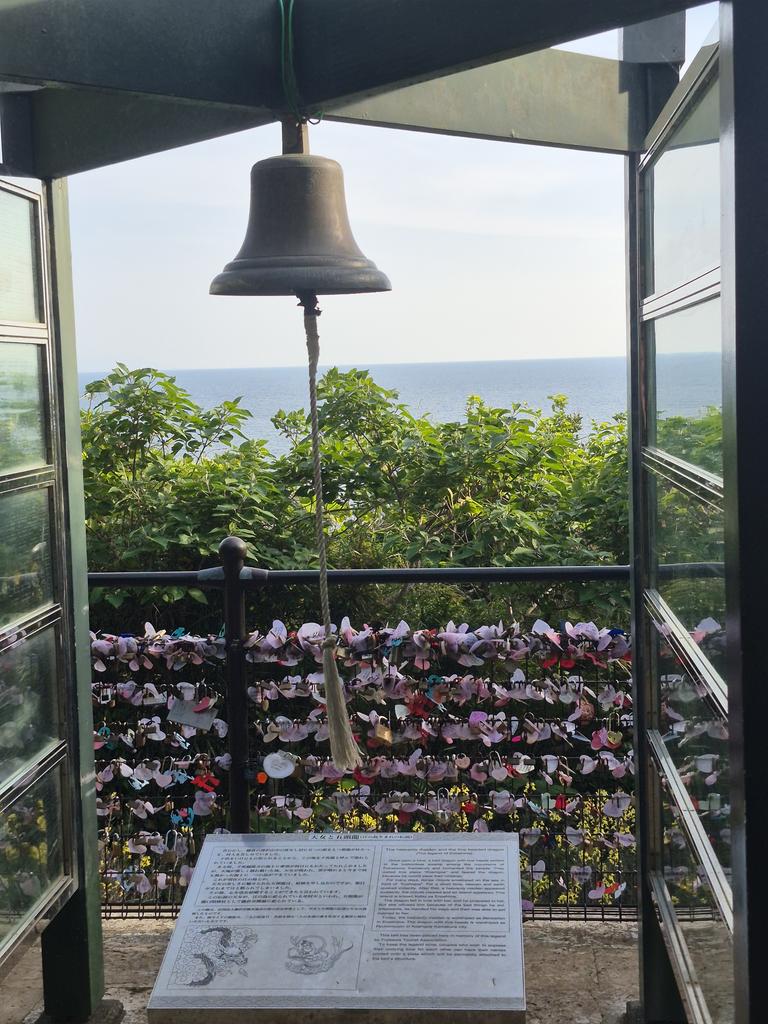
Just a short walk further is the Ryuren Bell of Love (Dragon Love Bell). As per the Legend of Enoshima, the people were afraid of a five headed dragon threatening to steal their children. The sky was cloudy for a long time in the spot where the dragon lived.
One day, heaven and earth quaked violently. Soon after, a heavenly maiden showed up, cleared the skies, and created the island of Enoshima. The dragon quickly fell in love with and proposed to her, but she said no because of his bad behaviour. Later the dragon changed for the better and they eventually got married.
Today the maiden is worshipped as Benzaiten (or Benten) and the dragon is worshipped as Ryukomyojin in the area. Thanks to their love legend, couples are encouraged to ring the Dragon Love Bell together and write their names on locks that they put on the fence behind it so their love never dies!
Yuigahama Beach
Address: 4 Chome Yuigahama, Kamakura, Kanagawa 248-0014, Japan
The last attraction worth seeing on your side trip to Kamakura is Yuigahama Beach, the most central of the three beaches in town. The beach is just a 15-minute walk from the Great Buddha statue and is famous for its gentle waters and stunning views of Sagami Bay.
This 3 km (1.8 miles) long stretch of sandy coastline in the heart of Kamakura is known as one of the best spots for swimming, surfing, and standup paddleboarding (SUP) near Tokyo. Lessons can be booked as well.
Yuigahama Beach is buzzing during the summer months, when dozens of beachside cafés, eateries, bars, and lounges open their doors to the public. This makes it a popular dining and nightlife spot and it can get very crowded on weekends and during holidays.
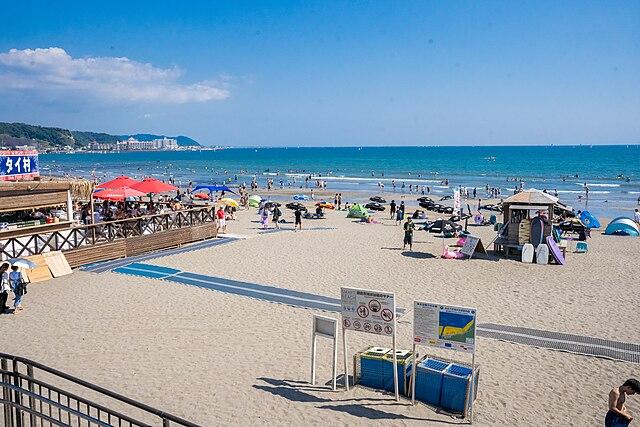
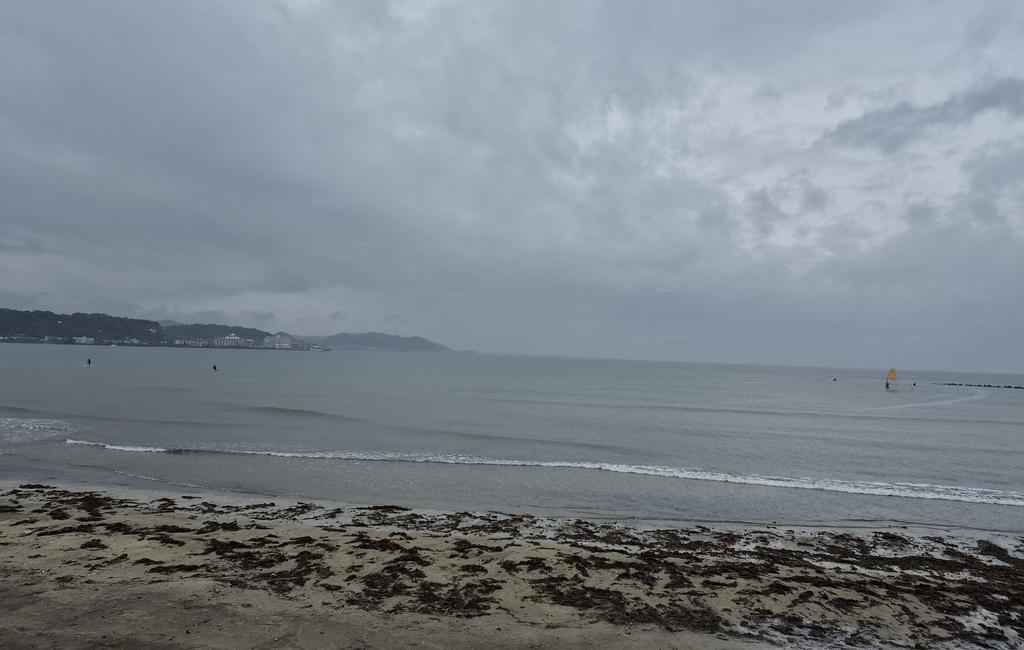
Yuigahama Beach on a nice summer day (Photo credit: Dick Thomas Johnson on Wikimedia Commons) and when I visited on a cloudy/rainy day, lol! 😀
Where to Stay in Kamakura
After an exciting day of exploring Kamakura and Enoshima, it’s a good idea to spend the night here. As a popular tourist destination, Kamakura has a big selection of accommodations to choose from.
I stayed at Guest House Kamakura Zen-ji (28-7 Sakanoshita, Kamakura, Kanagawa 248-0021, Japan) for one night. This cozy guest house is just a few minutes from Kamakura’s attractions and offers private rooms and dorms (often with traditional tatami flooring).
Besides, guests are welcome to relax in their garden, join a yoga class, or chat with fellow travelers in the common area. The host was super nice, all areas were spotless, and the dorm bed was very comfy!
Where to Eat & Drink in Kamakura
As you’d expect from a touristy town, there are many restaurant options for every taste and budget in Kamakura.
As a coastal town, Kamakura is known for its fresh seafood. Its specialty food is shirazu (whitebait), which you can find in various styles at restaurants (from donburi to pasta!).
Thanks to the many temples in the area, traditional Buddhist vegetarian or vegan meals (shojin ryori) can be found in Kamakura as well. Here are my favourite places for a yummy meal in Kamakura:
Cotonoha Vegan Café
Address: 2 Chome-10-34 Hase, Kamakura, Kanagawa 248-0016, Japan
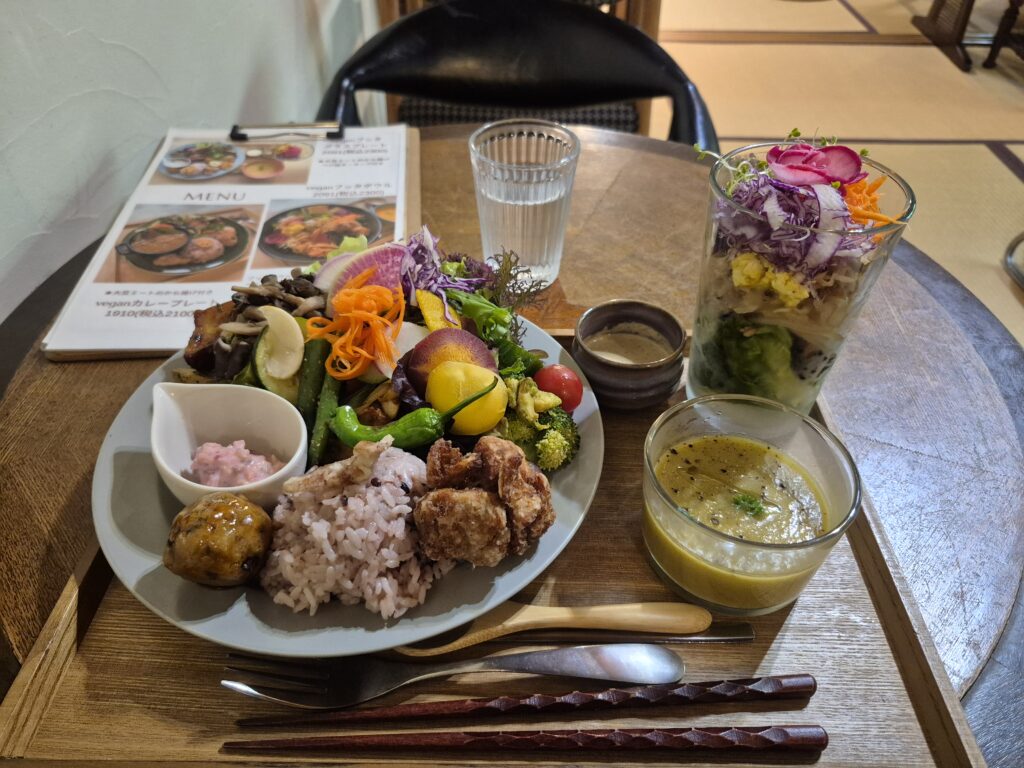
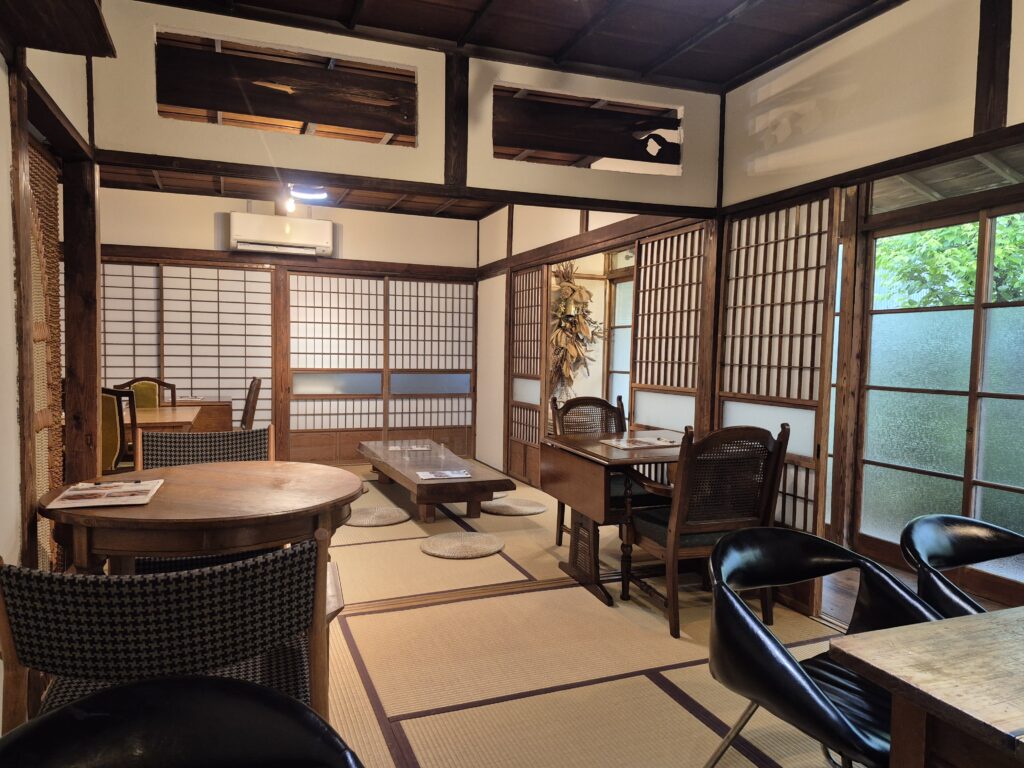
Cotonoha is a 100% vegan café inside a traditional Japanese house and only a short walk from Kamakura’s tourist attractions. Their specialties are the Buddha Bowls and gluten-free Curry, with a strong focus on fresh and healthy ingredients.
I tried their Buddha Bowl with separate ingredients (rice, tons of veggies, a vegan meatball, and soup), and wow, it was one of the best (and most veggie-packed) meals I had in Japan so far! The staff was very friendly and I loved the food presentation as well.
Thai Restaurant 889
Address: 2 Chome-8-11, Hase, Kamakura, Kanagawa 248-0016, Japan
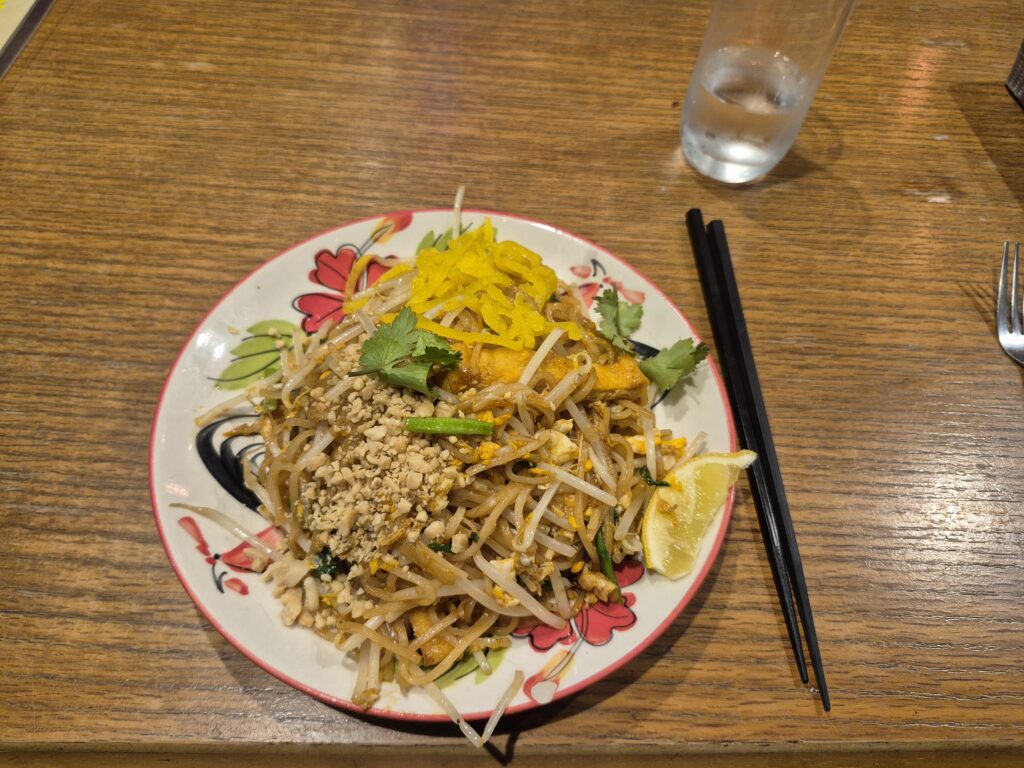
If you’re craving Thai food on your visit to Kamakura, I recommend eating at Thai Restaurant 889. Their menu features Summer rolls, Thai curries, Pad Thai, fried rice dishes, and more, which will surely keep you full for a long time!
I had their vegetarian Pad Thai and it was super tasty! Another bonus of this small restaurant is that you’re seated Japanese style (i.e. on pillows on the floor) and you can look at beautiful Yuigahama Beach through the window while eating your meal!
The Best Time to Visit Kamakura
Kamakura is a beautiful place to visit pretty much all year. On a clear day, you might even see Mount Fuji in the distance!
Many people come here during the spring season (March to May), when you can spot cherry blossoms and other flowers all over town. I’d just not recommend to visit Kamakura (and especially Enoshima) during Golden Week (late April to early May), as this is when many domestic and international tourists travel here.
Kamakura is also a popular spot during the summer months, especially for people who like to sunbath, swim, or surf around Kamakura’s beaches. There are many fun festivals happening at this time as well.
The fall is also nice to visit Kamakura thanks to pleasant temperatures and beautiful fall foliage, especially at Hasedera’s Temple gardens and the Great Buddha statue!
Finally, Kamakura is a charming town in the winter months, too. While it’s quieter, there are no crowds and just imagine peaceful Hasedera Temple and the Great Buddha covered in snow! Just be sure to dress warmly, as it can get very windy here.
How to Get to and Around Kamakura with Public Transit
Most people travel to Kamakura from Tokyo. The fastest direct train connection is the JR Yokosuka Line from Tokyo Station to Kamakura Station or you can take the JR Shonan-Shinjuku Line from Shinjuku Station to Kita-Kamakura Station. Each trip takes about an hour.
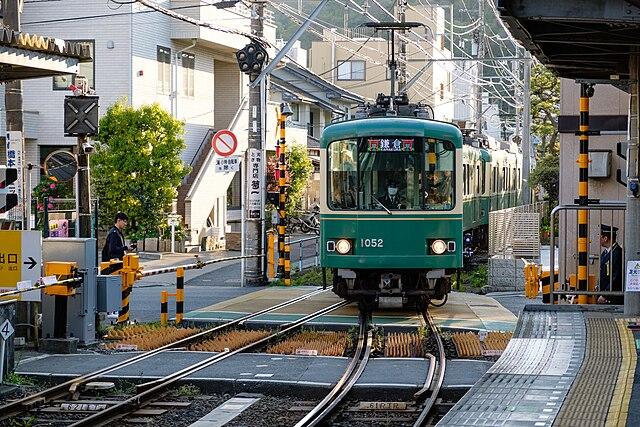
I decided to visit Enoshima first, so I hopped on the Odakyu Line from Shinjuku Station, then transferred at Fujisawa Station to the Enoden Line to Enoshima (1 hour 25 minutes). Later, I took the Enoden Line that goes to Kamakura Station (25 minutes).
Once in Kamakura, it’s very easy to get around town as well. Locals buses and the Enoden Line take visitors to Kamakura’s cool attractions. For example. Hase Station is just a short walk from Hasedera Temple and the Great Buddha.
Besides, Kamakura is very walkable and tourist attractions are not too far from each other. For example, it was just a 15-minute walk from my hostel to the town centre.
Conclusion: The Top 5 Best Things to Do in Kamakura
Kamakura is the perfect side trip from Tokyo that I highly recommend adding to your Japan itinerary. Whether you visit this charming coastal town just for a day or a weekend, there are so many cool things to see and do here.
From temples, shrines, the Buddha statue, beautiful beaches, trendy restaurants, Kamakura surely has something for everyone.
My favourites were Hasedera Temple and the Great Buddha, as I had never seen something like this before. Exploring Enoshima with its scenic shrines and stunning ocean views was awesome as well!
Traveling around Japan for a while? Then check out these posts:
Is Nikko, Japan Worth Visiting?

Writing and traveling have been my passions for 25+ years, so I launched this travel blog in May 2020. I love writing travel guides about amazing destinations and I'm passionate about music tourism and animal-friendly and sustainable travel.
So far, I've been to 20 countries on five continents, and Japan and Iceland were my favourites!
- IS WROCLAW, POLAND WORTH A VISIT IN 2026? - September 6, 2026
- A FIRST-TIME VISITOR’S GUIDE TO VICTORIA, BC: THE 18 BEST THINGS TO DO - May 31, 2026
- THE 6 BEST THINGS TO DO IN BEPPU IN ONE DAY - April 29, 2026
Leave a Reply